The New Road from Jomsom to Rara Lake: A High-Altitude Frontier in Nepal
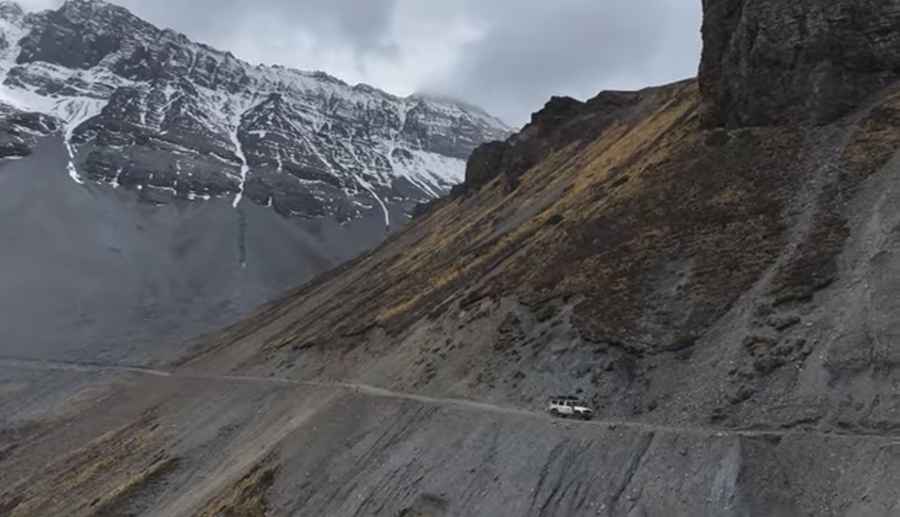
The road connecting Jomsom to Rara Lake is an unpaved high-altitude mountain track currently under construction in western Nepal. Traversing Upper Mustang and the remote Dolpo region, the route climbs from the Kali Gandaki River valley over several mountain passes exceeding 4,400 meters above sea level.
| Road facts: Jomsom to Rara Lake Track | |
|---|---|
| Location | Upper Mustang to Dolpo, Nepal |
| Starting Elevation | 2,700 m (Ekle Bhatti) |
| Max Elevation | 4,463 m (14,642 ft) at Bima Lojun La |
| Surface | Unpaved (Dirt, crushed rock, and gravel) |
| Status | Under construction |
Where does the road from Jomsom to Rara Lake start?
The track starts at Ekle Bhatti (28°47'19"N 83°44'11"E), a settlement located along the Kali Gandaki River between Jomsom and Kagbeni at an elevation of 2,700 meters. From the riverbank, the road turns west and begins a steep climb into the mountain ridges towards Dolpo.
What high mountain passes does the road cross?
As the track pushes west toward Rara Lake, it crosses three major high-altitude mountain passes:
- Windy Pass (Lung La): 3,466 m (28°48'19"N 83°44'35"E)
- Tiri La: 3,832 m (28°50'54"N 83°44'44"E)
- Bima Lojun La: 4,463 m (28°52'55"N 83°43'24"E)
What are the surface conditions on the Jomsom to Rara Lake road?
The road is an active construction track made of loose earth, uncompacted gravel, and sharp rocks carved into the hillsides. The track is single-lane width with steep vertical drops along the outer edge and no guardrails or barriers. Landslides, rockfalls, and mud washouts frequently cut the track during the summer monsoon season.
How remote is the track between Mustang and Dolpo?
The route passes through one of the most isolated areas of Nepal. There are no gas stations, repair shops, or medical facilities along the mountain section. At elevations above 4,000 meters, thin air causes a severe drop in engine power, forcing 4x4 vehicles to rely entirely on low-range gears to climb the steep ramps.
Road suggested by: Hugh Wilson