How difficult is the unpaved road to Öl Pass in Mongolia?
Öl Pass, also known as Olyin Pass, is a remote mountain crossing reaching an elevation of 2,105m (6,906ft) above sea level in the Khövsgöl aimag of northern Mongolia. Nestled within the wild Ulaantaiga Bio Reserve, the road to the summit is a grueling, unpaved track that cuts through the vast Mongolian steppe. This is not a road for standard vehicles; it is a primitive path where the lack of infrastructure and the extreme Siberian weather turns a 66-kilometer journey into a technical test of 4x4 endurance in one of the most isolated regions of the country.
| Road facts: Öl Pass (Olyin) | |
|---|---|
| Location | Khövsgöl Aimag, Mongolia |
| Elevation | 2,105 m (6,906 ft) |
| Length | 66.5 km (41.32 miles) |
| Road Name | Bayanzurkh - Ulaan-Uul Road |
| Surface | Unpaved / Dirt / Washboard |
How long is the Bayanzurkh - Ulaan-Uul road over Öl Pass?
The road spans 66.5 km (41.32 miles), running north-south from Tugul to Altraga. This is a long-haul trek through short grasslands and rocky outcrops where the "road" often disappears into multiple parallel tracks created by drivers trying to avoid deep ruts. The Bayanzurkh-Ulaan-Uul road is a vital link for local families and commercial traffic, meaning the surface is constantly beaten down by heavy, old Soviet-style trucks. The constant vibration from the "calamina" (washboard) surface is relentless for over 60 kilometers, capable of loosening every bolt in your vehicle if you don't maintain a controlled speed.
What are the hazards of driving through the Ulaantaiga Bio Reserve?
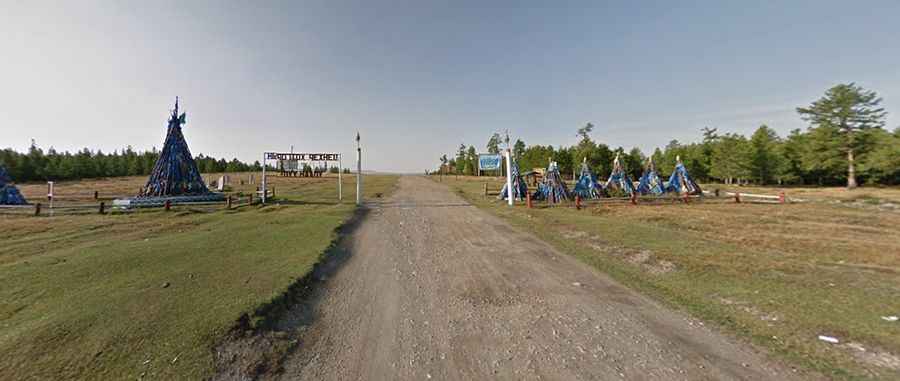
The primary hazard on the Öl Pass is its status as a major migration route for nomadic families. Driving here means you must share the narrow dirt track with massive herds of livestock and families moving their entire lives—including their wooden iurtes—on trucks. There are no road signs or safety barriers. As seen at the pass summit, marked by shamanic ovoo structures, the terrain is wide open and exposed to violent winds. If you meet a commercial truck on a narrow, rutted section, you may have to drive off-track onto the soft grassland, where the risk of getting stuck in hidden marshy patches is extremely high.
Why is the winter weather lethal on the Öl Pass?
At 2,105 meters in northern Mongolia, winter is not just a season; it is a survival situation. From October to May, the Öl Pass is hit by heavy snow and Arctic temperatures that can drop well below -30°C. The dirt road turns into a polished sheet of ice, and the Siberian winds create massive snowdrifts that can bury the 66.5 km track in hours. There is zero roadside assistance in the Ulaantaiga reserve; if you break down or slide off the track in winter, the extreme cold becomes a life-threatening emergency long before any help can arrive from the nearest settlement.
Is a 4x4 mandatory to cross the Öl Pass?
Attempting the Bayanzurkh - Ulaan-Uul road in a standard car is a recipe for mechanical failure. A high-clearance 4x4 is strictly mandatory to navigate the deep ruts and the rocky sections of the pass. You need robust tires and a reliable cooling system, as the engine will be working hard at over 2,000 meters. The isolation is total; you must carry extra fuel, water, and tools, as there are no fuel stations between the main settlements. In this part of Khövsgöl, you are driving through one of the last true wilderness areas on Earth, and the Öl Pass will quickly claim any vehicle that isn't built for the raw reality of the Mongolian steppe.
Road suggested by: jorge manuel gómez sánchez