Driving the high AH4 road to Shine Davaa in Mongolia
Shine Davaa is a mountain pass at an elevation of 2,637 meters (8,651 ft) above sea level, located in Bayan-Ölgii Province in western Mongolia. Crossing the Altai Mountains, the pass is traversed by Asian Highway 4 (AH4), connecting Tsagaannuur near the Russian border with Ölgii.
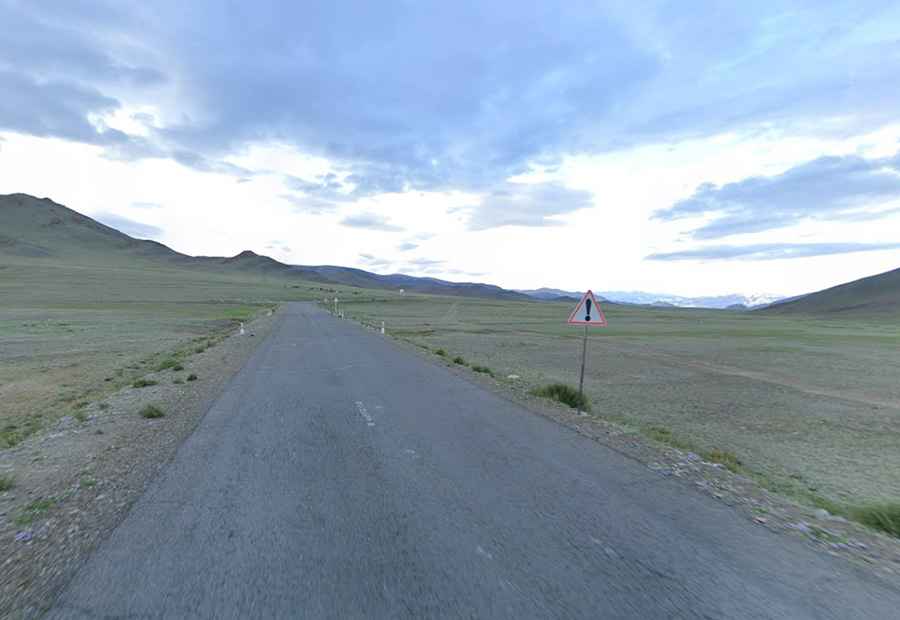
| Road facts: Shine Davaa (AH4) | |
|---|---|
| Location | Bayan-Ölgii Province (Mongolia) |
| Elevation | 2,637 m (8,651 ft) |
| Length | 64.7 km (40.2 miles) |
| Road Number | AH4 (Asian Highway 4) |
| Surface | Paved (Damaged sections and potholes) |
Where is the AH4 road through Shine Davaa located?
The road runs through the far western edge of Mongolia, cutting through the Altai Mountains. The 64.7-kilometer sector forms part of the regional corridor between Tsagaannuur and the provincial capital of Ölgii.
What are the driving conditions on the Shine Davaa pass?
While paved, the AH4 surface suffers from severe permafrost heave and temperature fluctuations, resulting in cracked asphalt, deep potholes, and sudden transitions to broken pavement. At 2,637 meters elevation, steep ramps combine with thin mountain air to reduce engine power output.
What hazards exist along the Bayan-Ölgii mountain route?
Extremely remote conditions mean there are no fuel stations, mechanical workshops, or services along the 64.7-kilometer pass between Tsagaannuur and Ölgii. High winds blow dust and sand across the road in summer, while winter temperatures dropping below -40°C cause severe icing and thermal cracking of the road surface.
Is the Shine Davaa pass open year-round?
The pass remains open officially throughout the year, but heavy winter snowstorms and severe cold make travel difficult from October through May. Spring snowmelts and summer rainstorms can wash sand and gravel across lower sections of the asphalt.
Road suggested by: jorge manuel gómez sánchez