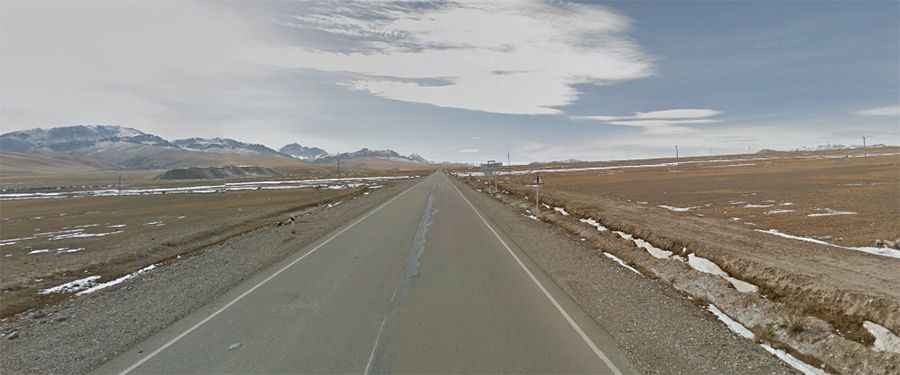
Driving the paved A365 road to Ak-Beyit Pass
Ak-Beyit Pass (Pereval Akbeit) is a high-altitude mountain crossing at an elevation of 3,289m (10,790ft) above sea level, located in the Naryn Region of Kyrgyzstan. Situated within the At-Bashi Range, the pass is a critical logistical corridor for international transit, forming part of the A365 highway and the European route E125.
| Road facts: Ak-Beyit Pass (A365) | |
|---|---|
| Location | Naryn Region, Kyrgyzstan |
| Elevation | 3,289 m (10,790 ft) |
| Road Number | A365 / E125 (Paved) |
| Length | 119 km (73.9 miles) |
Where is the Ak-Beyit Pass located?
The Ak-Beyit Pass is located in the eastern part of the country, acting as the primary link between the At-Bashi Valley and the Arpa Valley. Logistically, this 119 km (73.9 miles) sector of the A365 runs from the Torugart Pass on the Chinese border to Kara-Bulun. Despite being a major international route, the isolation of the Naryn Region means that any mechanical failure at this altitude requires total self-sufficiency, as services are extremely sparse along the 119 km transit.
How challenging is the drive through Ak-Beyit Pass?
Technically, the road to Ak-Beyit Pass is totally paved, but the asphalt quality is subject to extreme thermal expansion and heavy truck traffic, which often creates deep ruts and frost heaves. Driving at 3,289 meters puts significant stress on the vehicle's aspiration system; engines will experience a noticeable loss of power due to the thin air. For a driver, the 119 km stretch requires constant monitoring of the temperature gauge and tire pressure, as the transition through the At-Bashi Range involves long, sustained climbs where the cooling system is under maximum load.
Is the road to Ak-Beyit Pass open in winter?
The Ak-Beyit Pass is typically open all year round, but this is a high-altitude logistical gamble. In winter, the pass is prone to heavy snowdrifts and "buran" (strong blizzards) that can cause occasional closures without warning. Technically, the A365 is cleared for heavy freight, but black ice on the hairpins is a constant hazard. If you are driving this route between November and April, mandatory winter equipment and extra fuel are essential safety protocols, as a sudden weather shift in the At-Bashi Range can leave a vehicle stranded for hours at sub-zero temperatures.