Border Road 10: Driving the restricted desert route between Israel and Egypt
Border Road 10 is one of the most secluded and restricted paved routes in the Middle East. Running directly alongside the border fence between Israel and Egypt, this 190 km (118 miles) road crosses a heavily militarized desert landscape that has remained closed to civilian traffic for most of its history due to extreme security concerns.
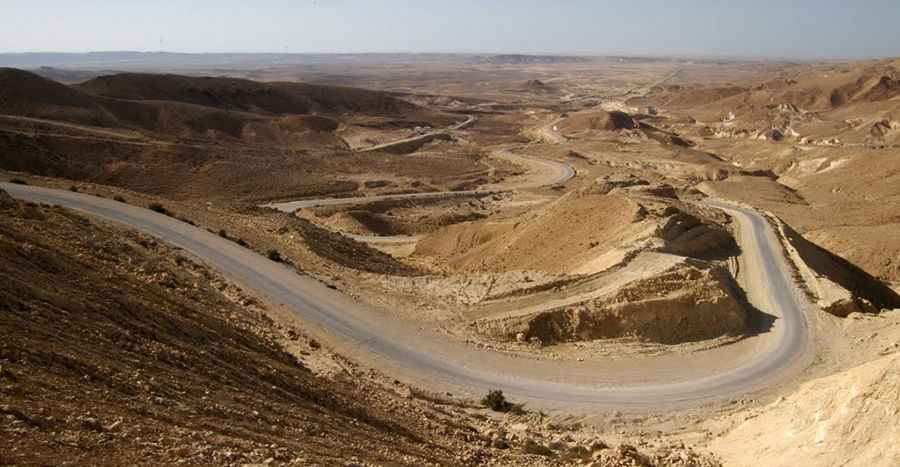
The road serves as a vital strategic corridor for the Israel Defense Forces (IDF), providing a high-speed patrol route to monitor the Sinai border. For the rare few who gain access, it offers a raw driving experience through a desolate environment where gas stations, cellular service, and water are non-existent.
| Road facts: Border Road 10 | |
|---|---|
| Length | ~190 km (118 miles) |
| Max Elevation | 988 m (3,241 ft) |
| Surface | Paved (Variable condition) |
| Location | Negev Desert (Israel-Egypt border) |
| Access | Strictly Restricted (Military Control) |
Where does Border Road 10 start and end?
The road runs north-south, stretching from the Rafah area in the north, near the Gaza Strip, down to the shores of the Red Sea near Eilat. Driving this route provides a unique perspective of the border infrastructure, hugging the sophisticated fence designed to prevent infiltration. Along the way, Egyptian border guard posts are visible at regular intervals across the line, adding to the intense atmosphere of this desert drive.
Can I drive Border Road 10? Access and Restrictions
Public access to Border Road 10 is notoriously difficult. For years, the road has been closed to all civilian vehicles. However, the IDF occasionally opens specific sections of the road to the public during Jewish holidays (such as Sukkot or Passover). These openings usually last only about 10 days per year and are restricted to daylight hours. Even during these windows, travelers must check with local military authorities, as the road can be closed instantly depending on the security situation in the Sinai Peninsula.
Technical challenges and desert conditions
While the road is fully paved, the condition of the asphalt is inconsistent. Some sections are well-maintained for military patrols, while others suffer from heat damage and sand drifts. The drive reaches a peak elevation of 988 m (3,241 ft) in the Negev Highlands, offering breathtaking views of the Sinai Desert and the Eilat Mountains. Because of the notorious absence of services, anyone driving this route must be self-sufficient, carrying extra fuel, food, and significant amounts of water.
Why is Border Road 10 so important?
Beyond its scenic value, the road is a cornerstone of regional security. It allows for rapid IDF response to any breaches of the border fence. The high-altitude lookout points along the way provide a strategic view over the vast, empty expanses of the Egyptian desert, making it one of the most sensitive and closely monitored roads in the world.
Pic: https://static.panoramio.com.storage.googleapis.com/photos/large/44353143.jpg