Driving in Iran: The Carnet de Passages and vehicle restrictions
Iran offers some of the most diverse driving landscapes in the Middle East, from the humid shores of the Caspian Sea to the scorched dunes of the Lut Desert. For overlanders, it is the essential bridge between Europe and Asia. However, driving your own vehicle in Iran is not as simple as crossing a border; it involves complex international customs documents and strict regulations on what type of vehicle is even allowed to enter the country.
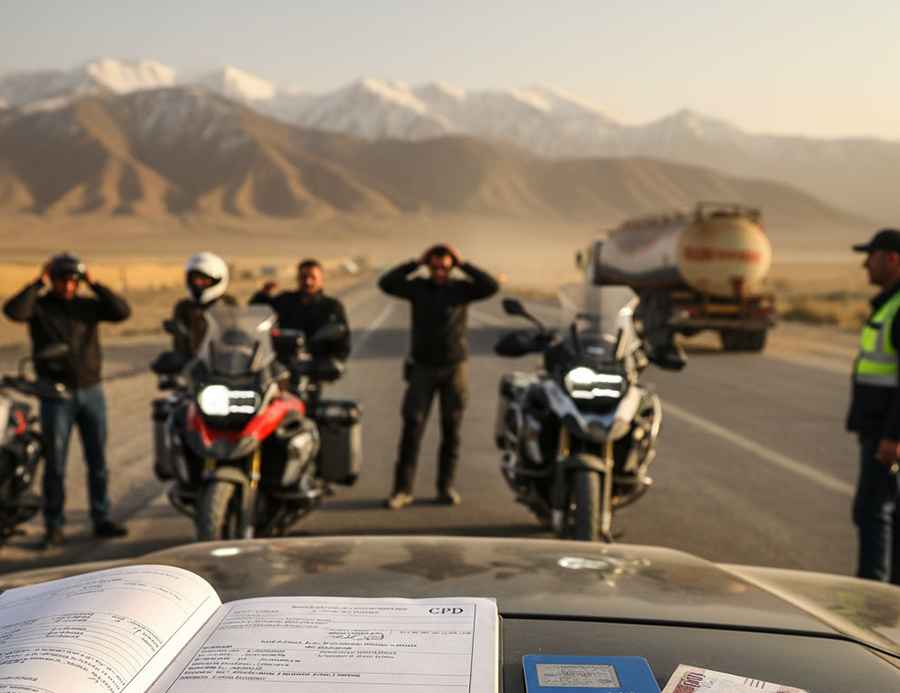
While the Iranian people are legendary for their hospitality toward travelers, the border officials are bound by rigid laws designed to prevent the illegal import of vehicles. To navigate this safely, you must understand the financial and technical requirements long before you arrive at the frontier with Turkey, Armenia, or Pakistan.
| Logistics: Driving in Iran | |
|---|---|
| Customs Document | Carnet de Passages en Douane (CPD) Mandatory |
| Engine Limit (Moto) | Strictly under 250cc (Permanent ban varies) |
| Fuel Access | Government Fuel Card (or using locals' cards) |
| Insurance | Third-party Iranian insurance required at border |
What is the Carnet de Passages for Iran?
The Carnet de Passages en Douane (CPD) is arguably the most important piece of paper for an Iranian road trip. It acts as a temporary import bond that guarantees you will not sell your vehicle within Iran. To obtain one, you must leave a significant financial deposit in your home country—often ranging from 100% to 300% of the vehicle’s value. If you exit Iran without the proper customs stamps, you risk losing this entire deposit.
In recent years, some specialized Iranian agencies have begun offering "local carnets" at the border for a non-refundable fee. This can be cheaper than the full international bond but requires trust in a local fixer. Without a valid CPD or a local equivalent, your vehicle will be impounded at the border indefinitely.
Vehicle and engine restrictions: Can you bring a big bike?
One of the most frustrating rules for adventure motorcyclists is the 250cc engine limit. Locally, motorcycles over 250cc are banned for security reasons. While transit permits for foreign "big bikes" (like the BMW GS or KTM Adventure series) are sometimes granted, the rules change frequently. Travelers often report being denied entry or needing a specific police escort to cross the country if their engine exceeds this limit.
For cars, there is a general ban on vehicles from the United States or those with engines larger than 2,500cc. While luxury SUVs are common in Tehran, foreign-registered high-displacement vehicles often face extra scrutiny and may be rejected at certain border crossings like Bazargan (Turkey) or Astara (Azerbaijan).
How to manage fuel and navigation in Iran?
Fuel in Iran is incredibly cheap due to government subsidies, but the system is complex for foreigners. Gasoline is dispensed using a government fuel card. As a visitor, you will not have one, meaning you must rely on gas station attendants or friendly locals to use their cards for you. While diesel is plentiful for trucks, it can be harder to find in some urban passenger stations, and you may need a specific "diesel card" to unlock the pump.
Regarding safety and navigation, night driving is high-risk due to the "creative" driving habits of local trucks and the lack of lighting on many desert highways. Furthermore, internet censorship is significant. Apps like Instagram, WhatsApp, and most Western news sites are blocked. It is vital to have offline maps (like Maps.me or OSMand) and a reliable VPN installed before you cross the border, as downloading them inside the country is almost impossible without a local SIM and a lot of technical work.