How to drive to the 5,711m summit of Kiu La?
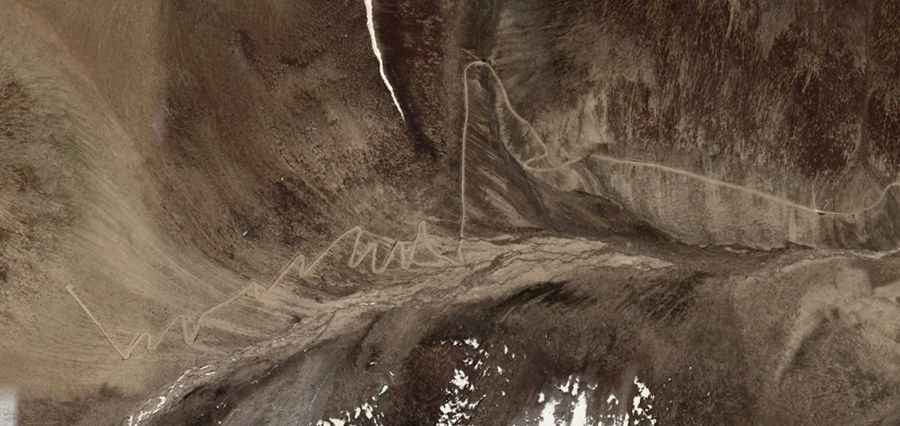
Kiu La is an extreme high-altitude mountain pass reaching an elevation of 5,711m (18,736ft) above sea level, situated on the international border between China (Tibet) and India (Ladakh). As one of the highest mountain passes of India and the world, it represents a pinnacle of high-altitude logistics. The 29.3 km unpaved road starts from Banying Xian and climbs through the Himalayas, serving as a critical military corridor that is strictly impassable during the winter months due to extreme snow accumulation and sub-zero thermal conditions.
| Road facts: Kiu La | |
|---|---|
| Location | China-India Border (Himalayas) |
| Elevation | 5,711 m (18,736 ft) |
| Length | 29.3 km (18.2 miles) |
| Elevation Gain | 1,184 m |
| Average Gradient | 4.04% |
What are the driving logistics of the Kiu La unpaved road?
The 29.3 km ascent to Kiu La is characterized by a sustained 4.04% average gradient on an unpaved surface. Logistically, the main challenge for drivers is the heavy presence of military traffic, which frequently degrades the gravel track into deep ruts. The road is narrow, requiring disciplined passing protocols on shelf sections where one vehicle must yield and move to the extreme edge of the precipice. Maintaining a 4x4 configuration is a technical requirement, as the loose Himalayan scree can compromise traction during the 1,184-meter vertical climb from Banying Xian.
How does the 5,711m altitude affect vehicle mechanics on Kiu La?
Reaching an elevation of 5,711 meters places Kiu La among the highest motorable road passes on Earth. At this altitude, oxygen levels are approximately 45% of those at sea level. This leads to a severe loss of combustion efficiency; naturally aspirated engines will experience a power drop of over 50%. Logistically, vehicles must be equipped with high-performance turbochargers to compensate for the air thinness. It is a mandatory technical protocol to monitor the engine's cooling system constantly, as the lower boiling point of water at this elevation increases the risk of pressurized system failure under the heavy load of the climb.
What are the winter hazards and closure protocols for Kiu La?
Due to its extreme elevation in the Himalayas, the road to Kiu La is subject to total closure from late autumn to late spring. Logistically, the pass is buried under multi-meter snow drifts that cannot be cleared with standard maintenance equipment. Even during the operational window, the road is prone to sudden blizzards and permafrost thawing, which can turn the 29.3 km track into a mud-trap. Drivers must carry specialized cold-weather logistics, including anti-gel fuel additives for diesel engines and emergency oxygen supplies, as the risk of altitude sickness (AMS) for the crew is high at 18,736ft.
How to manage military traffic logistics on Kiu La?
Because Kiu La is an international border pass, the road is primarily a tactical line of communication. Logistically, civilian transit is rare and often restricted. Drivers must be prepared to share the narrow 29.3 km route with heavy multi-axle military trucks and armored convoys. This requires a specific technical approach to braking and acceleration to avoid becoming stuck in the dust clouds (which reduce visibility to zero) or being forced off the stable part of the track. Before attempting the transit, verifying all military permits and ensuring the vehicle has a range of at least 500 km is a logistical necessity, as there is no support infrastructure between the settlements.