How to drive to Fotu La Pass in the Himalayas
Fotu La is a high mountain pass at an elevation of 4,108m (13,478ft) above sea level, located in the Leh district of Ladakh, India. Situated in the rugged Zaskar Range of the Himalayas, it stands as the highest point on the legendary National Highway 1 (NH1), connecting the regions of Leh and Kargil.
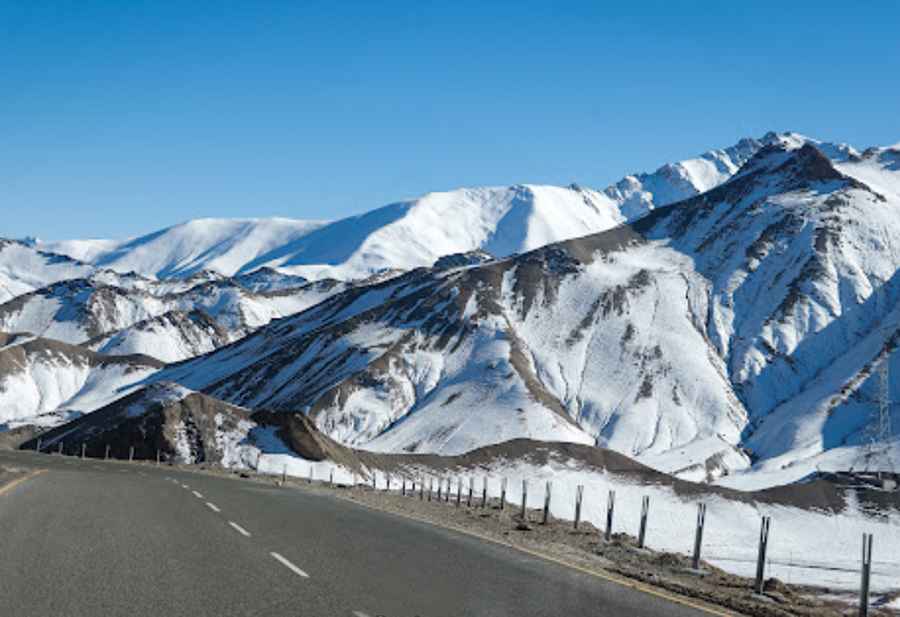
| Road facts: Fotu La (NH1) | |
|---|---|
| Location | Ladakh, India (Himalayas) |
| Length | 42.8 km (26.59 miles) |
| Max Elevation | 4,108 m (13,478 ft) |
| Road Name | National Highway 1 (Srinagar-Leh) |
| Surface | Paved |
How to reach Fotu La Pass on the NH1?
The road across the pass, also known as Fatu La, is entirely paved and forms part of the crucial Srinagar-Leh Highway. The pass is one of two major high-altitude gates between Kargil and Leh, the other being Namika La. Despite being paved, the drive is technically demanding due to numerous hairpin turns, sharp curves, and the extreme altitude that affects both engine performance and breathing.
Driving conditions and safety on Fotu La
The 42.8 km (26.59 miles) journey from Khangral to Lamayuru is spectacular but requires caution. The road is notorious for its steep sections and memorials at previous accident sites serve as a grim reminder to drive carefully. A key rule of the road here is to always give way to heavy trucks, as they struggle with the thin air and steep gradients. Due to heavy snowfall, the pass is typically closed during the winter months.
What makes the Fotu La drive unique?
Reaching the summit rewards drivers with a moon-like landscape, often referred to as "Moonland" near Lamayuru. At the top, you will find a television relay station belonging to Prasar Bharati and a viewing deck that offers 360-degree views of the snow-clad Himalayan ranges. The contrast between the rugged brown mountains and the occasional green oasis in the valleys makes it a world-class photography destination.
Is Fotu La the highest pass in Ladakh?
While it is the highest point on the Srinagar-Leh Highway (NH1) at 4,108m, it is not the highest pass in the Ladakh region, being significantly lower than the famous Khardung La. However, its importance lies in its accessibility and the dramatic descent towards the historic Lamayuru Monastery, featuring some of the most aesthetic bends and switchbacks in the Indian Himalayas.
Pic: Swaroop Netrabyle