How to drive the unpaved Shashila Road to Kharbu La?
Kharbu La is a high mountain pass at an elevation of 3,509 meters (11,512 ft) above sea level, located in the Ladakh region of northern India. The pass is situated on the unpaved Shashila Road, running through the high valleys of the Himalayan range.
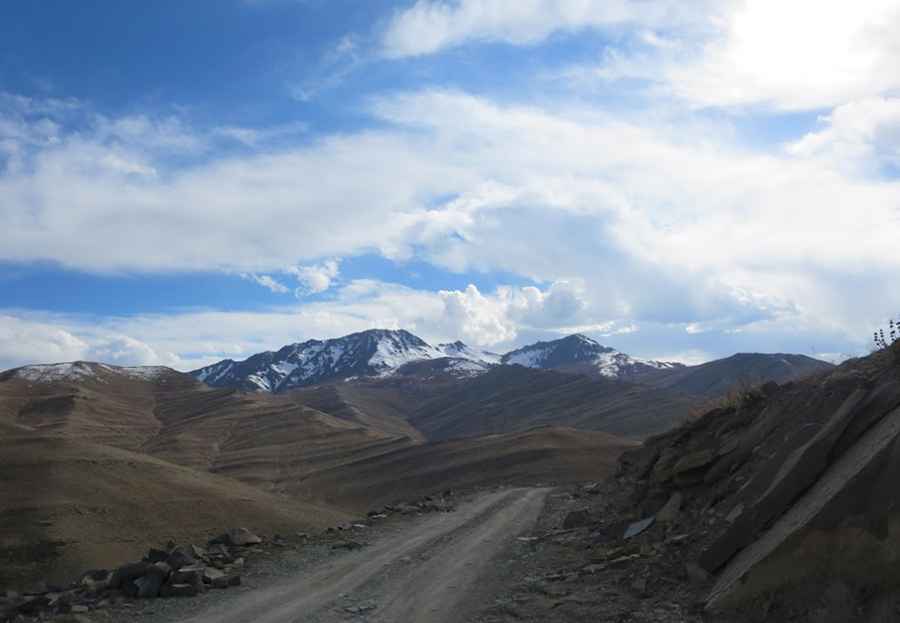
| Road facts: Kharbu La (Ladakh) | |
|---|---|
| Location | Ladakh (Northern India) |
| Elevation | 3,509 m (11,512 ft) |
| Length | 34.9 km (21.68 miles) from Shakardo to Chulichan |
| Max Gradient | 10% |
| Surface | Unpaved (Loose shale, gravel, and sand) |
How long is the Shashila Road through Kharbu La?
The unpaved mountain road spans 34.9 kilometers (21.68 miles), running east-west to connect the remote settlements of Shakardo and Chulichan. Positioned to the east of the steep Shashi La, the single-lane track cuts directly along the exposed cliffs of the Ladakh terrain, reaching its highest point at the 3,509-meter Kharbu La summit. The entire 34.9-kilometer trackbed consists of an unnumbered earth path lacking civilian towns or roadside infrastructures.
What are the driving hazards on the Kharbu La pass?
The single-lane road is completely unpaved, featuring a low-grip surface layer of loose shale fragments, deep sand deposits, and gravel ruts. The track scales mountain ramps with sustained gradients hitting a maximum of 10%, where tires easily spin out on the loose stone debris. The path is narrow and completely lacks side guardrails or safety barriers above the steep drop-offs into the Chulichan valley, requiring a high-clearance 4x4 vehicle to navigate the rocky track bed safely without striking the low chassis components.
Is the road to Kharbu La open in winter?
Due to its high altitude in northern India, the pass faces extreme winter freezing and is completely buried under deep snowdrifts and heavy ice fields from November until late May, remaining entirely impassable. The mountain track receives no winter plowing or clearing services. During the operational summer months, the unpaved surface is prone to severe dust accumulations and localized rockfalls from the flanking cliffs, and sudden seasonal rainstorms can quickly turn the dry dirt into thick, slick mud ruts across the lane.
Road suggested by: Hugh Wilson
Pic: Neeti Bassi