What are the driving challenges on the G317 road through Ngai La?
Ngai La is a high-altitude mountain pass at an elevation of 4,453m (14,609ft) above sea level, situated in the historical Kham region of the eastern Tibet Autonomous Region. Technically, the pass is a critical sector of the China National Highway 317 (G317). Navigating this pass involves managing high-volume commercial traffic on a roadbed that frequently transitions into narrow, single-track segments under extreme alpine conditions.
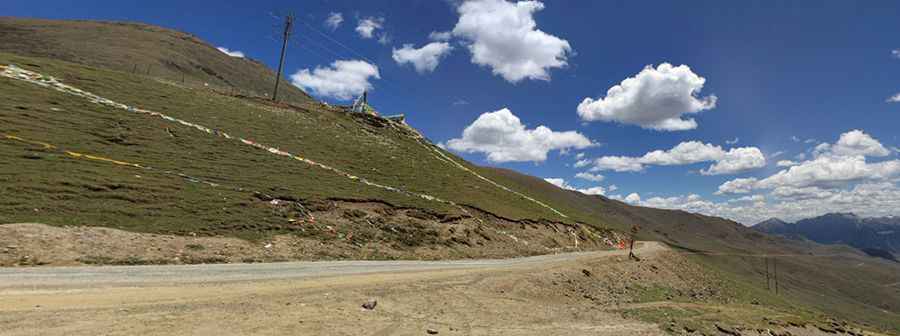
| Road facts: Ngai La (G317) | |
|---|---|
| Location | Kham Region, Tibet (China) |
| Elevation | 4,453 m (14,609 ft) |
| Road Designation | China National Highway 317 (G317) |
| Surface | Gravel and degraded asphalt |
How do traffic logistics affect the transit through Ngai La?
The G317 at Ngai La is notorious for massive logistical bottlenecks. Technically, the convergence of heavy freight trucks on narrow, unpaved sections can trigger traffic jams stretching for miles. During the rainy season, the gravel surface degrades into a high-viscosity mud trap, reducing traction and increasing the risk of vehicle immobilization. For an experienced driver, the technical challenge lies in managing low-speed maneuvering on single-track sectors while maintaining awareness of the unstable road shoulders, which are prone to subsidence under the weight of heavy vehicles.
What are the meteorological hazards on the Ngai La pass?
At an elevation of 4,453m, the Ngai La is exposed to a severe alpine climate for nearly ten months of the year. Technically, the pass acts as a wind corridor, with high-velocity gusts that can affect the stability of high-profile vehicles. The rapid transition between rain, ice, and snow requires a strict safety protocol, including the use of snow chains even outside the peak winter months. The scarce oxygen at this altitude not only affects the driver’s reaction time but also reduces the combustion efficiency of engines, making the steep climbs on degraded surfaces a constant mechanical strain.
How to manage vehicle dynamics on the G317 unpaved sectors?
Driving through the Ngai La requires a vehicle in optimal mechanical condition, particularly regarding the suspension and cooling systems. The unpaved gravel roadbed is subject to constant erosion, creating deep ruts that test the vehicle's ground clearance. Logistically, the isolation of the Kham region means that any breakdown on the single-track sections will immediately block the entire G317 corridor. Safety protocols mandate maintaining a conservative pace and ensuring that the vehicle's lighting systems are operational, as fog and blowing snow frequently reduce visibility to near-zero levels on the exposed summit ramps.
Pic: 石江川