Driving the unpaved S217 to Daxuenshan Pass in the Hengduan Mountains
Daxuenshan Pass (Da Xue Shan) is a high-altitude mountain crossing at an elevation of 4,337m (14,229ft) above sea level, located on the border between the Diqing Tibetan Autonomous Prefecture in Yunnan and the Garzê Tibetan Autonomous Prefecture in Sichuan, China. Part of the Provincial Road 217 (S217), the track is a raw, unpaved expedition through the rugged Hengduan mountain system.
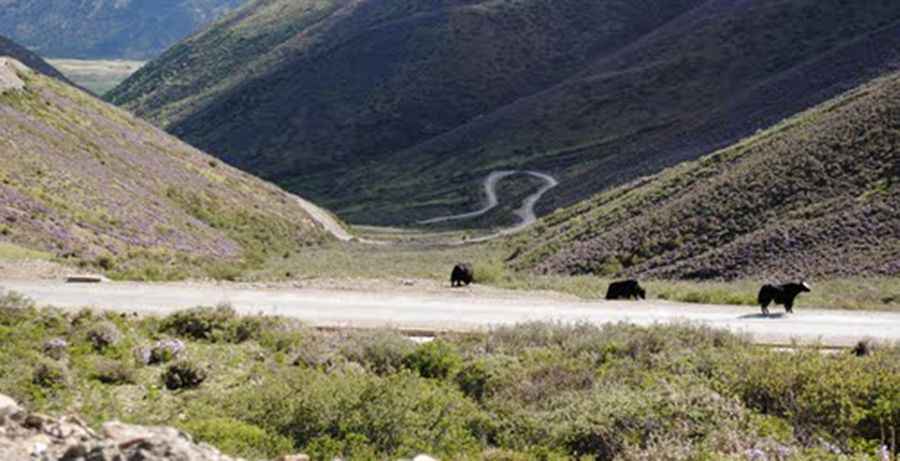
| Road facts: Daxuenshan Pass | |
|---|---|
| Location | Border of Yunnan and Sichuan, China |
| Length | 30 km |
| Max Elevation | 4,337 m (14,229 ft) |
| Road Name | Provincial Road 217 (S217) |
| Surface | Unpaved, mud, and loose rock |
How challenging is the S217 road to Daxuenshan?
The 30 km road between Paicang (Sichuan) and Kele (Yunnan) is a high-stakes mountain drive where the surface is entirely unpaved. The S217 is notorious for its poor condition, featuring 18 sharp hairpin turns that climb aggressively toward the summit. The road is frequently littered with large rocks and deep ruts caused by heavy runoff and timber transport. At 4,337 meters, the thin air significantly reduces engine torque, making the steep, loose-gravel switchbacks a struggle for vehicles without a low-range transfer case. A high-clearance 4x4 is not just recommended; it is mandatory to clear the bumps and rock debris that define this corridor.
What are the primary hazards of the Da Xue Shan crossing?
The most lethal hazard on Daxuenshan is the pervasive heavy mist. The pass is often shrouded in thick clouds that can reduce visibility to less than five meters without warning. In these conditions, navigating the narrow sections with steep drops becomes a blind gamble. Additionally, the road runs through dense pine forests where the ground remains damp and slippery even during the dry season, increasing the risk of sliding on the hairpins. The combination of high altitude, low visibility, and a surface that transitions between mud and loose shale means there is zero margin for error for the driver.
Is Daxuenshan Pass open during the winter?
Given its elevation in the Hengduan range, the pass is subject to extreme winter weather. From late October until early June, heavy snowfall and ice make the S217 virtually impassable for standard expedition vehicles. The road is not regularly plowed, and the remote nature of the border between Xiangcheng and Shangri-La means that if you get stuck, help is hours—if not days—away. Even in summer, sudden hailstorms can turn the dusty track into a mud trap in minutes, testing the traction and ground clearance of your vehicle.
What mechanical preparation is required for the S217?
Before attempting the 30 km climb, a full vehicle audit is essential. The constant vibration of the unpaved surface will test your suspension and chassis bolts. It is mandatory to carry a full-sized spare tire and basic recovery gear, as the sharp rocky outcrops around the pass are prone to slicing through sidewalls. Ensure your air filters are clean to cope with the fine dust and that your cooling system can handle the high-torque climb at altitude. This is a journey through a desolate high-mountain landscape where self-sufficiency and mechanical sympathy are your only guarantees of crossing from Sichuan to Yunnan safely.
Pic: https://mw2.google.com/mw-panoramio/photos/medium/52459650.jpg