How to drive the G109 road through the frozen Fenghuo Pass?
Fenghuo Pass (also known as Fenghuoshan) is a high mountain pass at an elevation of 4,961m (16,276ft) above sea level, located in the Tanggula Mountains of the Tibetan Plateau. Traversed by the Qinghai-Tibet Highway (G109), it is a critical logistical link where the road does not drop below 5,000m for a continuous 80km stretch toward the next pass. This is one of the most technically demanding paved sectors in China due to extreme permafrost instability.
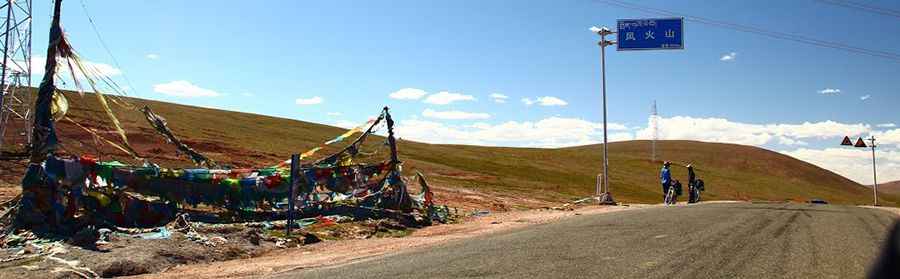
| Road facts: Fenghuo Pass | |
|---|---|
| Location | Zhidoi County, Qinghai, China |
| Elevation | 4,961 m (16,276 ft) |
| Road Surface | Asphalt (Severely degraded by permafrost) |
| Hazard Level | Extreme (Oxygen at 50% and -41°C temperatures) |
What are the driving hazards of the G109 at Fenghuo Pass?
The 84km section between Wudaoliang and Daoban is a logistical nightmare for heavy transit. Technically, the road is built on a 150-meter-thick layer of continuous permafrost. Due to global warming, this frozen ground is degrading, causing the asphalt to suffer from "thaw settlement." This results in unexpected dips, longitudinal cracks, and sudden frost boils that can snap a vehicle's axle if hit at speed. Drivers must constantly monitor the surface for uneven settlement, as the roadbed often sinks several centimeters within a single season.
How does the extreme climate affect logistics on Fenghuo Pass?
The weather in this "Forbidden Zone of Life" is characterized by a 50% reduction in oxygen levels and temperatures that drop to -41°C in winter. Logistically, internal combustion engines suffer a massive loss of torque, and air-braking systems can freeze if not properly maintained. The pass is notorious for its "killer side winds" and sudden snow squalls that reduce visibility to zero in seconds. According to the Qinghai-Tibet Highway guide, the high altitude combined with the relentless wind makes any mechanical breakdown a life-threatening situation, as there is no shelter for tens of kilometers.
Technical engineering at Fenghuo Mountain
The area is a global hub for cold-region research. Parallel to the highway is the Fenghuoshan Tunnel, the highest frozen-soil railway tunnel in the world. Technically, the highway engineers must use thermosyphons—metal pipes filled with ammonia—to pull heat out of the ground and keep the permafrost frozen under the embankment. Despite these measures, the 80km stretch above 5,000m remains one of the most unstable sections of the China National Highway 109. Safety protocols mandate carrying extra oxygen, thermal gear, and ensuring the vehicle's cooling system is rated for extreme sub-zero operation.
Pic: http://mapio.net/pic/p-58115940/