Driving the extreme 205 Provincial Road across Tibet
The 205 Provincial Road is one of the most extreme and high-altitude mountain routes in the world, located in the Tibet Autonomous Region of China. Stretching for 472 kilometers between Sangsangzhen and Nyima, this unpaved track is a technical endurance test that runs entirely above 4.200 meters. Reaching its peak at Drong La, at an elevation of 5,488 meters (18,005 ft), the road is a high-load environment where the lack of oxygen, brutal winds, and raw terrain force a total reliance on 4x4 mechanical reliability and expert logistics.
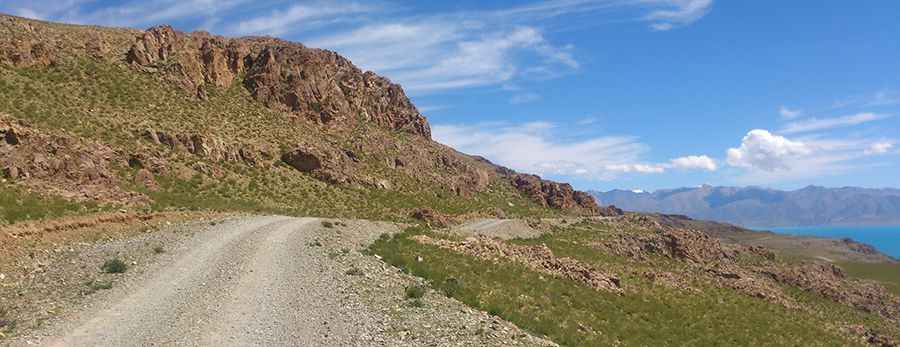
| Road facts: 205 Provincial Road | |
|---|---|
| Location | Northern Tibet Plateau, China |
| Max Elevation | 5,488m (18,005ft) at Drong La |
| Length | 472 km (293 miles) |
| Surface | Unpaved / Severely damaged |
How challenging is the drive on the 205 Provincial Road?
The 472-kilometer journey is a relentless grind across the northern Tibet plateau. This is one of the highest mountain passes of China, and the logistics of the drive are dominated by the altitude. At 5,488 meters, your engine will lose more than 40% of its torque, and the cooling system will struggle in the thin air even if the ambient temperature is low. The road is entirely unpaved, with sections that are "severely damaged" by landslides and constant rain. Expect to drive through mud, deep ruts, and segments where the track is underwater due to rising levels in glacial lakes like Dangqiong Co and Tangra Yumco. Only a 4x4 vehicle in perfect mechanical condition can handle the sustained high-frequency vibrations of this corrugated track.
What are the main hazards on the high Tibet plateau?
The primary hazard is the extreme and volatile weather. Even in mid-summer, temperatures can plummet from 20°C during the day to -10°C at night, creating a high risk of black ice and "hidden snow" on the passes. In July and August, continual heavy rain can turn the unpaved surface into an impassable mud trap, even for heavy-duty 4x4s. Landslides are a physical reality in this region, often blocking the road for days. Furthermore, the wind in the high-altitude stretches of Tibet is exceptionally strong, affecting the stability of high-profile vehicles. The isolation is total; once you leave Sangsangzhen, you are in a high-isolation sector where help is hundreds of kilometers away and cellular network coverage is non-existent.
Is the 205 Provincial Road open year-round?
Technically, the road is not officially gated, but practically it is impassable for much of the year. Due to its extreme altitude, heavy snowfalls can block the passes anytime between September and June. The sections running along the deepest lakes, like Tangra Yumco, are particularly prone to being washed out after storms. Maintenance is minimal on this 472 km stretch, and the logistics of clearing snow at 5,000 meters are non-existent. Always verify the status with local traffic police before attempting a transit, as a sudden blizzard can turn this "en enthralling drive" into a survival situation in minutes.
What mechanical prep is needed for the Drong La crossing?
Before starting the 472 km transit, verify that your 4WD system, transfer case, and low-range gears are 100% functional. The thin air at 5,488 meters requires clean air filters; the Tibetan dust will clog them rapidly, further starving the motor. Check your battery's health, as the extreme temperature drops at night will kill a weak cell instantly. On the steep, unpaved descents from the high passes, stay in a low gear to avoid brake fade; relying on the pads alone on a 210-meter deep lake-side ledge is a major risk. Carry at least 60 liters of extra fuel, 40 liters of water, and a double spare tire setup. Self-sufficiency is mandatory on the 205 Provincial Road, where a simple puncture can escalate into a high-risk emergency due to the lack of oxygen and freezing conditions.
Pic: 陈炜