Get behind the wheels for Dulongjiang Tunnel, the lifeline of the Gaoligong Mountains
The Dulongjiang Tunnel is a high-altitude road tunnel located in Gongshan County, within the Yunnan province of China. Cutting through the Gaoligong Mountain range at over 3,000 meters, this 6,680-meter tunnel provides the only year-round link to the remote Dulongjiang Valley.
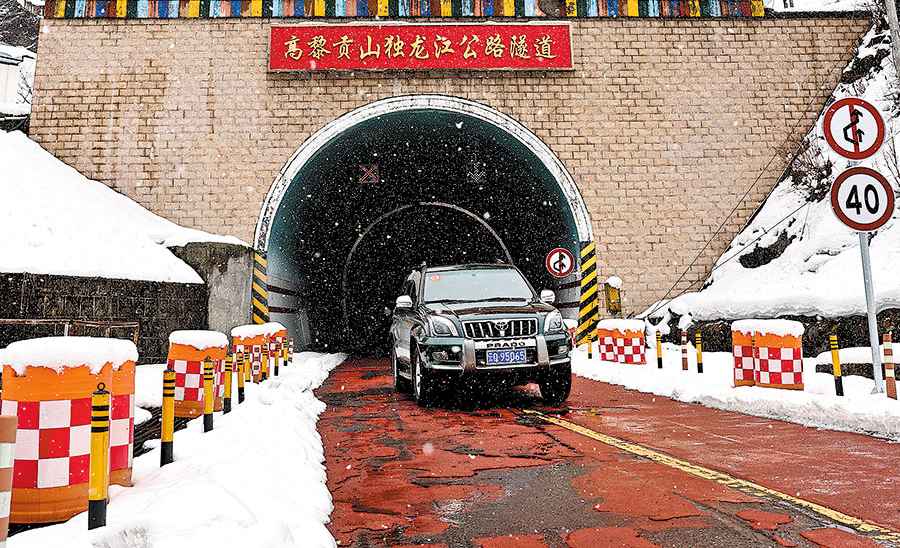
| Road facts: Dulongjiang Tunnel | |
|---|---|
| Location | Gongshan, Yunnan (China) |
| Length | 6,680 m (4.15 miles) |
| Max Elevation | 3,021 m (9,911 ft) |
| Grade | Single-tube, two-lane |
How long is the Dulongjiang Tunnel?
The tunnel is 6,680 meters long, connecting Gongshan County with Dulongjiang Township. Before its completion in December 2014, the mountain pass was blocked by heavy snow from November to May, leaving the valley isolated for six months every year. The tunnel reduced the travel time between the two points from 6-7 hours to approximately 2 hours by bypassing the high-altitude snow line of the Gaoligong ridge.
Why was the Dulongjiang Tunnel built?
Dulongjiang township in Yunnan Province was once one of China's poorest areas. For decades more than 4,000 Dulong people lived in hey huts on mountain slopes. In 1999, the first Dulongjiang highway was constructed over a 3,000-meter snowline on the Gaoligong Mountains, ending Dulongjiang's decades-long isolation. In 2014, the 7-kilometer Gaoligong Mountain tunnel was dug through the mountain to enable year-round traffic.
What is the elevation of the Dulongjiang Tunnel?
The eastern entrance sits at 3,021 meters, while the western entrance is located at 2,841 meters. With a maximum overburden depth of 990 meters, the tunnel was bored through fractured rock and unstable glacial deposits. The high altitude causes a significant drop in engine oxygen intake, and the steep approach roads require constant attention to braking systems during the descent toward the Dulongjiang Gorge at 1,500 meters.
What are the driving conditions in the Dulongjiang Tunnel?
The 7-meter wide tunnel is fully paved but presents several technical hazards. Heavy fog is common at both portals due to the massive temperature difference between the valley and the mountain ridge. During winter, thin ice often forms on the road surface inside the first few hundred meters of the tube. Despite being an all-weather route, 4WD vehicles and snow chains are recommended from December to March to handle the slush and ice on the approach ramps.
Is there a border inspection at Dulongjiang Tunnel?
Yes. Due to its proximity to the international border, there are mandatory checkpoints at the tunnel area. All drivers must present valid ID or passports for inspection. The route is isolated with no fuel stations or repair workshops between the main towns, so carrying extra fuel and basic mechanical tools is necessary. Mobile signals are intermittent and often disappear completely once you enter the deep gorge sectors beyond the western portal.
Road suggested by: Hugh Wilson
Pic: Photo by Wang Jing/China Daily