Duge Bridge: Crossing the Iconic 565m Gorge in Guizhou
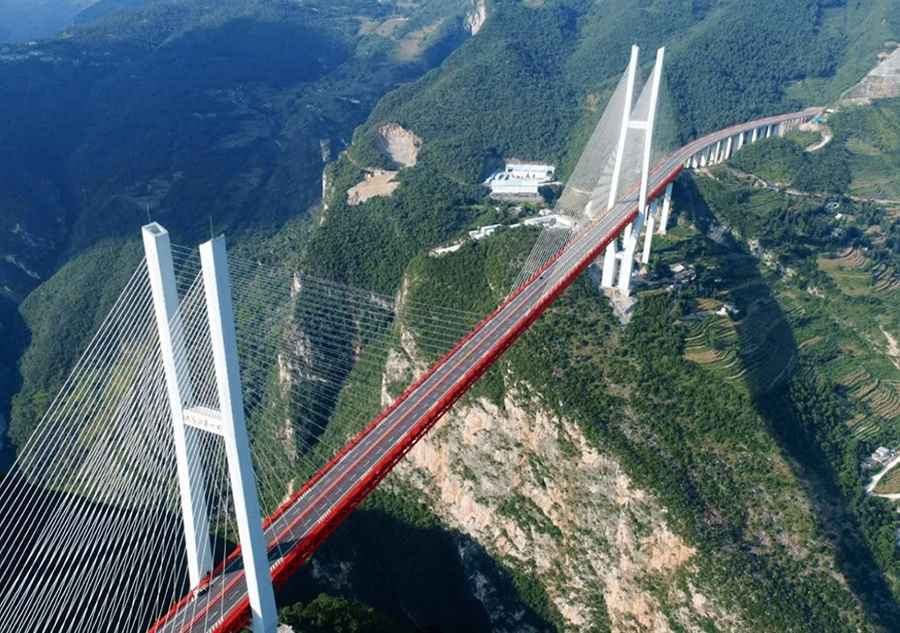
The Duge Bridge (locally known as Beipanjiang Bridge Duge) is a masterpiece of modern engineering on the border between the Yunnan and Guizhou provinces in China. Rising 565 meters (1,854 ft) above the river, it was recognized by Guinness World Records as the World's Highest Bridge from its completion in 2016 until 2025. It’s one of the most spectacular bridges in the world.
The New King: Huajiang Grand Canyon Bridge
In 2025, the Duge Bridge was officially surpassed by the Huajiang Grand Canyon Bridge, located about 200 kilometers downstream on the same Beipan River system. This new giant reaches a staggering height of 625 meters (2,050 ft), making it the first bridge in the world to break the 600-meter barrier. Despite losing its #1 spot, the Duge Bridge remains a legendary destination for travelers and engineers due to its pioneered cable-stayed design and extreme location.
| Fact | Details |
|---|---|
| Height (Deck to River) | 565m (1,854 ft) |
| World Ranking | 2nd Highest (Surpassed in 2025) |
| Total Length | 1,341m (4,400 ft) |
| Main Span | 720m (2,362 ft) |
| Tower Height | 269m (883 ft) |
| Type | Cable-stayed bridge |
| Location | Guizhou / Yunnan Border, China |
Duge Bridge vs. Millau Viaduct: Highest vs. Tallest
In the world of bridge engineering, there is often confusion between "highest" and "tallest."
- The Highest: Duge Bridge is one of the world's highest bridges because of the vertical distance between the road deck and the ground. At 565m, the deck sits high enough that Chicago’s Willis Tower (Sears Tower) would fit under it with 400 feet to spare.
- The Tallest: The Millau Viaduct in France remains the tallest bridge in the world in terms of its structural height. Its tallest mast reaches 343 meters (1,125 ft), which is taller than the Eiffel Tower, though its road deck sits "only" 270 meters above the Tarn River.
Why so High?
The Karst Challenge The bridge's extreme height was a technical necessity rather than a pursuit of records. The surrounding mountains are part of a karst landform made of brittle and loose limestone. Designers had to repeatedly move the bridge's location higher and higher to avoid the numerous caves and cracks in the cliffs, eventually settling on its 565-meter elevation. For its innovative design, the bridge was awarded the Gustav Lindenthal Gold Medal, considered the "Nobel Prize" of bridge engineering.
Driving Facts & Logistics
The bridge is a key section of the G56 Hangzhou–Ruili Expressway, a 2,935 km highway connecting eastern China to the Burmese border.
- Travel Impact: It reduced travel time between Liupanshui (Guizhou) and Xuanwei (Yunnan) from four hours to just over 60 minutes.
- Technical Specs: A cable-stayed bridge with a main span of 720 meters. Its eastern tower stands 269 meters (883 ft) tall.
- Access: While it is illegal to park on the bridge, there are dedicated parking areas at both ends where visitors can walk the pedestrian paths to experience the dizzying overview of the canyon.
How to Visit the Duge Bridge
Because of its remote location, visitors typically fly to Liupanshui Yuezhao Airport or take a train to Liupanshui City before hiring a car to Duge Town. From Duge, local transport can take you to the panoramic viewing deck. Note that some local access roads, such as the terrifying Xiagete Wall Road, are in poor condition and require experienced drivers.
Pic: Savoir Aimer (Admin)