How to drive the 5,561m Jizha La Pass in the Himalayas?
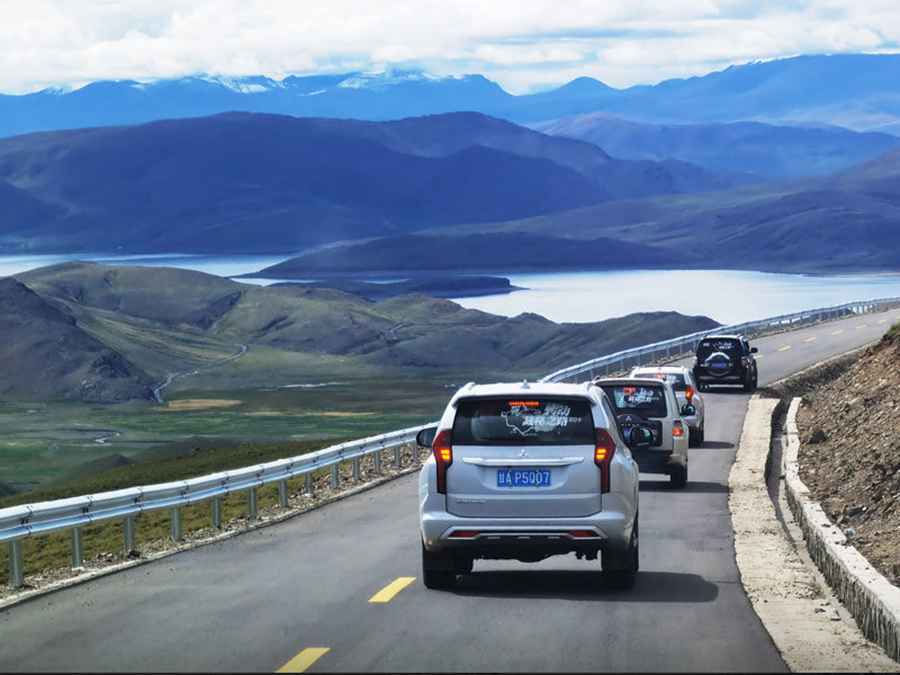
Jizha La is an extreme high-altitude mountain pass at an elevation of 5,561m (18,244ft) above sea level, located in Lhozhag County, Shannan, Tibet. Known as Jí Zhā Lā, it is one of the highest roads of China, representing a logistical frontier where mechanical performance is severely compromised by extreme hypoxia and glacial proximity.
| Road facts: Jizha La Pass | |
|---|---|
| Location | Lhozhag County, Shannan (Tibet) |
| Elevation | 5,561 m (18,244 ft) |
| Length | 85 km (52 miles) |
| Surface | Mixed (Paved / Unpaved at summit) |
| Hazard Level | Extreme (Altitude & Glacial exposure) |
Where is Jizha La Pass?
The pass is located in the southeast of the Tibet Autonomous Region, in the southern part of the Himalayas. Logistically, the route spans 85 km (52 miles), running west-east from Lhozhag to Tsome. This 85 km corridor is a critical high-altitude link that crosses the rugged terrain of the Shannan Prefecture, following a path characterized by extreme verticality and isolation.
Is the road to Jizha La Pass paved?
The road through Jizha La features a mixed surface. While sections are paved, the critical sector near the 5,561m summit is totally unpaved. Technically, the uncompacted roadbed requires a high-clearance vehicle to manage the rocky debris. After precipitation, a 4x4 vehicle is mandatory as the mud and melting snow from the nearby Jizala Glacier can drastically reduce traction on the steep, unprotected ramps.
How challenging is the drive through Jizha La Pass?
Technically, the 85 km drive is a high-risk transit featuring countless hairpin bends and sustained steep gradients. At 18,244ft, the primary challenge is the extreme atmospheric pressure drop, which causes a significant loss of engine power and cooling capacity. Logistically, the road passes in close proximity to the Jizala Glacier, exposing the roadbed to permafrost instability and rockfalls. Safety protocols mandate oxygen monitoring for drivers, as the physiological stress matches the mechanical strain on the vehicle's drivetrain.
Mechanical requirements for the 5,561m Himalayan transit
Driving to Jizha La requires a vehicle with a cooling system capable of operating in low-density air to prevent overheating during the high-torque ascent. Technically, the unpaved summit sector demands precise throttle control to maintain momentum on the steep switchbacks. During the 85 km descent, the use of engine braking is a technical necessity to manage the thermal load on the braking system, as the extreme gradients and rocky surface offer no margin for hydraulic failure in this desolate sector of Tibet.
Road suggested by: Jorge Manuel Gómez Sánchez
Pic&more info: https://m.pcauto.com.cn/x/2218/22188451.html