Driving the S101 through Sangchi Mountain Pass: A 4.061m mission in Qinghai
Sangchi Mountain Pass (Sangchi Shan Yakou) is a high-altitude mountain pass at an elevation of 4,061 meters (13,323 ft) above sea level, located in Jigzhi (Jiuzhi) County within the Golog Tibetan Autonomous Prefecture of Qinghai Province, China. Traversed by the S101 Provincial Road (formerly designated as G345), the route crosses the high-altitude grasslands of the Tibetan Plateau near the Nianbaoyuze mountain range.
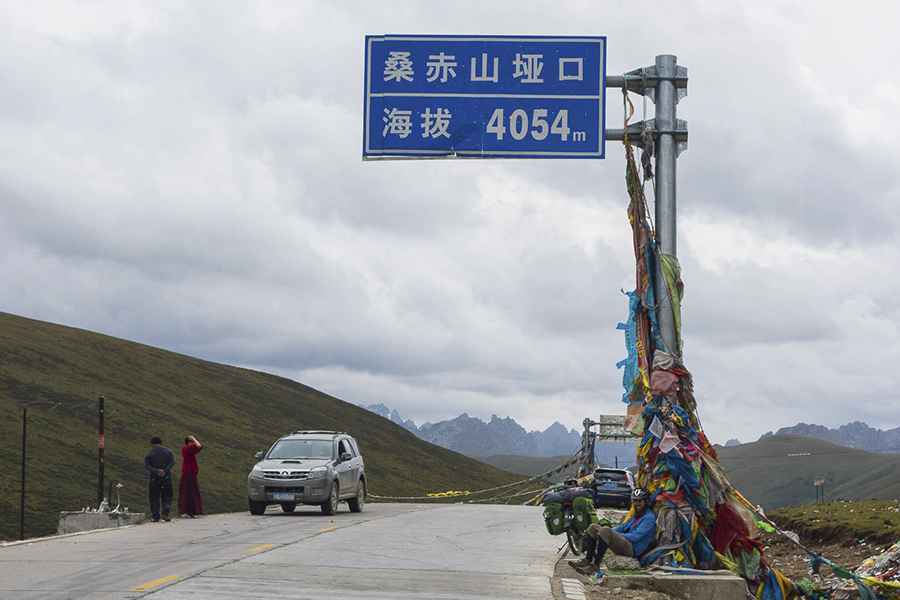
| Road facts: Sangchi Mountain Pass (S101) | |
|---|---|
| Location | Jigzhi, Golog Prefecture, Qinghai (China) |
| Elevation | 4,061 m (13,323 ft) |
| Length | 154 km (96 miles) |
| Road Number | S101 (formerly G345) |
| Surface | Paved asphalt (Subject to permafrost damage) |
Where is the S101 through Sangchi Mountain Pass located?
The road runs through the remote southeastern corner of Qinghai Province near the border with Sichuan. The 154-kilometer sector connects Chugqênsumdo and Duoya, running past the peaks of the Nianbaoyuze range on the Golog grassland.
What are the driving conditions on the S101 in Jigzhi County?
The 154-kilometer route is paved, but continuous freeze-thaw cycles in the permafrost layer cause buckling, cracking, and severe dips in the asphalt surface. Sustained elevations over 4,000 meters cause a significant reduction in engine horsepower for naturally aspirated vehicles, requiring lower gears on long climbs.
What hazards exist on the Sangchi Mountain Pass route?
The single-lane and narrow two-lane sectors lack guardrails along open embankment drops. Heavy crosswinds sweep across the plateau, while shaded mountain bends retain black ice. Sudden snowstorms can cover the paved surface year-round, and the route's isolation means mechanical support is non-existent across long stretches of the pass.
How long does it take to drive the S101 crossing?
Traversing the 154-kilometer route across the 4,061-meter summit typically takes between 5 and 6 hours under clear conditions, as frost heaves, narrow curves, and slow-moving heavy trucks prevent high speeds.
Road suggested by: Hugh Wilson
Pic&more info: https://www.twistingspokes.com/cycling-up-and-over-4000m-passes-in-gansu-qinghai-and-sichuan/