How to handle the military driving at New Changlung La?
The New Changlung La is a brutal high-altitude track located in Xinjiang, near the border with India. Reaching 5,590 meters (18,339ft) is a serious challenge that pushes both the driver and the vehicle to their absolute limits. At this height, the air is so thin that your engine loses most of its power and your own reaction time slows down. This isn't a road for a standard car; you need a prepared 4x4 and a clear head to handle the lack of oxygen and the steep military terrain. It’s one of the highest roads of the country.
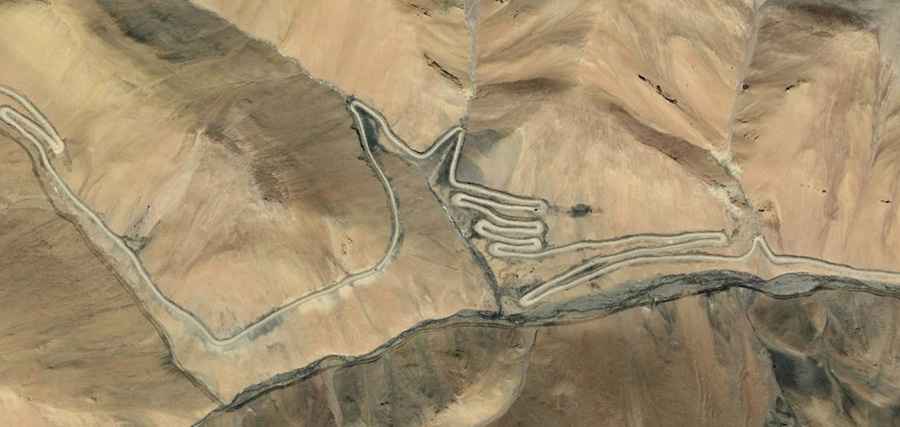
| Road facts: New Changlung La | |
|---|---|
| Location | Xinjiang, China (Aksai Chin sector) |
| Elevation | 5,590m (18,339ft) |
| Distance | 23.3 km (from Kota Jilga Post) |
| Average Gradient | 2.21% (with steep ramps on turns) |
| Vehicle Requirement | 4x4 with low-range and turbo engine |
How to drive the 11 tight hairpins of New Changlung La?
The climb to New Changlung La starts at the Kota Jilga military post and covers about 23 kilometers of rough track. This is a military road built for heavy army trucks, so it’s wide but very raw. Even though the average grade is just 2.21%, the real struggle is the 11 sharp hairpin turns. These switchbacks are made of loose rock and dust that offer very little grip. You’ll need a proper 4x4 with low-range gearing to keep the tires from spinning. There are no guardrails here, so you have to be precise with your steering; one mistake and you're going over the edge.
What happens to your engine at 5,590 meters high?
This is where things get technical: the air is so thin that your engine can't "breathe." If you don't have a turbo, the car will feel sluggish and might even stall when trying to start on a slope. Even in the freezing cold, engines can overheat because the thin air doesn't cool the radiator efficiently. You must check your brakes before the descent. Because of the altitude and the weight of the vehicle, brakes take a beating. Use engine braking in a low gear to hold the car back so you don't cook the brake pads on the way down.
Survival logistics on a military road in Xinjiang
Driving here is no joke. There are no gas stations, no mechanics, and zero cell service. If you break down, you’re on your own until a military convoy passes by. The weather can flip in seconds—you can go from sunshine to a blizzard in the middle of summer. You should always carry spare fuel, water, and thermal blankets. But the biggest danger is altitude sickness. If you start feeling a pounding headache or dizziness, the rule is simple: get to a lower altitude immediately. Driving while dizzy on these tracks is a death sentence.
Road suggested by: Hugh Wilson