Is the cobblestone road to Fengxue Pass in Yunnan difficult to drive?
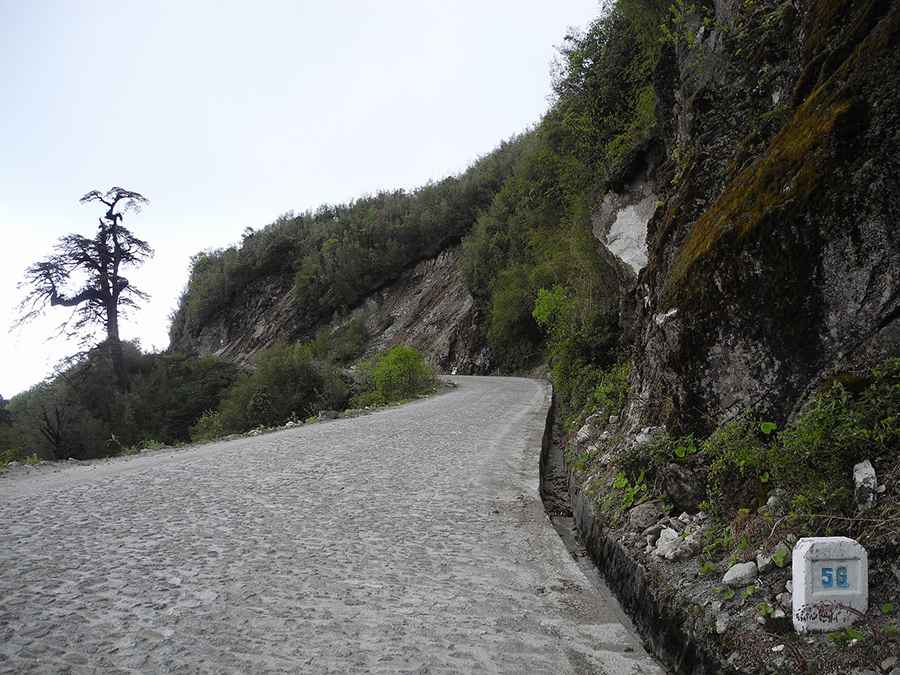
Fengxue Pass, also known as Fengxue Yakou, is a high mountain pass at an elevation of 3,157m (10,357ft) above sea level, located in Lushui County, Yunnan Province, China. Located in the rugged Gaoligong mountain range near the Myanmar border, the pass is crossed by the S327 road, a route notorious for its old cobblestone pavement.
| Road facts: Fengxue Pass (S327) | |
|---|---|
| Location | Lushui, Yunnan, China (near Myanmar border) |
| Elevation | 3,157 m (10,357 ft) |
| Length | 81.1 km (50.4 miles) |
| Surface | Cobblestone and broken pavement |
What is the road surface like on the S327 toward Fengxue Pass?
The road through the pass is called S327. It's known for its rough cobblestone surface, built decades ago. The stones create a relentless vibration that loosens vehicle trim and stresses the suspension components over the entire 81.1 km drive. In the high-altitude forest sections, the stone blocks are constantly damp due to heavy mist and rain, causing tires to spin and slip. Moss grows in the gaps between the cobblestones, making braking unpredictable, especially on the narrow downhill segments where the road lacks outer steel barriers.
How many turns are on the road to Fengxue Pass?
The route between Pianmazhen and Luzhangzhen counts over 300 sharp curves and hairpins. Driving the full 81.1 km mountain section requires between 3.5 and 5 hours of continuous wheel work. The steering pump and brakes face heavy thermal load due to the constant back-and-forth maneuvering at low speeds. Most hairpins are blind, cut directly into the vertical dirt banks on one side and bordered by deep earthen drop-offs on the other, leaving no runoff space if a car understeers on the slick stones.
Why is Fengxue Pass strategically important?
Running right along the border with Myanmar, this mountain route is a major line for border patrol and local timber transport. Because of this, drivers regularly share the single-lane cobblestone track with heavy multi-axle military trucks and commercial logging vehicles. Meeting these trucks on the narrowest corners forces smaller cars to pull onto the unpaved mud shoulders, which are often soft and prone to collapsing after heavy rainfall.
Is the drive to Fengxue Pass open in winter?
The pass stays open most of the year, but ice from December to March makes the stone surface extremely slick. Freezing mist settles in the gaps between the cobblestones, forming a transparent layer of black ice that cannot be sanded down effectively. Due to the high altitude of 3,157 meters, heavy snowfalls can temporarily block the summit, requiring snow chains and high-clearance four-wheel-drive vehicles to maintain traction on the steep, vibrating climbs.
Road suggested by: Hugh Wilson
Pic: 程亮