Wugeshan Pass: The unnumbered 4x4 mud track in the Qilian Mountains
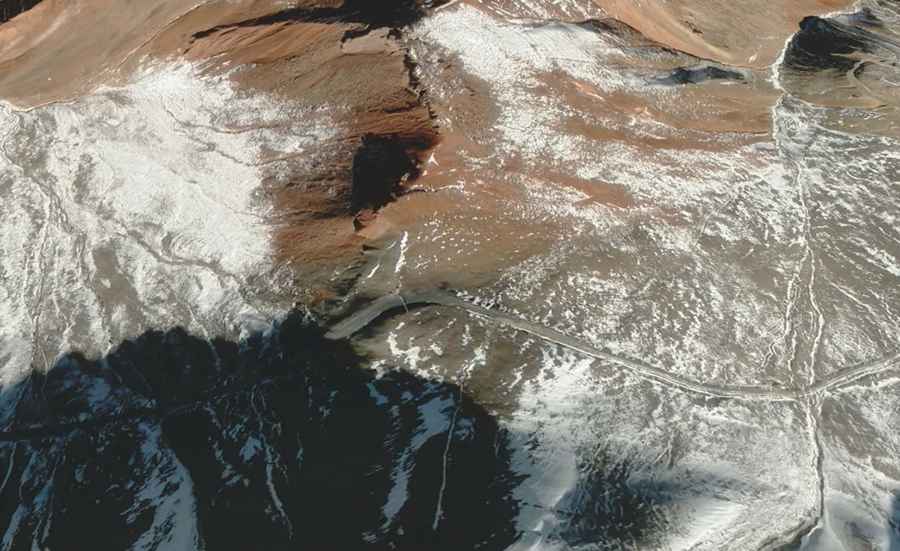
Wugeshan Pass is a high-altitude mountain crossing at an elevation of 4,351 meters (14,274 ft) above sea level, located on the boundary of Tianjun and Qilian counties in the Qinghai Province of China. Positioned within the rugged Qilian Mountains, the pass is crossed by a primitive, unnumbered mountain track.
| Road facts: Wugeshan Pass | |
|---|---|
| Location | Tianjun and Qilian counties, Qinghai (China) |
| Elevation | 4,351 m (14,274 ft) |
| Length | 43.2 km (26.8 miles) |
| Max Gradient | 10.0% |
| Surface | Unpaved (Gravel, dirt, and deep mud) |
Where does the unnumbered road through Wugeshan Pass run?
The unpaved mountain road is 43.2 kilometers (26.8 miles) long, running north-south to connect the remote localities of Yanglongxiang and Suli. The single-lane track climbs directly across the barren upper alpine ridges of the Qilian range, reaching its highest point at the 4,351-meter summit crest. The entire 43.2-kilometer route consists of an unnumbered earth path completely devoid of human settlements, fuel stations, or roadside facilities.
What are the driving hazards on the Wugeshan Pass track?
The road is entirely unmaintained, featuring a rough trackbed made of loose rocks, sharp shale fragments, and deep dirt ruts. The single lane climbs via sustained ramps hitting maximum gradients of 10%, where the 4,351-meter altitude cuts engine torque output. The path completely lacks lateral guardrails or safety barriers. Due to the deep ruts and soft ground that reduce tire grip, a high-clearance 4x4 vehicle with a low-range transfer case is required to clear the terrain without striking the underbody components.
Is the Wugeshan Pass road open in winter?
Due to its high altitude in a severe climate zone, the pass is completely blocked by heavy snowdrifts and solid ice sheets from October until late June, remaining entirely impassable. The route receives no winter clearing services. During the short summer window, rapid snowmelt and heavy rains turn the clay sections into deep, slick mud traps and trigger sudden flash mudslides that wash away sections of the narrow road shoulders along the cliffs.
Road suggested by: Hugh Wilson