Can i drive to the summit of Kigunaru Pass in Tibet?
Kigunaru Pass is a high mountain pass at an elevation of 5,883m (19,301ft) above sea level, located in the Tibet Autonomous Region, China. Built over a former dirt track, it features high-altitude asphalt varying in width (one or two lanes depending on the section). It's one of the highest roads in the world.
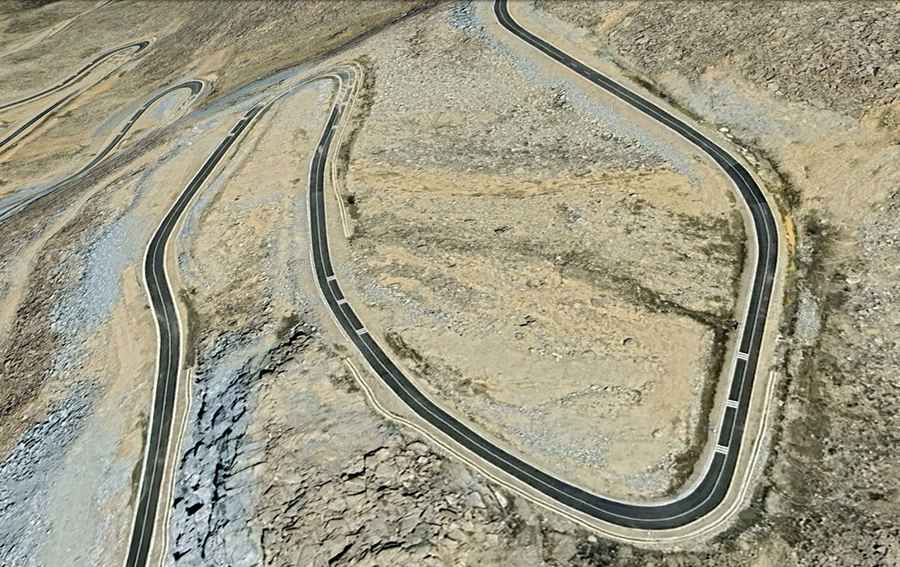
| Road facts: Kigunaru Pass (Yeban Xian) | |
|---|---|
| Location | Rutog County, Ngari Prefecture, Tibet (China) |
| Elevation | 5,883 m (19,301 ft) |
| Length | 116 km (72.08 miles) from Chulung Ogma to Zomolung |
| Elevation Gain | +1,699 m / -1,682 m |
| Hairpin Turns | 71 switchbacks |
| Surface | Fully paved asphalt (1 to 2 lanes) |
| Access | Restricted / Military zone (Closed to foreign travelers) |
Where is Kigunaru Pass?
The pass, also known as Yeban Xian, is located in Rutog County, Ngari Prefecture, in the western part of Tibet.
Is the road to Kigunaru Pass paved?
The road was a primitive unpaved track for decades, but in the 2020s, it was fully paved. However, it is not an easy drive, with very steep sections and 71 hairpin turns, most of them located near the summit.
Why is there a road to Kigunaru Pass?
China paved the route with high-quality asphalt strictly for military and territorial control. Designed to move heavy convoys, supply trucks, and troops between valleys as quickly as possible during border conflicts, it serves no tourism purpose. Foreigners attempting to approach the area will be stopped immediately by the Chinese military.
How long is the road to Kigunaru Pass?
The road through the pass is 116 km long, running north-south from Chulung Ogma to Zomolung. Over this distance, the elevation change is +1,699 m / -1,682 m.
How remote is the road to Kigunaru Pass?
The route lacks any roadside services, fuel stops, or emergency aid for hundreds of kilometers.
Is the road to Kigunaru Pass open year-round?
Set high in the Transhimalaya-Gangdise Range, heavy snow and permafrost block the pass for most of the year at this elevation, leaving the route impassable from late October through late June or early July. Sudden summer weather shifts can bring unannounced blizzards or rockfalls across the road. It's one of the highest roads in the country.
Road suggested by: Hugh Wilson