Driving the remote Xila Daban: A 5.292m military track in Ngari
Xila Daban is a high mountain pass at an elevation of 5,292 meters (17,362 ft) above sea level, located in the extreme west of the Tibet Autonomous Region, near the border with India. The road over the summit is a rough, unpaved track known as the Chepzi Highway.
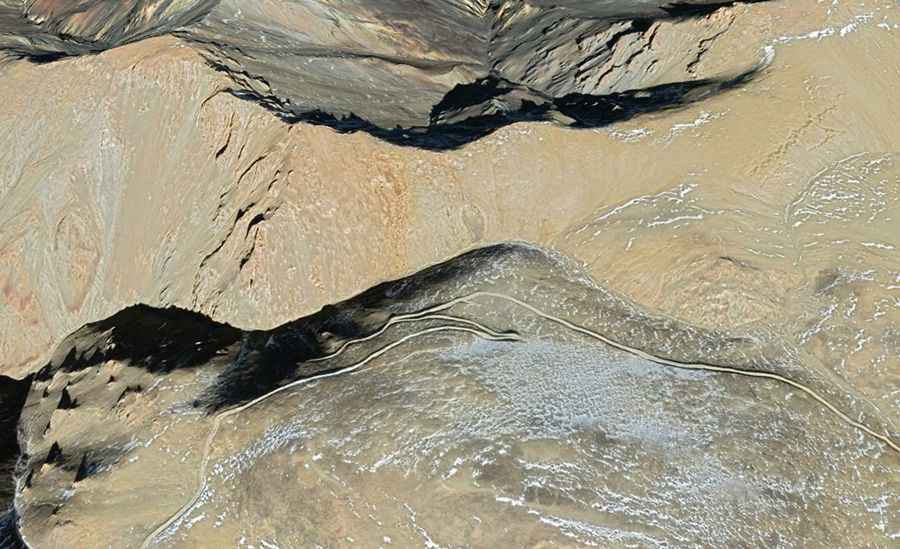
| Road facts: Xila Daban | |
|---|---|
| Location | Zanda County, Ngari Prefecture, Tibet |
| Elevation | 5,292 m (17,362 ft) |
| Length | 109.2 km (67.8 miles) |
| Elevation Gain/Loss | +2,546 m / -2,868 m |
| Surface | Unpaved (Glacial dust and loose stones) |
Where is Xila Daban?
The pass is located in Zanda County, within the Ngari Prefecture. The road is heavily used by military trucks, serving as a route to remote border patrol facilities like Qipu Jilie.
Is the road to Xila Daban unpaved?
The road to the summit is completely unpaved, consisting of fine glacial dust and loose stones. It is called the Chepzi Highway. The route is extremely difficult, climbing through hundreds of sharp hairpin turns. A 4x4 vehicle is required due to the steep gradients and the total lack of roadside infrastructure.
How long is the road to Xila Daban?
The road through the pass is 109.2 kilometers long, running south to north from Chepzi toward the Indian border. Along the way, the total elevation profile features a climb of +2,546 meters and a descent of -2,868 meters.
How remote is the road to Xila Daban?
The road to Xila Daban is one of the most isolated tracks in the Ngari Prefecture. The primary hazard is the absolute lack of assistance; along this 100-kilometer stretch of dirt, there is no electricity, medical aid, or civilian infrastructure.
Is the road to Xila Daban open in winter?
While technically open year-round, heavy snow frequently makes the track impassable during the winter months, as the entire route runs above 4,000 meters sea level. Sudden weather shifts are common, with blizzards possible even in summer, turning the dirt track into thick mud. The road also crosses other mountain passes along the way, including Qutong La (Chutong La) at an elevation of 4,396 meters (14,422 ft) above sea level.
Road suggested by: Hugh Wilson