Yingkuoshan Pass: Driving the scenic G214 high-altitude route in Qinghai
Located in the Chindu County of Qinghai Province, the Yingkuoshan Pass (also known as Jarong La) is a high mountain pass reaching an elevation of 4,465m (14,648ft) above sea level. Situated on the vast Tibetan Plateau between the cities of Yushu and Xining, this pass is a legendary segment of the historic G214 National Highway.
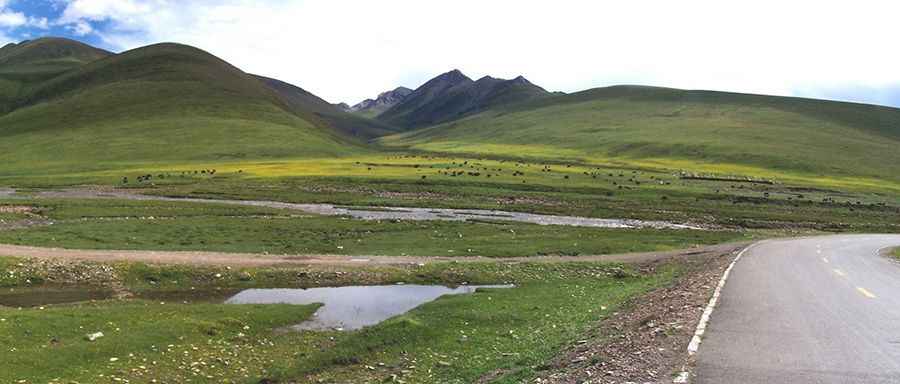
For decades, Yingkuoshan was a major bottleneck for logistics between Qinghai and Tibet. Today, while most transit traffic uses the modern G0613 toll road and its bypass tunnel, the old mountain pass remains fully operational. It serves as a spectacular free alternative for those who prefer unparalleled mountain views and fresh air over the darkness of a tunnel. However, driving at nearly 4,500 meters requires a well-maintained vehicle and a driver ready for the challenges of high-altitude weather.
| Road facts: Yingkuoshan Pass (Jarong La) | |
|---|---|
| Location | Chindu County, Qinghai, China |
| Elevation | 4,465 m (14,648 ft) |
| Length | 44 km (27.3 miles) |
| Average Gradient | Max 7% |
| Surface | Fully Paved (G214) |
How long is the drive through Yingkuoshan Pass?
The road through the pass spans 44 km (27.3 miles), running in a south-north direction from Nilunlong to Zhenqinzhen. Unlike many other Tibetan passes, the G214 route here is totally paved, making it accessible to standard vehicles. However, do not underestimate the climb; the road is very steep in sections, hitting maximum gradients of 7% through several ramps. These inclines, combined with the lack of oxygen at 4,400 meters, will force most vehicles to drop gears to maintain a steady pace.
The drive is famous for its "jaw-dropping views" of the Qinghai highlands. As you navigate the winding curves, you are likely to encounter herds of yaks and vast, open landscapes that the new toll highway completely bypasses. It is the ultimate road trip for those seeking freedom and a slower pace through one of China’s most beautiful provinces.
Winter hazards and safety on the G214
While the pavement is in good condition, the Yingkuoshan Pass is subject to extreme winter weather. Snowfall is common from late autumn to late spring, and because the road is no longer the primary transit route, snow clearance may not be as frequent as on the G0613. When the road is covered in snow or black ice, the 7% ramps become dangerously slippery, requiring snow chains or winter tires.
For a safe journey, it is ideal to plan your crossing during daylight hours. Night driving at this altitude is discouraged due to the extreme drop in temperature and the risk of encountering livestock on the road. Ensure your braking system is in top shape for the long descent towards Zhenqinzhen, and always carry extra warm clothing and supplies in case of a sudden weather-related delay. The Yingkuoshan Pass is a reminder of the golden age of Himalayan road trips, offering a scenic reward to those who avoid the tunnel.
Road suggested by: Hugh Wilson
Pic: Too simple, Sometimes naive