Driving the G227 through Eboling Pass: The 22% wall of the Qilian Mountains
Eboling Pass (also known as Biandukou or Oboling) is a high mountain pass reaching an elevation of 3,700 meters (12,139 ft) above sea level on the border between Qinghai and Gansu provinces in China. Traversed by the paved G227 Ningzhang Highway, the route crosses the Qilian Mountains between Haibei Tibetan Autonomous Prefecture and Zhangye.
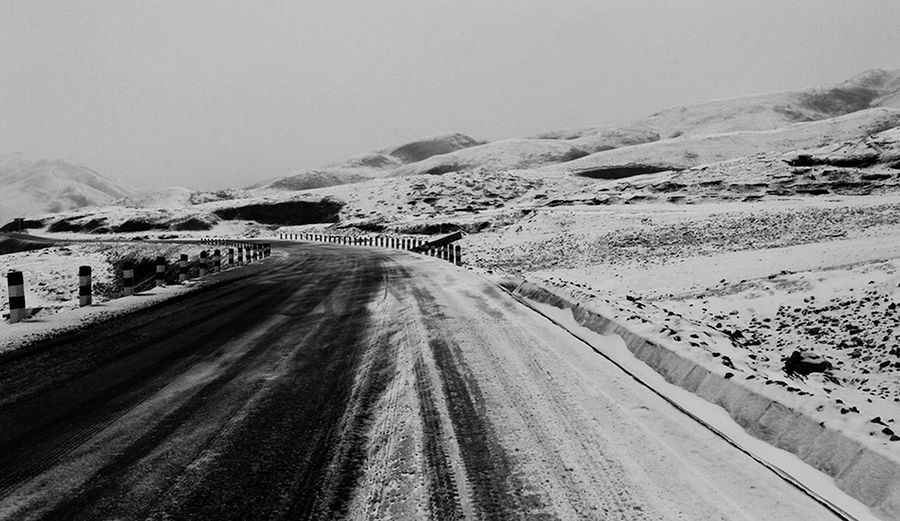
| Road facts: Eboling Pass (G227) | |
|---|---|
| Location | Qinghai / Gansu border (China) |
| Elevation | 3,700 m (12,139 ft) |
| Length | 45.0 km (27.9 miles) between Ebo and Nanfeng |
| Maximum Gradient | 22% |
| Surface | Fully paved asphalt |
| Key Hazards | 22% max incline ramps, severe black ice, winter snow closures |
Where is Eboling Pass located?
The pass is situated on the provincial boundary between Qinghai and Gansu in northwestern China. The 45-kilometer section of the G227 Highway connects Ebo (Qinghai) with Nanfeng (Gansu), climbing through the central Qilian Mountain range.
Is the G227 over Eboling Pass paved?
Yes. The entire 45-kilometer route is fully paved with asphalt. Despite the paved surface, high-altitude freeze-thaw cycles create sudden asphalt buckling, frost heaves, and surface cracking along the pass sector.
How steep is the road over Eboling Pass?
The pass features steep climb geometry, with maximum gradients reaching 22% along the upper ramps. Navigating 22% inclines at 3,700 meters causes heavy thermal load on cooling systems and significant torque loss in internal combustion engines due to reduced atmospheric oxygen.
What hazards exist during winter on Eboling Pass?
The primary physical hazards are black ice accumulation on the dark asphalt and high-altitude snowstorms that force road closures between late autumn and spring. Nighttime freezing turns snowmelt runoff into ice sheets across the 22% gradient turns without outer safety buffers.
Road suggested by: Hugh Wilson
Pic: John Lee李駿