How difficult is the 38% gradient road to Qiuchi Mountain in China?
Qiuchi Mountain is a high mountain peak at an elevation of 1,759 meters (5,770 ft) above sea level, located in Xihe County, within the Longnan prefecture of Gansu Province, in China. The mountain is accessed via a very steep track with a series of tight hairpin turns cut directly into the vertical cliff faces.
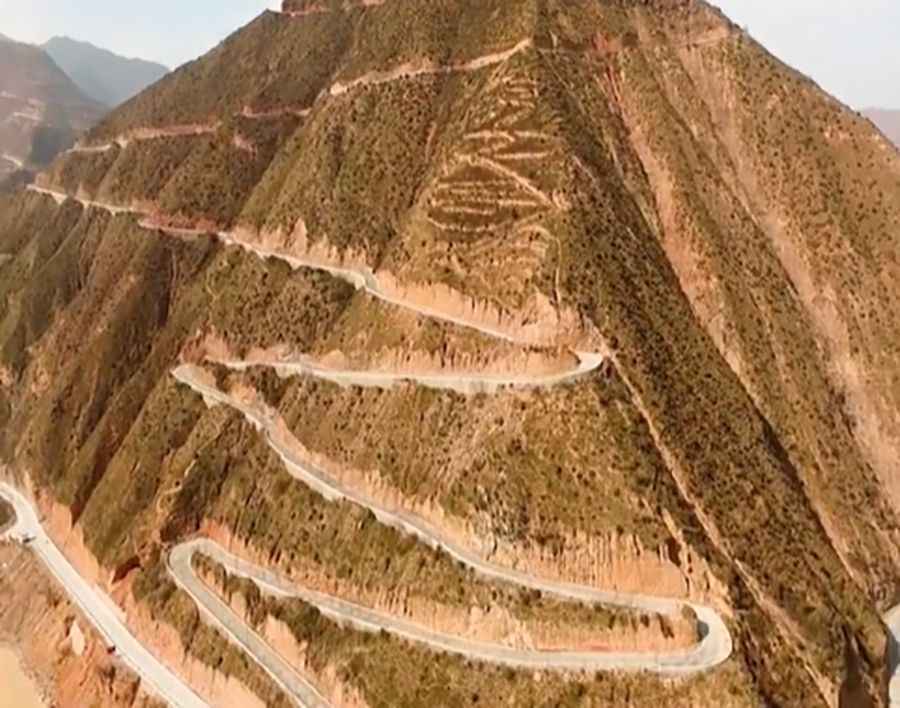
| Road facts: Qiuchi Mountain | |
|---|---|
| Location | Xihe County, Longnan, Gansu (China) |
| Elevation | 1,759 m (5,770 ft) |
| Length | 12.3 km (7.64 miles) from S223 |
| Max Gradient | 38% |
| Surface | Unpaved (Dirt, gravel, and rough concrete patches) |
Where does the road to Qiuchi Mountain start?
The mountain ascent branches off the paved S223 regional highway in Xihe County. The unpaved lane runs for 12.3 kilometers (7.64 miles) to reach the upper peak structures. The route is configured as a single-lane mountain path that climbs the limestone walls of the Longnan prefecture through dozens of closely stacked switchbacks, with no lateral safety barriers or guardrails along the edge of the drops.
How steep are the ramps of Qiuchi Mountain?
The primary driving hazard of the 12.3-kilometer ascent is the extreme slope, which reaches maximum gradients of 38% on the steepest internal ramps. The trackbed consists of raw dirt, loose gravel, and intermittent rough concrete sections poured to help tires bite. Due to the extreme verticality, vehicles require low-range four-wheel-drive systems and high-grip tires to climb without losing traction or rolling backward on the loose debris.
Is the Qiuchi Mountain road open in winter?
Due to the 38% gradients, the road is impassable during wet weather or winter freeze cycles. Heavy rain transforms the unpaved clay dirt sections into slick mud slides, while winter snow and ice completely close the track to all vehicular traffic. The single-lane width offers very limited passing points, forcing complex reversing maneuvers along the edge of the mountain flanks if two vehicles meet on the switchbacks.
Road suggested by: Hugh Wilson
Pic: https://www.douyin.com/video/6804996703905697038