Jangkhu La: Driving one of the highest paved passes on the G317 Road
Jangkhu La is a high-altitude mountain pass at an elevation of 4,935m (16,190ft) above sea level, located in the Seni District of Nagqu, within the Tibet Autonomous Region of China. As part of the legendary G317 (Northern Sichuan-Tibet Highway), this pass is a critical link for those driving across the vast and remote Tibetan Plateau.
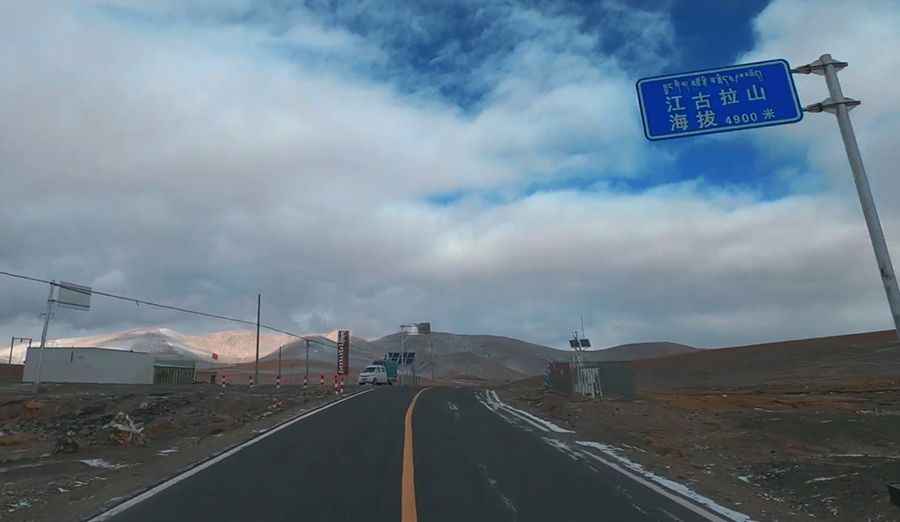
The journey across Jangkhu La is a testament to modern engineering in extreme environments. While the route is now mostly paved with high-quality asphalt, the sheer elevation makes it a formidable challenge for both vehicles and drivers. At nearly 5,000 meters, engine performance drops significantly, and altitude sickness is a constant risk for those not properly acclimatized to the thin air of the G317 Road.
| Road facts: Jangkhu La | |
|---|---|
| Elevation | 4,935m (16,190ft) |
| Location | Nagqu, Tibet (China) |
| Length | 37.4 km (23.2 miles) |
| Max Gradient | 6% |
| Surface | Paved (Asphalt) |
How challenging is the drive to Jangkhu La in Tibet?
The drive through Jangkhu La spans 37.4 km (23.2 miles), running west-east between the settlements of Kormang and Daqên. Under normal conditions, it takes about 45 minutes to complete this section of the G317 Road. Although the highway is relatively wide and features a manageable maximum gradient of 6%, the constant high altitude means that even minor mechanical issues can become emergencies in such a remote area.
Is the Jangkhu La pass open in winter?
The pass is theoretically open to traffic throughout the year, as it is a vital artery for the Nagqu region. However, due to its extreme elevation, it is frequently subject to heavy snowfall and black ice. During severe winter storms, Chinese authorities may close the road for short periods until snow-clearing equipment can clear the way. Drivers attempting the pass between October and May should carry emergency supplies and be prepared for sub-zero temperatures.
What are the main hazards on the Jangkhu La section of the G317 Road?
While the smooth asphalt has reduced the risk of getting stuck in mud, new hazards have emerged. The primary danger at Jangkhu La is the lack of oxygen, which can lead to fatigue and impaired judgment. Additionally, the route is shared with large transport trucks and nomadic herds, requiring constant vigilance. The weather can change in minutes, turning a sunny drive into a blinding blizzard, even in the shoulder seasons.
Why is Jangkhu La a drive worth taking?
Reaching the summit of Jangkhu La offers a profound sense of isolation and grandeur. The pass provides sweeping views of the barren, wind-swept landscape of northern Tibet, where the earth seems to touch the sky. It is a key milestone for anyone driving the full length of the G317 Road, capturing the raw beauty and the immense scale of the "Roof of the World."
Road suggested by: Hugh Wilson
Pic: Walk China