What are the driving conditions on the Provincial Road 303 (S303) in Tibet?
Provincial Road 303 (S303) is a high-mountain highway located in the eastern Tibet Autonomous Region of China. Spanning 709 km (440 miles), this grueling route connects the G214 Road in Suonacun (Baxoi County, Chamdo) with the China National Highway 317 near Bulong Town, running entirely above an elevation of 4,200 meters.
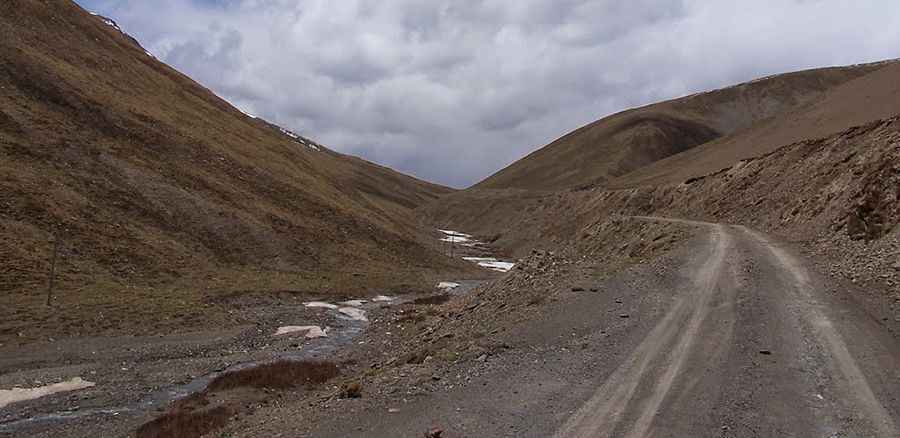
| Road facts: Provincial Road 303 (S303) | |
|---|---|
| Location | Eastern Tibet, China |
| Length | 709 km (440 miles) |
| Maximum Elevation | 5,086 m (16,686 ft) |
| Surface | Asphalt and unpaved gravel/mud sectors |
| Driving Time | 20+ hours |
Which mountain passes do you cross on the S303?
The S303 is a relentless chain of high-altitude climbs. The road tops out at 5,086 meters (16,686 ft) above sea level at the Zha La pass, where naturally aspirated engines lose up to 40% of their power due to the thin air. The route forces you over eight other major summits:
- Gade La: 5,016 m (16,456 ft)
- Quzhong La: 4,885 m (16,026 ft)
- Mob La: 4,802 m (15,754 ft)
- Red Mud Pass: 4,732 m (15,524 ft)
- Puti La: 4,483 m (14,708 ft)
- Tekhar La: 4,476 m (14,685 ft)
- Ode La: 4,468 m (14,658 ft)
- Tienpo La: 4,324 m (14,186 ft)
Each summit involves steep ramps and tight hairpins where the track turns into loose gravel and slick mud.
Is the S303 road paved or unpaved?
The highway is a broken mix of pavement and dirt. Severe frost heaving and deep cracks tear up the asphalted sections, leaving the road in poor condition for much of its length. Drivers face several unlit tunnels with dripping water and rough, muddy floors. These galleries are narrow and packed with heavy transport trucks. Due to deep ruts and endless switchbacks, a high-clearance 4x4 vehicle is necessary to complete the drive, which takes at least 20 hours under clear conditions.
What happens if it rains or snows on the S303?
Heavy rains routinely flood the lanes and trigger massive landslides that block the road with rock debris. Avalanches and heavy snowstorms hit these altitudes regularly, closing the passes without warning. Sheets of black ice cover the shaded northern slopes of the mountains. Landslides frequently strip the asphalt away completely, leaving raw dirt gaps that require tough off-road tires. If your vehicle breaks down up here, you are entirely on your own for long stretches.
Will the high altitude affect your body and vehicle on the S303?
Driving for 20 hours above 4,200 meters triggers acute altitude sickness, as you are operating far above the safety threshold. Mechanically, your cooling system must be flawless; the combination of steep inclines and low air density causes radiators to boil rapidly. Dropping down from passes like Gade La or Quzhong La requires holding the vehicle back with engine braking, or you will overheat your brake fluid on the long descents toward the river beds.
Road suggested by: Hugh Wilson
Pic: jlguo