Driving the unpaved road to Beru La Pass in Tibet
Beru La is a high-altitude mountain pass at an elevation of 4,780 meters (15,682 ft) above sea level, located in Sog County within the Nagqu Prefecture of the Tibet Autonomous Region, China. Branching off from the National Highway 317 (G317), the road to the summit is a raw, unpaved track that serves as a technical link toward the village of Kezadacun. Driving here involves navigating a high-load environment where the notorious lack of oxygen at nearly 4,800 meters tests the mechanical limits of your vehicle's aspiration and cooling systems.
| Road facts: Beru La Pass | |
|---|---|
| Location | Sog County, Nagqu, Tibet |
| Elevation | 4,780m (15,682ft) |
| Length | 17.9 km (11.12 miles) |
| Route | G317 to Kezadacun |
How challenging is the drive to Beru La?
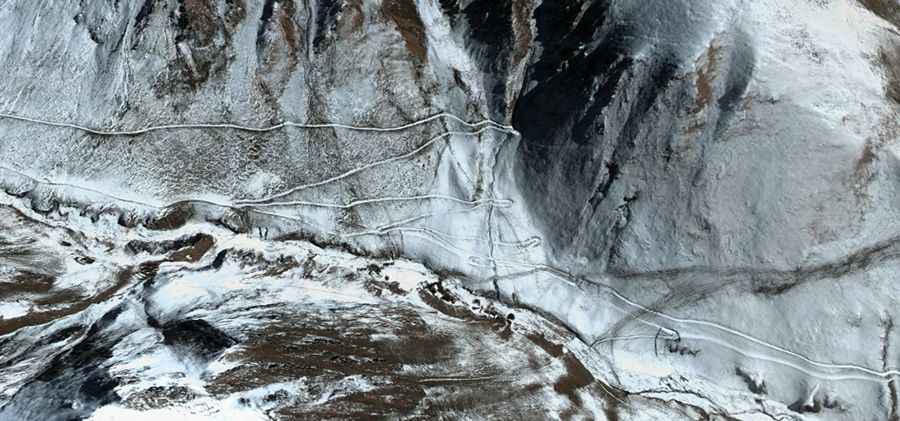
The 17.9-kilometer journey is a concentrated mountain climb that demands a high-clearance 4x4 vehicle. The road is entirely unpaved, featuring a surface of loose shale and hard-packed dirt that becomes increasingly unpredictable as you gain altitude. The physical reality of the climb is defined by six challenging hairpin turns; these switchbacks are narrow and steep, requiring precise gear selection to maintain torque in the thin Tibetan air. At 4,780 meters, your engine will lose approximately 30-35% of its efficiency, making the steep ramps feel much more aggressive than their actual gradient suggests. Maintaining momentum without spinning out on the loose gravel is the primary technical goal.
What are the main hazards on the Sog County mountain track?
The primary hazard on the road to Beru La is the extreme altitude combined with the total lack of safety infrastructure. Located near the Baqên County border, the track has zero safety barriers to protect against dangerous drops. The weather in Nagqu is notoriously volatile; sudden snow squalls can turn the unpaved track into a slippery mud slide even in the middle of summer. "Hidden ice" is a frequent reality in the shaded sections of the six hairpins, making traction a gamble. Furthermore, the isolation is high; once you leave the G317, passing traffic is minimal, and the logistics of a recovery operation at this altitude are non-existent.
Is the road to Beru La open during the winter?
Technically, the road remains an open link for local transit, but practically it is impassable for much of the winter. Due to its summit elevation of 4,780 meters, heavy snow accumulation frequently blocks the higher ramps. There is no official snow-clearing service for this secondary track, meaning that only heavy machinery or local furgonetas with chains might attempt the crossing. Driving here in low visibility or during a snowstorm is extremely dangerous, as the narrow trail and the steep hairpins provide zero margin for error when the ground is frozen.
What mechanical prep is needed for the 4,780m Beru La climb?
Before leaving the National Highway 317 (G317), verify that your cooling system and air intake are in perfect order. Climbing to 4,780 meters at slow speeds puts an immense load on the radiator while the thin air reduces its cooling capacity. Check your tire sidewalls for any cuts; the sharp Tibetan rocks are notorious for shredding standard tires. On the descent toward Kezadacun, stay in a low gear to avoid brake fade; relying on the pads alone to manage the weight of a 4x4 on these steep switchbacks is a major risk. Carry at least 20 liters of extra fuel, 15 liters of water, and ensure your battery is strong enough to handle a cold start at high altitude.
Road suggested by: Hugh Wilson