Driving the hand-carved Xiya Valley Hanging Tunnel
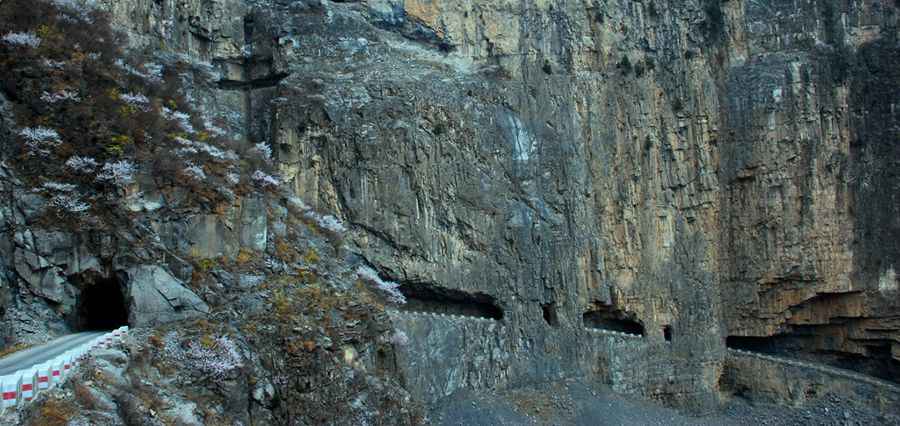
The Xiya Valley Hanging Tunnel, also known as Xiyagou Guabian Road, is a legendary feat of manual labor hidden deep within the Taihang Mountains of China's Shanxi Province. This is not a standard highway; it is a raw, hand-carved spiral through vertical cliffs that was hammered out over three decades. The road was the only lifeline for Xiyagou village, and today it remains one of the most technical and visually overwhelming drives in the world, where the layers of asphalt overlap inside the mountain like a concrete corkscrew.
| Road facts: Xiya Valley Hanging Tunnel | |
|---|---|
| Location | Shanxi Province, China |
| Length | 7.1 km (total road) / Tunnel: ~3km |
| Structure | 3-layer spiral tunnel |
| Restriction | Closed to private cars (Bus only) |
Why was the Xiya Valley Hanging Tunnel dug out by hand?
The construction of the Xiya Valley road is a story of survival. Starting in 1962, the villagers of Xiyagou spent more than 30 years using only hammers and chisels to carve this path through the limestone cliffs. To gain enough elevation to exit the valley, they had to design the road in a "Z" pattern that twists and turns in three distinct layers inside the rock. It is one of the most famous tunnel roads in China, not for its size, but for the sheer impossibility of its vertical climb. This multi-level design means you are often driving directly above or below another section of the same road, separated only by a few meters of solid stone.
What is it like to drive inside the Xiyagou wall-mounted highway?
The road is now fully paved, but the conditions inside the tunnel are claustrophobic and unpredictable. The lane is extremely narrow, making it completely impassable for two vehicles to meet at the same time. This is the main reason why private vehicles are now banned; the logistics of managing traffic in a hand-dug spiral are too dangerous. Lighting inside the tunnel comes almost exclusively from "side windows"—irregular holes hacked out of the cliff face to let in air and light. These windows offer terrifying views of the drop-offs, but they also mean the light inside is patchy and deceptive, hiding sudden dips or debris that has fallen from the unlined ceiling.
What are the main hazards of the Xiyagou Hanging Tunnel?
The primary hazard is the proximity to the vertical cliff and the constant dampness of the tunnel. Water frequently seeps through the limestone, making the asphalt slick and greasy even in dry weather. The turns are so sharp and the ceiling so low that buses often have to maneuver within centimeters of the rock wall. If you were allowed to drive here, your cooling system would be under massive stress; the steep, slow-speed climb through the three layers of the mountain prevents adequate airflow to the radiator. Furthermore, the rock walls are jagged and uneven; there is no such thing as a "shoulder," so any mechanical failure or even a flat tire inside the tunnel would block the entire route for hours, leaving you stranded in a dark, narrow stone corridor.
Road suggested by: jorge manuel gómez sánchez
Pic: chunlei xue