Gongga Co: Driving the steep 11.79% ascent to the Bhutanese border
Gongga Co, also known as Lake Gongga, is a high-altitude alpine lake at an elevation of 4,642 meters (15,229 ft) above sea level, located in Lhozhag County of the Shannan Prefecture, in the southeastern Tibet Autonomous Region. Positioned deep within the Himalayas, the remote track to the lake runs close to the international border with Bhutan.
| Road facts: Gongga Co | |
|---|---|
| Location | Lhozhag County, Tibet (China) |
| Lake Elevation | 4,642 m (15,229 ft) |
| Max Road Elevation | 4,991 m (16,374 ft) |
| Length | 5.17 km (3.21 miles) from Sangdong |
| Elevation Gain | 610 meters |
| Average Gradient | 11.79% |
| Surface | Unpaved (Dust and loose mountain stones) |
How steep is the mountain track to Gongga Co?
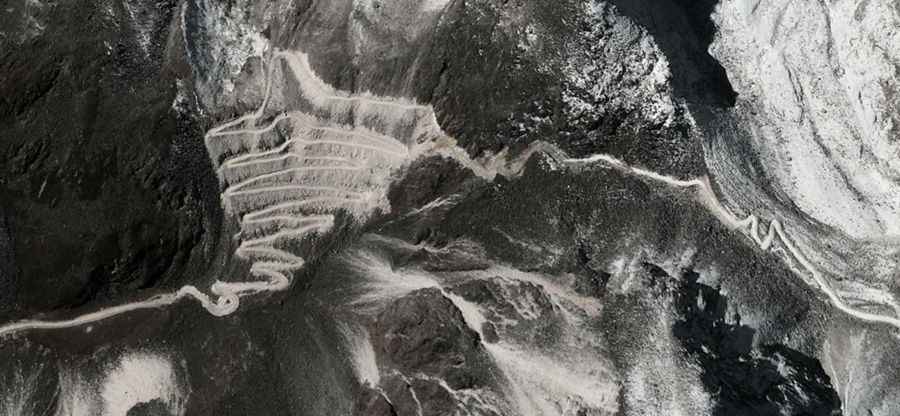
The unpaved ascent begins in the small village of Sangdong and runs for only 5.17 kilometers. Over this short distance, the track gains 610 vertical meters of elevation, resulting in a continuous average gradient of 11.79%. The narrow road climbs via a tight sequence of sharp hairpin switchbacks cut into the rocky mountainside, topping out at a maximum road altitude of 4,991 meters before dropping slightly to terminate at the water's edge.
What are the driving hazards and borders limits at Gongga Co?
The single-lane road consists of a raw dirt trackbed filled with deep ruts, dust, and loose stone debris, requiring a high-clearance 4x4 vehicle to maintain tire grip on the 11.79% ramps. The path lacks lateral protections or safety guardrails against the sheer drop-offs into the valley. Due to its proximity to the sensitive Bhutanese frontier, the route is under military surveillance, and access requires specific border permits for the Shannan Prefecture to clear the checkpoints.
Is the road to Gongga Co open year-round?
At an altitude bordering 5,000 meters above sea level, the track faces extreme Himalayan weather conditions and is completely blocked by deep snow and ice for the majority of the year. The route receives no maintenance or snow clearing services. During the short summer months, sudden high-altitude snowfalls or freezing rain storms can occur instantly, washing away parts of the trackbed or turning the dry dirt ramps into slick, impassable mud traps.
Road suggested by: Hugh Wilson