How to drive the high-altitude track to Mihman Yoli Pass?
Mihman Yoli Pass is an international mountain crossing at an elevation of 4,787 meters (15,705 ft) above sea level, situated on the border between Afghanistan (Badakhshan Province) and China (Xinjiang). The unpaved mountain track links the remote northwestern panhandle of Afghanistan with the Kashgar Prefecture, forming a wild dirt shelf that is only clear of snow from July to September.
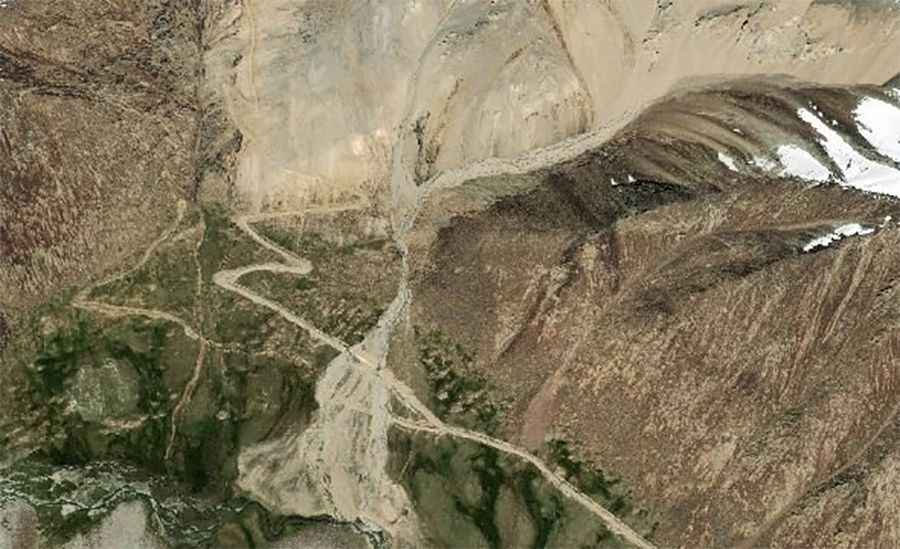
| Road facts: Mihman Yoli Pass | |
|---|---|
| Location | Afghanistan (Badakhshan) - China (Xinjiang) border |
| Elevation | 4,787 m (15,705 ft) |
| Length | 33.9 km (21 miles) from Mingtiegai |
| Elevation Gain | 1,039 meters (3,408 ft) |
| Surface | Unpaved (Loose scree, rock debris, and raw dirt) |
What are the hazards of the Mihman Yoli ascent?
The 33.9 km track climbing from Mingtiegai handles a vertical rise of 1,039 meters. The surface consists of a single lane of loose, shifting scree and deep dirt ruts. The steep ramps lack any form of safety fences or retaining barriers, and the outer soil edge crumbles regularly into the ravines due to thermal thawing. Large boulders fall onto the path from the raw cliffs above, requiring high ground clearance to drive over the stone fields without ripping the oil pan apart.
What are the security and border challenges on this remote pass?
The pass cuts through an isolated frontier heavily regulated by military checkpoints, requiring permits from both Afghan and Chinese border authorities before any transit can be attempted. The entire 33.9 km sector offers zero fuel stations, repair shops, water points, or village shelters. Drivers must carry auxiliary fuel tanks and satellite radios, as cell phone towers do not exist in this part of the Badakhshan province.
How does the 4,787-meter altitude affect vehicle engines?
At 15,705 feet, the lack of oxygen suffocates the engine, causing a massive loss of power on the climbing ramps. Radiators boil easily in the thin air during the slow crawl. On the steep descent back down, you must lock the transmission in low gear to let the engine hold the weight; riding the footbrake on these slopes will overheat the pads and cause total brake failure within a few kilometers. Fine glacial dust also plugs air filters immediately.
What vehicle gear is required for the Afghanistan-China border tracks?
Only heavy-duty 4x4 vehicles with low-range transfer cases and thick all-terrain tires can tackle the pass. The sharp, jagged stones of the Pamir range easily slice standard tire rubber, making it necessary to carry two full-sized spare wheels and a solid high-lift jack. The last spot to get fuel on the Chinese side is Tashkurgan. If a vehicle gets stuck or bogs down in the mud ruts, drivers must rely entirely on their own electric winches, steel sand ladders, and heavy straps to drag the car out.
Road suggested by: Jorge Manuel Gómez Sánchez