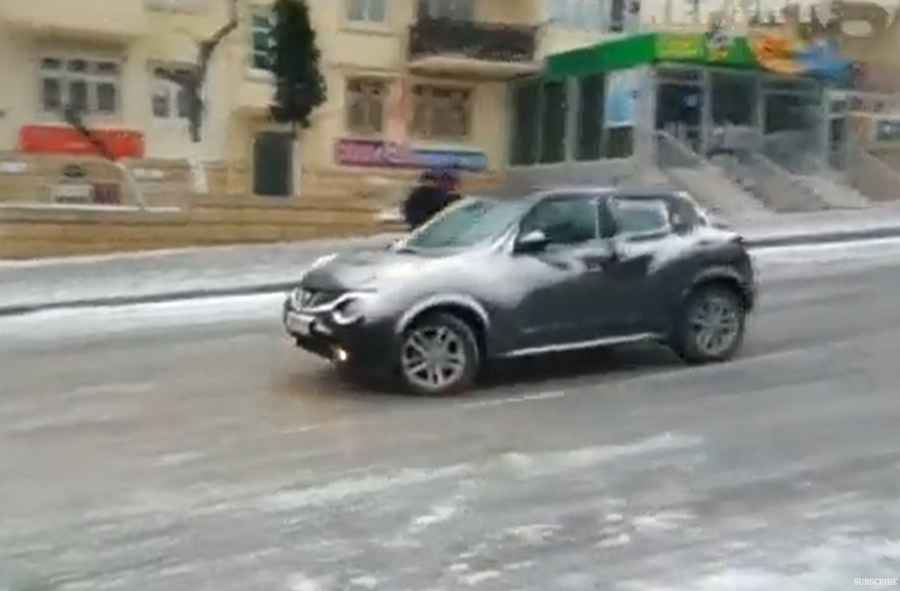
A slippery street with black ice in Baku
On January 26, 2016, a severe cold snap in Baku, the capital of Azerbaijan, resulted in a rare and technical road hazard known as black ice. A specific junction in the city became the site of multiple uncontrolled slides involving buses, trucks, and passenger cars, highlighting the risks of driving in regions where infrastructure is not winter-ready.
| Incident Facts: Baku Black Ice Event | |
|---|---|
| Location | Baku, Azerbaijan |
| Date | January 26, 2016 |
| Hazard Type | Black Ice (Thin Glaze Ice) |
| Contributing Factor | Lack of winter tires and road salting |
What caused the mass sliding in Baku?
The primary cause of the incident was the formation of black ice—a transparent coating of glaze ice on the asphalt. Because the ice is translucent, it takes on the color of the road, making it nearly invisible to drivers. In Baku, a city with a semi-arid climate that rarely experiences sustained freezing temperatures, the sudden drop in temperature caught the transit system unprepared. Standard summer tires, commonly used in the region, lose almost all coefficient of friction when encountering a frozen surface, rendering traditional braking systems ineffective.
The Logistics of Infrastructure Unpreparedness
The road network in Azerbaijan is designed for high temperatures and dry conditions, lacking the mechanical salting and gritting equipment found in northern climates. During the 2016 event, the lack of chemical de-icing agents meant that once the ice formed, it remained stable despite vehicle traffic. The video shows heavy vehicles, including an out-of-control bus and a truck, spinning 360 degrees. This is due to the momentum and weight distribution of large vehicles, which, once they lose static friction, become impossible to steer or stop using standard pneumatic brakes.
Mechanical Failure and Driver Response
In conditions of 0% traction, wheels continue to spin or lock up entirely, but the vehicle follows its inertial path. The Baku footage demonstrates that even at low speeds, the slight gradient of the urban streets was enough to keep vehicles in motion. Remarkably, no serious injuries were reported, largely because the slides occurred at low velocities. However, the event serves as a technical case study on why winter-rated tires and proactive road treatment are essential in cities that experience sudden cold snaps, regardless of their usual climate.
How to drive on black ice?
Technically, the only way to regain control on black ice is to avoid sudden steering inputs and to de-clutch to allow the wheels to regain independent rotation. However, in the 2016 Baku event, the layer of ice was so uniform that no patches of asphalt were available to provide grip. This rendered the vehicles' ABS (Anti-lock Braking Systems) useless, as the sensors could not detect any difference in traction between the four wheels. The only preventive measure in such logistical environments is the pre-emptive closure of affected junctions until road crews can apply sand or salt to the surface.
Pic&video: Guardian News