Driving in Saudi Arabia as an American: What to Sort Out Before You Rent a Car
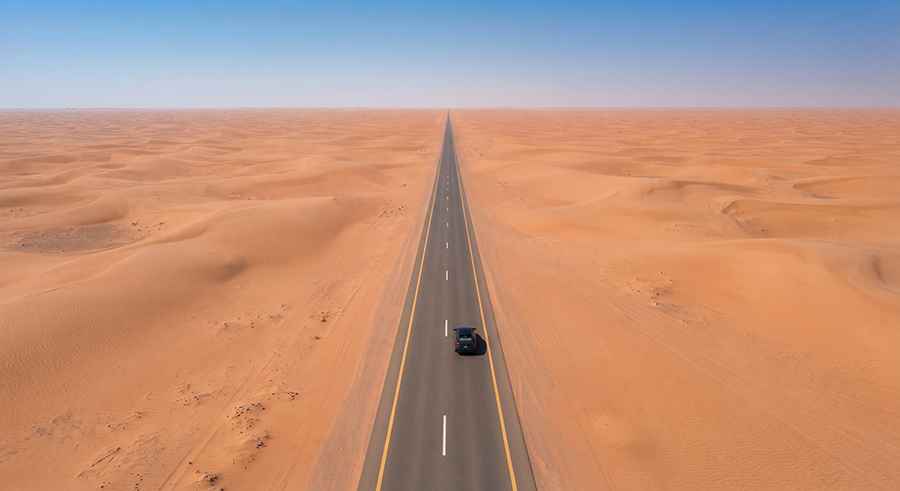
Saudi Arabia has some of the most unusual driving in the Middle East. Desert highways run dead straight to the horizon, mountain roads fold into dozens of hairpins, and in the southwest a single route passes through 25 tunnels in the Sarawat range.
For Americans the country is much easier to visit than it used to be. Before you pick up a rental car, though, you need the visa and the right papers for your US licence, and it helps to know what the roads are actually like.
The roads worth the trip
Highway 10
In the Eastern Province, Highway 10 has a straight section of 255 km (158 miles) through the Rub' al Khali, with no bends and almost no gradient. It was long called the world's longest straight road, and the title has recently gone to Highway 85 between Arar and Al Jouf. The speed limit is 120 km/h for cars. What wears you down is two hours of identical desert, so plan breaks.
Al Hada Road
West of Taif, Al Hada Road (Route 15) climbs the escarpment in 93 bends, and the views after dark are part of its reputation. The road continues down toward Mecca, which non-Muslims can't enter, so if you aren't Muslim, plan it as an out-and-back from Taif. If you want something steeper, the Mohammediyah mountain road is the local alternative.
Al Baha's 25 tunnels
Route 211 runs 233 km (144 miles) from Al Bahah in the mountains down to Muhayil near the Red Sea, through 25 tunnels of different lengths. It's fully paved, but there are no lamp posts, so drive it in daylight and use low gears on the way down.
Getting in: the eVisa comes first
US citizens can apply online for Saudi Arabia's tourist eVisa. It's valid for one year with multiple entries and lets you spend up to 90 days in the country. It covers tourism, events, family visits and Umrah, but not Hajj or study. Applications go through the official portal, visa.visitsaudi.com.
Apply before you book anything you can't cancel, and keep the approved visa on your phone and on paper. If you'd like the requirements and steps in one place, there's a walkthrough of the Saudi eVisa for US citizens that covers what to prepare.
Your US licence and the rental counter
Saudi Arabia's General Directorate of Traffic lets visitors drive on a foreign or international licence for up to one year from the date they enter the country, or until the licence expires, whichever comes first. Two conditions matter for Americans. The licence has to match the type of vehicle you're driving, and a foreign licence needs a translation from an accredited body.
An International Driving Permit translates your licence into several languages, so carry one along with the licence itself. In the US, AAA and AATA are the two organizations the State Department authorizes to issue IDPs. Rental companies add their own rules on top of the law, so ask yours before you fly which documents they accept and whether there's a minimum age or a credit-card deposit.
On the road
- Camels wander onto rural highways and are very hard to see after dark. Outside the cities, slow down at dusk and avoid long night drives.
- Main roads are watched by automated speed cameras. Stick to the posted limits, which can change quickly near towns.
- Desert stretches between towns are long. Fill up whenever you pass a station and carry more water than you think you'll need.
- In summer the interior can go above 45°C (113°F). Check your tires and coolant before a long run.
- After strong wind, sand can drift across part of a lane on desert highways. It's easy to spot in daylight and much harder at speed at night.
- On descents like Al Hada or the Al Baha tunnels, shift down and let the engine brake instead of riding the brakes all the way to the bottom.
A short checklist before you go
- Approved eVisa, saved on your phone and printed.
- US driver's licence plus an International Driving Permit.
- Written confirmation from the rental company that it accepts your documents.
- Offline maps, since the signal drops out in the desert and the mountains.
- A full tank and water before every long stretch.
- Mountain drives planned for daylight.