Driving across the terrifying Ghudar Bridge in Afghanistan
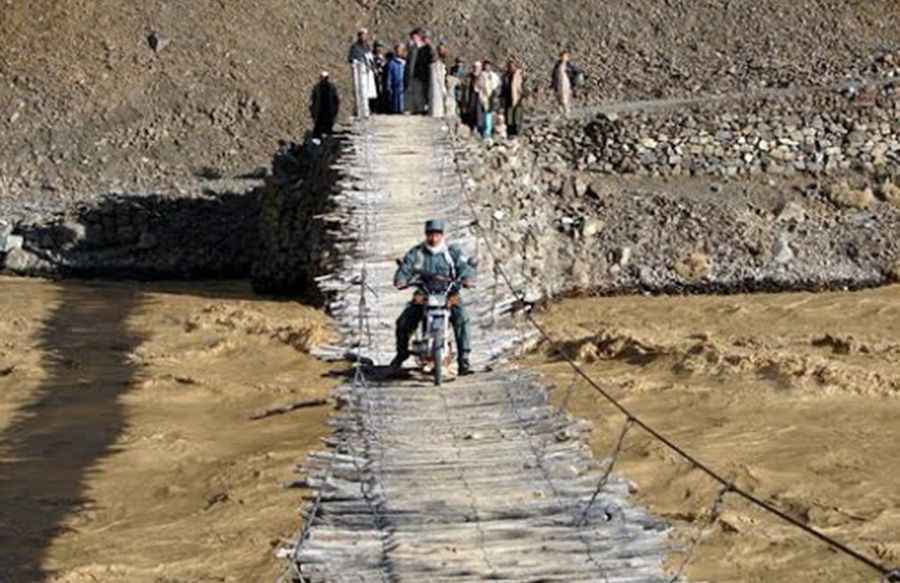
The Ghudar Bridge is a nightmare of local engineering spanning the Lazir River in the Nili district of Afghanistan's Daykundi Province. This is not a bridge built with steel and concrete; it is a precarious 50-meter hanging structure made of wood logs, sticks, and tensioned cables. For the people of Ghodar, it is a vital lifeline, but for anyone else, it is one of the most spectacular and dangerous bridges in the world. Crossing it means trusting your life to a surface that shifts and groans under every wheel, with no safety nets and a direct drop into the raging currents below.
| Road facts: Ghudar Bridge | |
|---|---|
| Location | Nili district, Daykundi Province, Afghanistan |
| Length | 50 meters (164 ft) |
| Structure | Suspension (Wood logs and cables) |
| Hazard Level | Extreme (High fatality risk) |
How difficult is it to cross the Ghudar Bridge?
The crossing of the Ghudar Bridge is a test of nerves and balance. As seen in the local conditions, the "deck" of the bridge is composed of uneven logs tied together, creating a bumpy and unpredictable surface. There are no side rails, only the suspension cables that offer zero protection if you lose your balance. For motorcyclists, the challenge is maintaining momentum without letting the front wheel slip between the gaps in the wood. The bridge is narrow and designed for single-file traffic; if you meet someone coming from the opposite side, the logistical nightmare of backing up on a swaying, narrow structure is enough to paralyze even experienced travelers.
Why is the Ghudar Bridge so dangerous during flood season?
The danger of the bridge spikes during the flood season when the Lazir River turns into a violent torrent of brown silt and debris. The bridge hangs low over the water, and the spray makes the wooden logs incredibly slippery. Every year, fatalities occur because people—often on motorbikes or carrying heavy loads—lose their footing and are swept away by the current. There is no rescue service in this remote part of the Daykundi Province; if you fall in, the river will carry you miles downstream through rocky gorges. The structure itself, built and maintained by local villagers with limited resources, is under constant stress from the wind and the weight of traffic, making mechanical failure of a cable a real and constant threat.
What are the main hazards when driving the roads near Ghudar?
Beyond the bridge itself, the roads leading to Ghodar are raw, unpaved tracks that are prone to washouts. This is a high-altitude desert region where the isolation is total. There is no cell service, no medical facilities, and no fuel stations for miles. If your vehicle breaks down or you suffer a mechanical failure on the bridge's approach, you are entirely on your own. Dust is a major factor, often obscuring the deep ruts and sharp rocks that can shred tires. During the winter, the entire region can be cut off by snow, making the bridge even more treacherous as ice forms on the wooden logs, turning an already deadly crossing into an impossible one.
Pic: https://mw2.google.com/mw-panoramio/photos/medium/44528698.jpg