Driving the rugged and remote road to Kotal-e Kurang
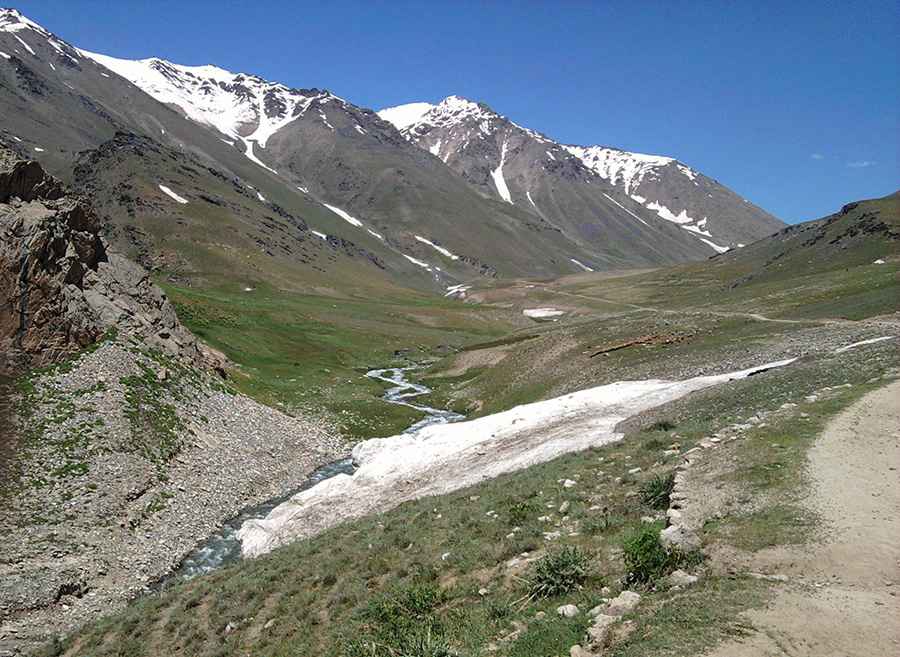
Kotal-e Kurang is a formidable high-mountain pass reaching 3,363 meters above sea level in the Badakhshan Province of northeastern Afghanistan. This is one of the most remote and technically demanding routes in the Hindu Kush, connecting the provincial capital with the isolated Lake Shiva. The road is a grueling 139-kilometer journey through a landscape of vertical rock and deep valleys, where the track often disappears into riverbeds and mud. Driving here is a brutal test of mechanical endurance, where a single mistake or a mechanical failure can leave you stranded days away from any form of assistance.
| Road facts: Kotal-e Kurang | |
|---|---|
| Location | Badakhshan Province, Afghanistan |
| Elevation | 3,363m (11,033ft) |
| Length | 139 km (86 miles) |
| Surface | Unpaved / Mule Track |
Is the road to Kotal-e Kurang unpaved?
The entire 139-kilometer route is unpaved and, in many sections, degrades into little more than a mule track. Starting from Fayzabad, the track follows the natural contours of the mountains, meaning you will face steep climbs on loose scree and narrow ledges with no safety barriers. The most critical challenge is the river crossings; depending on the season and snowmelt, these can be deep and fast-moving. You must scout the depth before committed to a crossing to avoid hydro-locking your engine. A high-clearance 4x4 with a snorkel and a low-range gearbox is the only way to navigate these mud-filled valleys and rocky steps without destroying the undercarriage of your vehicle.
How long does it take to drive through Kotal-e Kurang?
Although the distance is 139 kilometers, the drive from Fayzabad to Lake Shiva can easily exceed 10 to 12 hours. The road conditions are so poor that your average speed will rarely go above 15-20 km/h. Much of the trip is spent in low gears, grinding up steep inclines or crawling over fields of embedded boulders. At 3,363 meters, your engine will lose about 35% of its power, which makes the long climbs even more taxing on the cooling system. You must plan for a full day of high-intensity driving, knowing that a simple flat tire or a blocked section of the track can add hours to an already exhausting journey.
Is it safe to drive through the Badakhshan mountains?
Safety in this region is defined by both the terrain and the security situation. The area near the borders is highly unstable, with a constant threat of militant activity and a total lack of consular or emergency support. However, the physical environment is just as dangerous; the track is prone to landslides and washouts that can leave you trapped in the Kurang Valley with no way out. There is no cell service for the majority of the trip, and passing traffic is almost non-existent. If you encounter a breakdown, you are entirely on your own in a territory where the local environment is as unforgiving as the political climate.
What mechanical prep is needed for the Kotal-e Kurang crossing?
Before heading deep into Badakhshan, your vehicle must be in perfect mechanical condition. The sustained vibration from the washboard tracks and the impact of the boulders will destroy weak suspension components instantly. Check your air filters frequently, as the fine Afghan dust will choke your intake in hours. Because of the river crossings, ensure all breathers (diffs, gearbox) are extended and your waterproof seals are intact. On the long descents, use engine braking to prevent your pads from glazing over. Carry at least two full-sized spare tires, extra fuel, a winch, and enough supplies to survive for several days in case the track becomes impassable due to weather or a mechanical failure.
Road suggested by: Hugh Wilson
Pic: R