What are the highest roads in Afghanistan?
Afghanistan is a landlocked country located at the intersection of Central and South Asia, historically crucial as a major connection point along the Silk Road. It is bordered by Iran (west), Pakistan (south and east), Turkmenistan, Uzbekistan, and Tajikistan (north), and China (northeast).
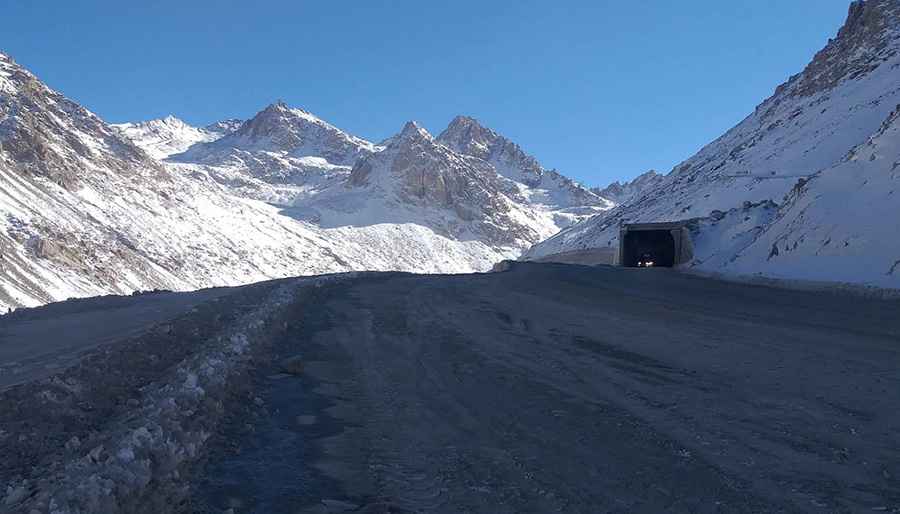
The geography is predominantly mountainous, dominated by the massive Hindu Kush range, which bisects the country. This rugged topography defines the terrain, which consists of high peaks, deep river valleys, and plateaus. The climate is arid continental, characterized by very hot summers and severely cold, snow-covered winters.
Highest Roads of Afghanistan
The demanding mountainous terrain, carved by the Hindu Kush, necessitates the use of high-altitude crossings and passes for regional connectivity. These vital links represent some of the most challenging drivable routes in the world, providing access between Afghanistan's isolated regions via its highest mountain passes.
| Road | Elevation | Province | Surface |
|---|---|---|---|
| Wakhjir Pass | 4,836m (15,866ft) | Wakhan | Unpaved |
| Mihman Yoli Pass | 4,787m (15,705ft) | Badakhshan | Unpaved |
| Dorah Pass | 4,538m (14,888ft) | Badakhshan | Unpaved |
| Anjuman Pass | 4,430m (14,534ft) | Badakhshan | Unpaved |
| Kōtal-e Darah-ye Rāst | 4,188m (13,740ft) | Kabul/Parwan | Unpaved |
| Salang Pass | 3,878m (12,723ft) | Parwan/Baghlan | Unpaved |
| Kotal-e Ghar Jawin | 3,769m (12,365ft) | Badakhshan | Unpaved |
| Kawak Pass | 3,671m (12,043ft) | Panjshir/Baghlan | Unpaved |
| Shah Mansoor Pass | 3,638m (11,935ft) | Ghazni | Unpaved |
Pic: Hasan Malistani