How difficult is the unpaved road to Nowjok Pass in Daykundi?
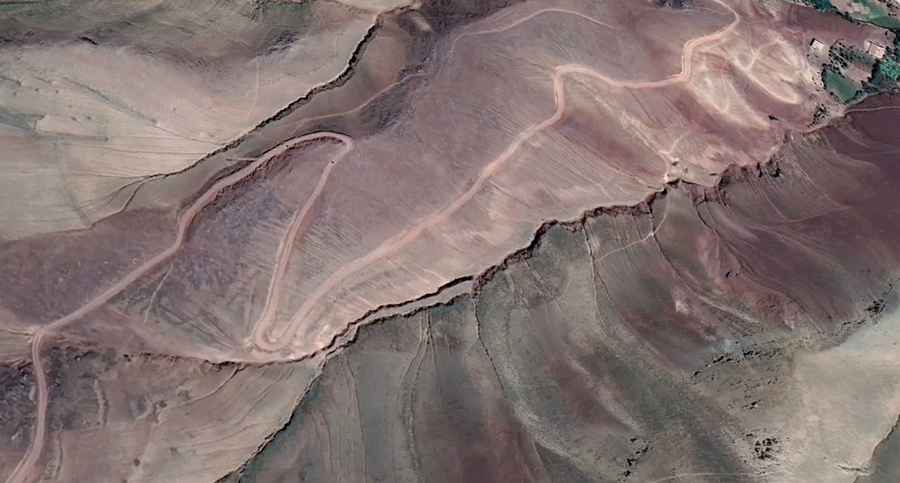
Kotal-e Nowjok is a high mountain pass at an elevation of 2,722m (8,930ft) above sea level, located in the Daykundi Province of central Afghanistan. Situated in one of the most isolated regions of the country, the pass is a critical but treacherous link in the Hindu Kush foothills. The road is a raw, unpaved track where the lack of infrastructure and the extreme terrain create a driving environment that is as mechanically demanding as it is psychologically taxing.
| Road facts: Kotal-e Nowjok | |
|---|---|
| Location | Daykundi Province, Afghanistan |
| Elevation | 2,722m (8,930ft) |
| Length | 28 km (17.4 miles) |
| Surface | Unpaved / Dirt / Loose Rocks |
| Vehicle Required | Heavy-duty 4x4 |
How long is the road through Nowjok Pass?
The mountain track spans 28 km (17.4 miles), running south-north between the settlements of Barghosang and Qabcherakzar. At an average speed of less than 15 km/h due to the terrain, crossing the pass is a multi-hour commitment. The route follows the natural contours of the Daykundi mountains, featuring hundreds of curves and dozens of tight hairpin turns that require constant steering work. The narrowness of the path in the higher sections means that encountering oncoming local trucks can force a dangerous reverse maneuver on a surface with zero room for error.
What is the road surface like on Kotal-e Nowjok?
The entire 28 km stretch is unpaved and in a constant state of decay. The surface is a mix of fine, powdery dust and large, embedded rocks that can easily puncture a tire or crack an oil pan. Deep potholes are common, often hidden under layers of soft silt. In the steepest sections, the track is prone to wash-outs, where the outer edge of the road has simply crumbled into the valley below. A high-clearance 4x4 is not optional; it is a basic requirement to clear the high centers of the track and the rocky debris that clutters the hairpins.
What are the main hazards of driving in Daykundi?
Beyond the technical difficulty of the track, the primary hazard is the total lack of support. There are no emergency services, fuel stations, or medical facilities within a reasonable distance of Kotal-e Nowjok. Any mechanical failure effectively leaves the vehicle stranded in a high-altitude desert. During the winter months, the pass is buried under snow and becomes impassable, while the spring thaw turns the dirt into a bottomless slurry. Dust is also a major factor; the fine silt can penetrate seals and air filters, leading to rapid mechanical wear if the vehicle is not properly prepared for desert conditions.
Is night driving discouraged on Nowjok Pass?
Driving through Nowjok Pass at night is extremely dangerous and strongly discouraged. The lack of any artificial lighting, combined with the dangerous drop-offs and the unpredictable road surface, makes it nearly impossible to identify hazards in time. Sudden dips, large boulders in the middle of the track, and the crumbling edges are only visible under direct daylight. Given the isolation of central Afghanistan, being caught on the pass after sunset significantly increases the risk of being unable to resolve a mechanical issue or navigate the most technical 28 km of the route.