The Best Used 4x4 for Off-Road: A Definitive Buyer’s Guide
Buying a used 4x4 for off-road expeditions is an exhausting but critical process. Unlike buying a city car, choosing an expedition rig is about selecting a survival tool that must perform under extreme stress. Whether you are a seasoned overlander or preparing for your first adventure on the Karakoram Highway, this guide analyzes the best used 4x4 options to help you answer the eternal question: which one is truly the best?
| Expedition 4x4 Selection Criteria | |
|---|---|
| Reliability | Ability to reach the destination without mechanical failure in remote areas. |
| Simplicity | Manual transmissions and mechanical winches are often preferred for field repairs. |
| Parts Availability | The ease of finding spares in remote regions (Toyota/Nissan dominance). |
1. Determining Your Mission Profile
To choose the right vehicle, you must first define its primary role in your car park. Our common sense tells us to start here before looking at the price tag:
- Long-Distance Mixed Terrain: For those living far from the city or working in the countryside, the vehicle must be reliable, comfortable, and economic. A long wheelbase (5-door) is preferred to reduce "bouncing" on undulated roads.
- Extreme Expeditions: For journeys away from civilization, you need a big, reliable vehicle with high passability. Comfort and fuel economy become secondary to durability and cargo capacity.
- Technical Off-Roading: If your goal is technical rock crawling or narrow mountain passes like the Stelvio Pass, a short wheelbase (3-door) offers better maneuverability and break-over angles.
2. Analyzing the Contenders: Which Model Fits You?
Every 4x4 has its own mission. Based on years of global expedition data, here is how the most popular used models stack up:
The Toyota Dynasty (Land Cruiser 70, 80, 90, 100, 120)
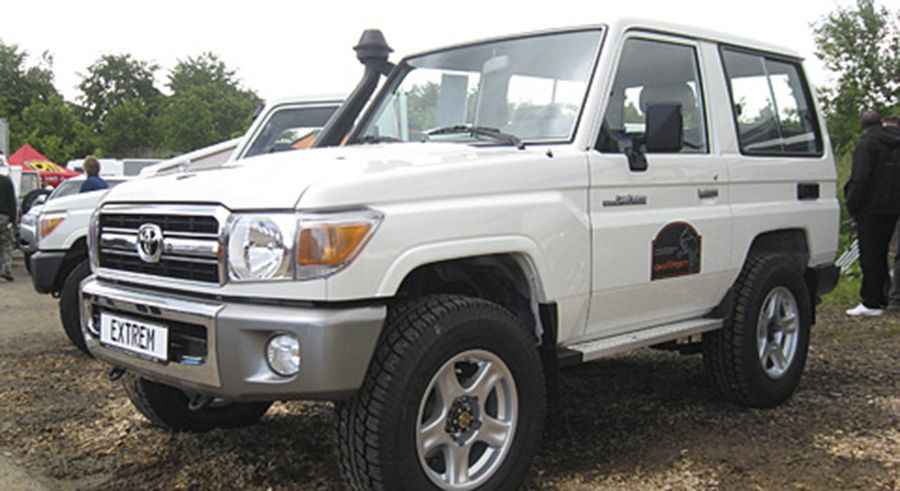
The Toyota Land Cruiser is arguably the most reliable choice. The 70 and 80 series are the legends of globe-trotters due to their solid axles and mechanical simplicity. The 90 and 120 series offer a better balance for those who need to cover long distances on asphalt before hitting the dirt. They are expensive, but their resale value and the global availability of parts make them the safest investment for an off-road life.
The Nissan Patrol & Mitsubishi Pajero
The Nissan Patrol is a beast of burden, often found with original mechanical winches—a vital feature for safety during solo expeditions. The Mitsubishi Pajero (and Pajero Sport) offers excellent steerability and a more car-like driving experience, though its running gear may require more frequent maintenance when subjected to constant heavy-duty use.
The Land Rover Heritage (Defender & Discovery)
The Land Rover Defender is the quintessential off-road tool: simple, rugged, and capable of being repaired with basic tools. However, older Land Rovers (including the Discovery and Range Rover) are known for electrical "phenomenons." If you choose an older British rig, you must have strong nerves and the ability to ignore blinking lights on the gauge-board as long as the mechanicals are sound.
The Alternatives: Jeep, Ford, and Rugged Short-Stakes
For shorter everyday journeys or specific budget constraints, models from Jeep (Grand Cherokee), Ford, Suzuki, or even the Hyundai Terracan offer viable entry points. While they may lack the "immortal" reputation of a Land Cruiser, a well-maintained unit can still provide the thrill of the trail at a fraction of the cost.
3. Critical Technical Criterions
When evaluating a potential purchase, push subjective love aside and focus on these eight points:
- Price: The initial cost is just the beginning; always budget for immediate post-purchase service.
- Fuel Consumption: Crucial for long-haul expeditions where fuel stations are rare.
- Engine Power & Gearbox: Manual transmissions are generally preferred for heavy off-roading to allow for better control and reliability.
- Reliability: Can it survive 1,000 km of corrugations on the Ruta 40?
- Availability of Spare Parts: Popular models are cheaper to maintain in the long run.
- Reliability of the Frame: For older vehicles, the level of rust on the chassis is the ultimate "deal-breaker."
4. The Hard Truth About Buying Used 4x4s
There is no such thing as the "perfect" used 4x4 on the market. If a vehicle is in flawless condition, the owner usually continues to drive it. If it is for sale, it likely has technical issues. Your job is to find out the costs of those repairs and evaluate if the investment is worth it.
Avoid vehicles where the owner has been careless with the exterior or interior. A "worn-out" cabin is usually a sign that the engine and running gear have been equally neglected. A test drive is mandatory—try every gear, engage the 4WD system, and listen for "clunks" in the drivetrain.
Conclusion
The best 4x4 is not the newest one, but the one that has been most meticulously maintained. The year of production has little importance compared to the actual condition of the vehicle. If you choose wisely, your 4x4 will not just be a vehicle, but a faithful companion that will take you safely through the world's most fascinating and death-defying paths.