What Makes a Road Dangerous: Bad Engineering or Bad Driving?
Imagine a narrow road after the rain. The road has a turn, which includes a puddle right at the turn, and another vehicle following you becomes quite irritated. Whose fault is it if something happens? The designer of the road, its maintenance workers or the driver who made the turn too quickly?
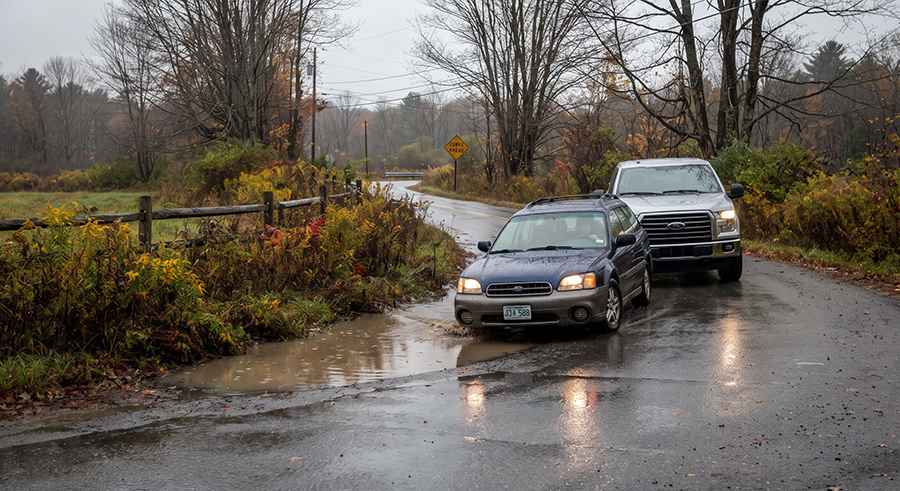
It’s always easy to blame the very last thing that happened right before a traffic accident. However, if one looks slightly further, it turns out that the road itself doesn’t offer the driver much time to make the right decision.
How Much Time Does the Road Give You?
It’s possible that the descent is steep enough, and there’s a turn at the bottom of it. This way, the driver is likely to increase their speed when they should actually be braking. Also, if the turn is hidden from view behind some rock formation or a hedge, the driver won’t see the stopped vehicle until they make the turn.
The good design of a road takes into considerationhow far ahead drivers can see. It’s true even when it comes to hills. The large section of the road can be free of any obstacles while the ascent will hide the oncoming vehicle. The maintenance of an existing road can improve the situation through the removal of some overgrowth and placing a warning sign where the drivers have enough time to react to the situation.
Poor drainage can also be easily overlooked by engineers. The water can stay on the road and hide either a puddle, a hole in the road or simply decrease the friction coefficient of the surface. This problem will reoccur every time the rain starts if the drainage system of the road is clogged.
When It Takes Time to Repair
Even a well-designed road can become dangerous over time. Faded road markings can make it difficult to see lane boundaries, especially at night. Deep potholes can force cyclists to choose between riding over them or swerving into traffic. Drivers face a similar risk if they spot a pothole too late and there's another vehicle alongside them.
If you came across The War on Britain’s Motorists while looking up how to watch Channel 4 in the US, the 2024 Dispatches episode examines how councils decide when to repair potholes.
As part of the pothole investigation with the RAC, the program discovered that about one third of the councils that responded repair potholes only when they reach a certain depth, but a pothole that’s too shallow to be repaired under the council's criteria can still be an issue for a cyclist.
Where the Drivers Matter
Anyone who's tried to overtake a slow truck uphill knows how hard it can be to do so safely. The road may look empty, but you need enough room to get past the truck and return to your lane. A bend or hilltop can hide oncoming traffic.
Even on a well-marked road, a driver can follow too closely or go too fast for the conditions. Imagine two people taking a turn on a wet road. One leaves enough space and brakes early. The other follows closely and waits for the brake lights ahead, leaving much less room to react.
Good road design can relieve some of that pressure. A passing lane on a long uphill stretch gives drivers a chance to get past slower vehicles. Clear markings show where it's unsafe to overtake, which is especially helpful on unfamiliar roads.
It’s Usually Both of Them
Even careful drivers can hit a puddle or pothole they didn't see coming. Poor driving can also damage the road itself. Well-maintained roads, with clear visibility, visible markings, and smooth surfaces, give drivers more time and space to react and correct their mistakes. But ultimately, how they use that extra time and space is up to them.