How to Plan an Epic Road Trip Adventure Without the Last-Minute Stress
There's nothing quite like the pull of the open road. A great road trip promises freedom, discovery, and lifelong memories. The trouble is, the best adventures take a lot of planning, and too many promising trips are spoilt by a frantic week of last-minute bookings and forgotten gear.
These make journeys that are more stressful than they ever needed to be, with the magic buried under a pile of avoidable problems.
The good news is that a little groundwork turns a frantic scramble into the journey of a lifetime. Planning doesn't have to drain the romance out of an adventure. Done well, it's what frees you to be spontaneous once you're actually on the road, because the big logistics are already handled. Here's how to plan an epic road trip the smart way, so the only surprises you meet are the good ones.
Dream big, then shape the route
Every great trip starts with a spark, whether it's a single legendary road you've always wanted to drive or a region you've longed to explore. Begin there, then build the route outward. Decide roughly how long you have, how far you want to push, and what kind of driving you're after, from coastal cruising to white-knuckle mountain passes.
This is the fun part, so lean into it. Browsing a curated list of the world's ultimate road trips is a brilliant way to anchor your journey around a drive worth building a whole trip around. For some travellers, that headline drive is a true once-in-a-lifetime pilgrimage, like the mighty Karakoram Highway that climbs between China and Pakistan through some of the planet's highest terrain. Once you've locked in your headline road, map the supporting route around it, leaving space for the detours and discoveries that so often become the highlight.
Think carefully about the season, too. The same road can be a dream in summer and a deathtrap in winter, and many of the world's most spectacular passes close entirely for months at a time. Check when your chosen route is open, drivable, and at its best, then plan your dates around that window rather than forcing a trip into a gap in your calendar that the weather won't honour. A few hours of research here saves you from arriving at a locked gate a thousand kilometres from home.
Give the itinerary room to breathe
The biggest mistake is cramming too much in. An itinerary that looks efficient on a spreadsheet becomes punishing behind the wheel, and you end up watching the best scenery blur past the window. Plan shorter driving days than you think you need, and build in buffer time for the unexpected.
A good plan includes an itinerary, a proper stop to explore, and an easy evening to rest and reset. Aim to arrive at each overnight stop with daylight to spare, since setting up camp or finding accommodation after dark adds stress you don't need. Leaving gaps in the plan is what lets a trip breathe, and the spontaneous stops are usually the ones you'll talk about for years.
It helps to be honest about how you actually travel. Some people love knocking out big distances and feel energised by a long day at the wheel, while others fade after a few hours and need frequent breaks to stay sharp. Plan around your actual limits, not the heroic version of yourself you imagine from the couch. Fatigue is one of the leading causes of trouble on long drives, so a schedule that keeps the driver feeling fresh is as much a safety measure as a comfort.
There's also a balance to strike on how much to lock in ahead of time. Booking every night in advance guarantees you a bed, but chains you to a rigid plan. Winging it entirely risks arriving in a popular spot with everything already full. A sensible middle ground plans early for the weekend nights, peak-season stops, and anywhere remote with few options.
Prep the vehicle like your trip depends on it
On a serious road trip, your vehicle is everything, so it needs a proper once-over before you leave. A pre-trip service is worth every cent, especially if your route heads anywhere remote. Have a mechanic check the essentials, and don't set off with a niggle you've been ignoring.
Run through the basics yourself. Check your tyres, your fluids, and your spare, and make sure you know how to change a wheel before you need to. Learn where everything lives in your vehicle, from the jack to the first-aid kit, so you're not hunting through the boot by torchlight at the worst possible moment. If you're renting rather than taking your own car, read the fine print on where you're allowed to drive, since many rental agreements void your cover the moment you touch an unsealed road.
It's also worth matching the vehicle to the ambition. A comfortable sedan is perfect for sealed highways and coastal runs, but it has no business on a rugged backcountry track. Be realistic about what your car can handle, and either choose a route that suits it or hire something more capable for the sections that demand it. Pushing an unsuitable vehicle onto a hard road is how good trips turn into expensive rescues.
Plan for the remote and the rough
Remote driving is where the real adventure lives, and also where the real risks hide. If your route ventures far from towns, services, and mobile coverage, the planning bar rises sharply. The freedom of the empty road comes with the responsibility of being self-sufficient, since help can be hours or even days away.
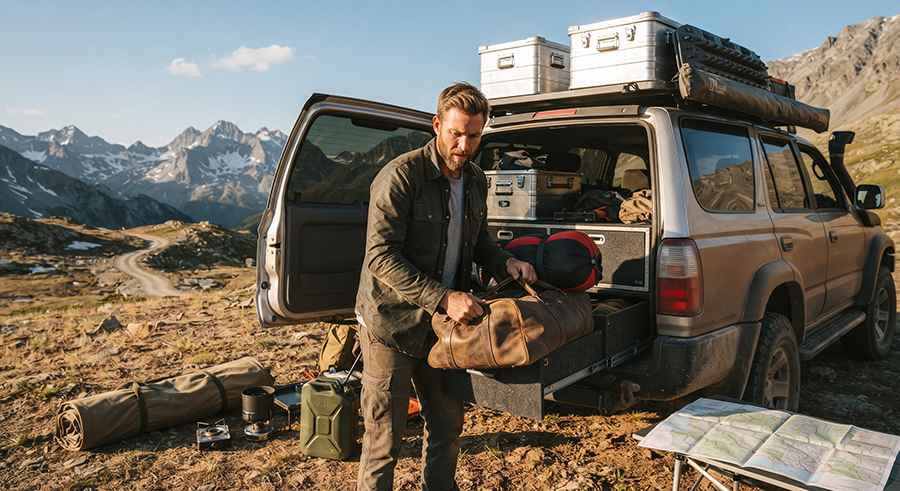
If your adventure takes you into rough or unsealed terrain, like the kind found on Australia's best 4WD tracks, the right vehicle, decent recovery gear, and a realistic sense of your own experience all become non-negotiable. Carry more fuel, food, and water than you think you'll use, since distances between services in remote regions can be vast. A satellite messenger or personal locator beacon is a wise investment for anywhere out of phone range, and travelling in convoy with a second vehicle adds a serious margin of safety on the hardest routes. Know the road you're taking before you set off.
Budget the adventure properly
Road trips have a way of costing more than you expect. Fuel, accommodation, food, parking passes, and any mechanical surprises all add up, and running out of money halfway through is a fast way to end an adventure early. Create a realistic budget before you go, then pad it with a contingency buffer for the things you can't predict.
Break the costs into categories so nothing ambushes you later. Fuel is usually the biggest line, so estimate your distance and your vehicle's efficiency honestly. Factor in accommodation, whether that's campsites, cabins, or the occasional hotel to recharge, along with food, activities, tolls, and border or park fees. Then add a healthy cushion on top, because the unexpected is the one thing you can count on.
For a true bucket-list trip, or a vehicle upgrade to make the journey possible, some travellers choose to spread the cost rather than drain their savings in one hit. Australian travellers, for instance, can look at an unsecured personal loan to turn a big one-off expense into fixed, predictable repayments. As with any borrowing, it pays to work out what comfortably fits your budget first and only take on what you truly need, so the adventure stays a joy rather than a worry when you get home. A clear, realistic money plan is what lets you say yes to the experiences that made you want to go in the first place.
Pack smart, not heavy
Overpacking is the enemy of a good road trip. Every extra bag eats into space, comfort, and fuel economy, so be ruthless about what earns a spot. Lay everything out before it goes in the car, then halve the clothes and double the water.
A few categories deserve priority. Pack a solid emergency kit, reliable navigation that works offline, and enough food and water to see you through a stretch with no services. For remote routes, add a first-aid kit, a way to communicate out of mobile range, and layers for weather, if there's even a small chance of trouble. Get the essentials sorted, and the rest is just nice-to-haves.
How you pack matters as much as what you pack. Keep the things you'll reach for often, like snacks, water, and a jacket, within reach, not buried at the bottom of a bag. Store heavy items low and central for better handling, secure anything loose so it doesn't become a projectile in a sudden stop, and keep your documents and valuables somewhere you can grab them in a hurry. A tidy, well-organised vehicle is calmer to live in for days on end, and it makes the whole trip feel more under control.
Sort the admin before you leave
The boring paperwork is exactly what trips people up at the worst moments. Check that your licence is valid for the whole journey, and look into an international driving permit if you're crossing borders. Confirm your vehicle registration and insurance are current, and understand precisely what your cover does and doesn't include, especially for unsealed roads, off-road use, or driving in another country.
Keep both digital and physical copies of your key documents, from licences and insurance to booking confirmations and emergency contacts. If your route crosses international borders, research visa requirements, vehicle permits, and any local road rules well ahead of time, since the requirements can take weeks to sort. Handling this admin early means none of it can ambush you once you're on the road and far from a printer or a reliable signal.
Keep everyone happy on the road
A road trip is as much about the people in the car as the road outside it. Long hours in a confined space can fray even the closest relationships, so think about the human side of the journey as seriously as the mechanical one. Agree on the ground rules before you leave, from who drives which legs to how you'll split the costs and the chores.
Build in regular breaks to stretch, swap drivers, and simply enjoy where you are rather than racing to the next point. A good playlist, a few podcasts, and some offline entertainment take care of dull stretches between highlights. Above all, do your best to keep the mood up, since the trips people remember fondly are the ones where everyone felt heard and nobody was pushed past their limit.
Fuel up and chase the horizon
An epic road trip rewards the planner. Shape your route around a drive you'll never forget, give the schedule room to breathe, prep your vehicle, plan for the remote stretches, budget with a buffer, and pack with discipline. Sort the admin early, look after the people sharing your ride, and respect the limits of both your car and the road. The horizon is out there waiting, so plan it well and go chase it.