What It Takes to Drive a Motorcoach Over a Mountain Pass
Most travelers who ride a charter coach over a mountain pass remember the view and very little else. They watch the switchbacks from a high seat, take photos of the drop-off and step out at the summit pullout for a stretch. Up front, the driver has a very different trip.
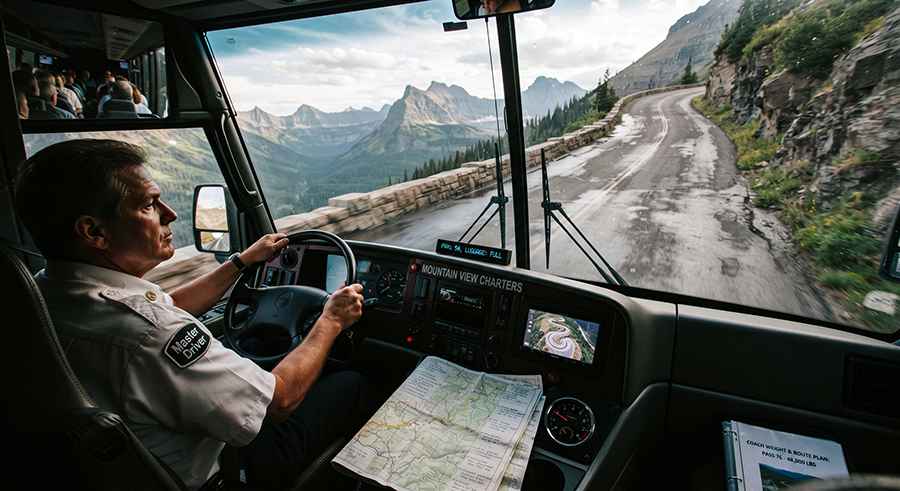
A full-size motorcoach can weigh well over 40,000 pounds when loaded with passengers and luggage, and moving that mass safely up and down a steep, narrow road takes planning that starts days before the wheels turn.
Why a Coach Behaves Differently on Grades
A passenger car and a 45-foot coach follow the same road, but they barely share the same physics. The coach carries far more momentum, sits much higher and needs a wider path through every tight curve. On a long climb, the engine works hard and the speed drops, which is normal and expected. The harder part comes on the way down, and the physics stay the same whatever name is painted on the side, whether it reads Ideal Charter Bus or belongs to a school district: gravity keeps adding speed, and the brakes can only absorb so much heat.
Truck and bus drivers call the resulting loss of stopping power brake fade. Air brakes on a heavy vehicle press linings against drums or rotors, and the friction turns motion into heat. Ride the brakes for several miles of descent and that heat builds faster than it can escape, until the pedal that felt firm at the top of the pass feels soft halfway down. Runaway truck ramps exist on many western grades for exactly this reason, and professional drivers treat them as a sobering reminder of what happens when the math goes wrong.
The standard defense is old and simple. Drivers select a low gear before the descent begins and let the engine brake or transmission retarder hold the vehicle back, which slows the coach without touching the service brakes at all. When the speed creeps above a chosen safe number, the driver applies the brakes firmly for a moment, drops a few miles per hour, then releases and lets them cool. Commercial driving schools teach this as snub braking, and it keeps the brakes ready for an emergency.
Experienced drivers know the right descent speed often feels painfully slow from the passenger seats. Groups sometimes grumble when a coach crawls down a grade that cars take at twice the pace. That patience is the whole idea, since a heavy vehicle that starts a long descent too fast has very few good options left.
Narrow Roads, Tight Curves and the Space a Coach Needs
Mountain roads were rarely built with 45-foot vehicles in mind. Older highways and park roads often have tight hairpins, short guardrails and a rock wall on one side with open air on the other. A long coach tracks inside the path of its front wheels on every turn, a behavior drivers call off-tracking, so the rear wheels cut closer to the inside edge. On a sharp switchback, the driver may need to swing wide into the opposite lane to keep the rear axle off the shoulder.
That maneuver depends on good sight lines and patient oncoming traffic, which mountain roads do not always provide. Some scenic routes restrict vehicle length outright, and certain well-known park roads close their upper sections to long vehicles entirely. A trip that looks easy on a map can turn into a problem if nobody checked those limits in advance, because turning a coach around on a narrow road is often harder than finishing the climb.
Weather adds its own layer. Afternoon thunderstorms, early snow at elevation and valley fog all change how a big vehicle handles. A tall coach with a large side profile also catches crosswinds in exposed sections, especially on bridges and ridgelines. Drivers check forecasts for each part of the route, since conditions at 10,000 feet can look nothing like conditions at the hotel.
Driver Hours and Fatigue on Mountain Routes
For many coach drivers, the clock is as demanding as the road. Federal rules in the United States limit how long a commercial passenger driver can drive and how long they can stay on duty before a mandatory rest period. Those hours of service rules apply no matter how beautiful the scenery is or how far behind schedule the group has fallen. Mountain miles also run slower than interstate miles, so a route that looks like a few hours on paper can eat much more of the legal window than expected.
Fatigue on a winding road is a different hazard from fatigue on a straight highway. Each curve demands steering input, speed control and attention to the vehicle's tail. A tired driver reacts later, and on a descent a late reaction can mean entering a curve too fast with brakes that are already warm. For longer itineraries, operators commonly plan for a second driver or schedule the day so the mountain section happens in the morning while the driver is fresh.
Schedules shape the budget as well. Groups planning a mountain itinerary often treat the cost of renting a bus as a flat daily figure and are surprised when the quote reflects the terrain. Slow mountain miles stretch the number of hours a driver is on duty, and longer trips may require driver lodging or a second driver. Seasonal demand around fall foliage and national park summers can also push prices up, so planners who book early tend to have more choices.
What Group Trip Planners Can Do Before Departure
Trip organizers do not need a commercial license to make a mountain route safer. The most useful step is sharing the full itinerary early, including every stop, overlook and side road the group hopes to see. That gives the driver time to check length restrictions, seasonal closures, trailhead parking and turnaround space at each destination. A lookout that works for a family SUV may have nowhere for a coach to park or turn.
Planners also help by building slack into the schedule. Mountain driving rarely runs on highway timing, and a tour that packs too many stops into one day pushes the driver toward the end of the legal hours. Buffer time for slow climbs, photo stops and construction delays takes pressure off the person behind the wheel, which is where pressure does the most harm.
The starting point shapes the trip too. Organizers arranging group transportation chicago for a fall trip into the hills of southwest Wisconsin will face rolling grades and narrow county roads, while a group leaving Denver the same week may climb past 11,000 feet before lunch. Driver hours rules stay the same in both cases. The planning around brakes, weather and road restrictions, however, changes considerably with the terrain.
Questions Worth Asking the Operator
Before signing, organizers can ask whether the driver has experience on the specific route or on similar mountain roads, and whether the coach is equipped with a retarder or engine brake. It also helps to ask how a weather closure or a road that turns out to be off limits for long vehicles would be handled. Clear, specific answers suggest the trip has been thought through. Vague ones are a signal to keep asking.
Mountain roads have a way of turning an ordinary group outing into the part of the trip people talk about for years. Most of the work that keeps those memories pleasant happens quietly, in a gear selected at the top of a grade or an extra hour written into the schedule. Passengers rarely notice any of it, which is usually the best sign that it went right.