The Strange Psychology of Why Otherwise Calm People Become Angry Drivers
Plenty of people who never raise their voice at work, at home, or in a long grocery line transform behind the wheel. A slow driver in the left lane or a sudden merge can trigger muttering, honking, or gestures that seem completely out of character.
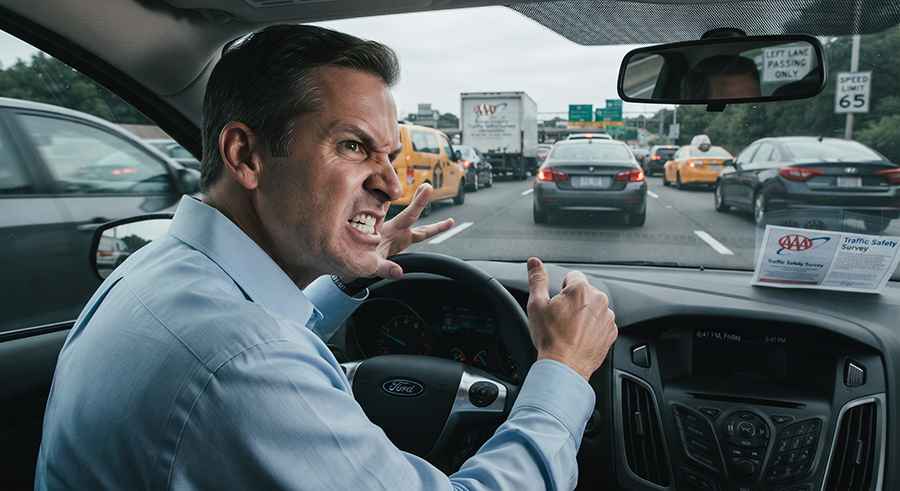
It's a strange phenomenon, and it's surprisingly common. Surveys from the AAA Foundation for Traffic Safety have found that a large majority of drivers admit to showing significant anger or aggression behind the wheel at least once in the past year.
Driving combines stress, time pressure, unpredictable strangers, and the feeling of being sealed inside a private bubble. That mix can bring out reactions people would rarely show anywhere else, and those reactions can quickly turn dangerous on a busy road.
What Happens in the Brain When Someone Cuts You Off?
When another car swerves into your lane, the brain may treat it as a threat. The body's stress response kicks in, releasing adrenaline and raising heart rate. That surge prepares the body to react quickly, which helps in true emergencies.
The problem is what happens after the danger passes. Frustration and anger can linger, especially when the other driver's move feels careless or intentional. People often assume the worst about strangers, interpreting a simple mistake as a personal insult.
Those emotional reactions can shape driving decisions in the moments that follow. Speeding up, tailgating, or trying to get back at the other driver are common responses, and they're exactly how aggressive driving can escalate from a feeling into dangerous behavior.
Why Cars Can Make People Feel Anonymous and Untouchable
Inside a car, face-to-face interaction disappears. Other drivers become vehicles rather than people, which makes it easier to judge them harshly. Without eye contact or facial expressions, misunderstandings are common and empathy fades. Assuming good intent can take much of the sting out.
Perceived anonymity plays a role too. Many drivers feel unlikely to ever see the other person again, which lowers social barriers that normally keep anger in check. Behavior that would seem rude in a hallway can feel acceptable on the highway.
Cars can also trigger territorial feelings. A lane, a parking spot, or the space in front of a car can feel like personal property. When someone intrudes on that space, the reaction may feel more intense than the situation really deserves.
How Small Frustrations Can Escalate Into Dangerous Behavior
Tailgating is often one of the first signs of escalating frustration. Following too closely leaves almost no room to react if the car ahead brakes suddenly, raising the risk of rear-end collisions. Rear-end crashes are among the most common results.
Excessive speeding and unsafe lane changes often follow. Drivers may weave through traffic, cut others off, or race to get ahead. Those maneuvers reduce reaction time and increase the chance of losing control or colliding with another vehicle. Each maneuver also invites another driver's anger.
Hostile gestures, honking, and yelling can provoke other drivers, sometimes leading to confrontations. In the worst cases, road rage incidents involve physical violence or intentional crashes. What began as a small frustration can escalate quickly when both drivers refuse to back down.
Why Recognizing Your Own Anger Matters
Noticing anger early is one of the most effective ways to stop it from escalating. A tight grip on the wheel, a racing heart, or angry thoughts about another driver are all signals to slow down and reset.
Practical strategies help. Increasing following distance, changing lanes to let an aggressive driver pass, and avoiding eye contact with an angry motorist can defuse tense moments. Leaving earlier for appointments reduces time pressure that often fuels frustration.
Managing stress outside the car matters too. Rest, calming music, and reminders that most driving mistakes aren't personal can make a big difference. If another driver becomes threatening, it's safer to drive to a public place and call 911 than to engage.
Conclusion
Driving can bring out a different side of people. Stress responses, perceived anonymity, and territorial instincts can turn small frustrations into anger that feels surprisingly intense, even for otherwise calm individuals. It can happen to almost anyone on a bad day.
That anger can lead to tailgating, speeding, unsafe lane changes, and confrontations that put everyone at risk. Recognizing the early signs and choosing to step back can prevent a bad moment from becoming a dangerous one. Most of those confrontations aren't worth the risk.
The most important driving skill may be emotional control. Patience, awareness, and a willingness to let small slights go help keep roads safer for everyone and make every trip a little less stressful. A deep breath can be one of the best safety features a car has.