A Police Report Does Not Determine Fault in a Car Accident
A car accident in the Bronx can leave people trying to piece together what happened while dealing with vehicle damage, injuries, and insurance concerns. In the aftermath, the police report may become an important part of the record, but it represents what was observed and reported at the scene rather than a final determination of legal responsibility.
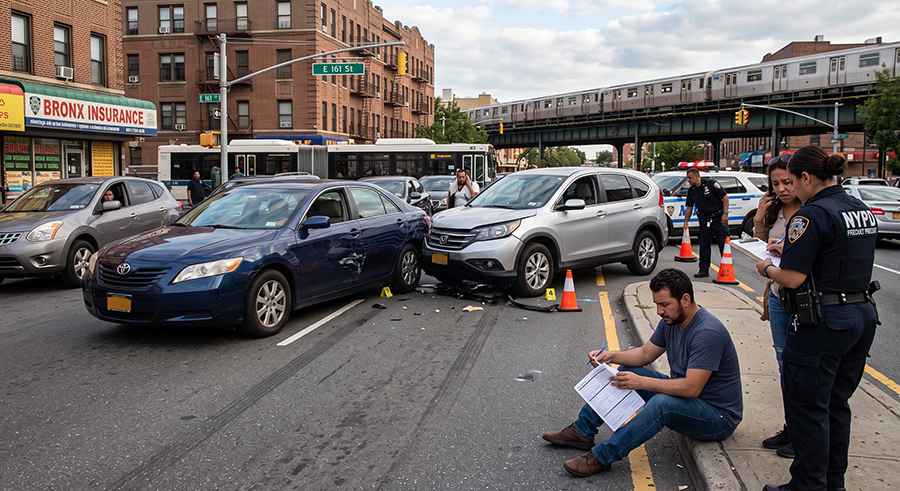
Understanding its role can help an injured person look at the collision more carefully and recognize when other evidence may be needed to explain what actually occurred.
For someone dealing with a disputed accident, consulting a car accident lawyer in Bronx can help place the police report alongside the broader evidence. A lawyer can examine the report together with photographs, witness accounts, medical documentation, and other records to identify inconsistencies or missing details that may affect the claim. This fuller review can help an injured person respond to an insurer’s position based on the available facts rather than relying on the police report alone.
Protecting A Claim After A Crash
Anyone involved should obtain a copy of the police report and check it for factual errors. Names, license plate numbers, insurance details, road locations, and injury descriptions deserve close review. A person should report significant errors through the proper department process.
Photos should show vehicle damage, debris, traffic signs, lane markings, lighting, and nearby businesses with cameras. Contact information from witnesses should be preserved, and medical care should be documented through bills, diagnoses, prescriptions, and work restrictions.
People should avoid arguing about fault at the scene or posting opinions about the collision online. Statements made before all facts are known can create problems during an insurance review. A car accident lawyer can review the report alongside photographs, witness accounts, medical records, and other evidence before advising a client about a claim. Legal advice becomes more useful when the complete record is available.
What A Police Report Actually Does
A police report creates an early record of the collision. It may include the crash location, vehicle positions, road conditions, traffic signals, witness names, driver statements, citations, and the officer’s diagram.
The report helps insurers and lawyers understand what happened, but it is not a final ruling. An officer often arrives after vehicles have moved, witnesses have left, or physical evidence has changed. The report can contain useful facts without answering every question about negligence.
A report also separates observations from conclusions. An officer might record that one driver received a ticket, but the ticket alone does not establish civil liability. Traffic violations and personal injury claims involve different legal questions and proof.
Why The Report May Not Match The Full Evidence
Drivers and witnesses sometimes provide incomplete accounts because collisions create confusion. A person might misjudge a vehicle’s speed, forget a signal, or describe events from a limited viewpoint.
Physical evidence can clarify disputed facts. Vehicle damage, skid marks, photographs, surveillance footage, phone records, and event data can show how the collision occurred. Medical records can also connect injuries to the impact when an insurer questions causation.
Witness testimony matters as well. A neutral witness who saw the traffic signal or the moments before impact can provide information that the first report lacks. Later evidence does not automatically disprove the report, but it can correct an incomplete account.
How New York Assigns Responsibility
New York follows a comparative negligence system. A person can recover damages even when they share some responsibility, but the award decreases by their percentage of fault.
For example, a court could find that another driver caused most of a collision while the injured driver contributed through a separate mistake. The damages would then reflect the assigned percentages. The police report might support one part of the analysis, while testimony and records address the rest.
Insurance adjusters also make their own liability assessments. Their initial decision is not a court judgment. A claimant can challenge an unfair determination with evidence that addresses the adjuster’s reasoning.
When A Legal Review Helps
A review becomes especially useful when the report contains conflicting statements, assigns blame without clear support, omits an injured person, or records facts incorrectly. It also helps when an insurer relies on the report while ignoring photographs, witnesses, or medical documentation.
A lawyer can identify deadlines, request evidence, communicate with insurers, and explain whether a settlement reflects the documented losses. New York personal injury claims also involve rules that can affect recovery, so waiting for an insurer’s final position can create unnecessary risk.
Conclusion
A police report is evidence, not a final decision about fault. Compare its details with photographs, witness accounts, vehicle damage, medical records, and other available proof. Anyone who finds an error should seek a correction and preserve the supporting material. Before accepting a liability decision or signing a release, the injured person should have a qualified New York attorney review the report and full claim file, especially when the evidence conflicts.