The Road May Be Open, but Your Rental Car May Still Be Banned
A road showing as open on a map does not necessarily mean your rental car is allowed to drive it. That distinction catches travelers out on mountain roads, gravel tracks and routes with river crossings. The highway authority may allow traffic. The weather may be good. Your vehicle may even look capable of the drive. Your rental agreement can still say no.
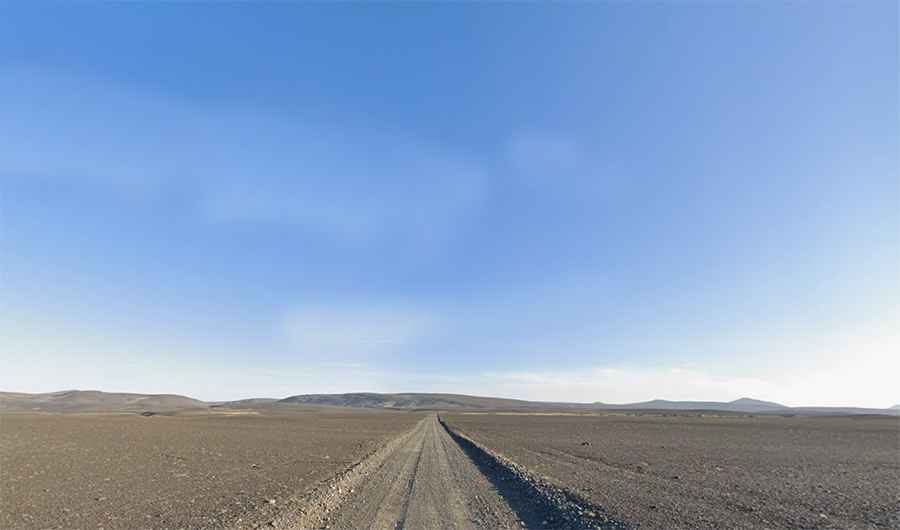
If you ignore that restriction and damage the vehicle, the expensive part can begin after the drive. Depending on the contract, damage protection, roadside assistance or recovery may not apply.
Before turning onto an unfamiliar mountain road, check three things separately:
Is the road open?
Is the vehicle suitable?
Does the rental contract permit it?
They are not the same question.
Why can an open road still be prohibited by a rental company?
Road authorities and rental companies manage different risks.
A road authority decides whether a route is legally open to traffic. A rental company also considers vehicle damage, recovery costs, surface conditions and whether its fleet is suitable for the terrain.
That is why rental contracts may restrict:
- Specific named roads
- Unformed roads
- Beaches
- F-roads and mountain tracks
- River crossings
- Ski-field access roads
- Off-road driving
- Routes beyond a particular point
Do not assume booking a 4WD removes those restrictions.
Four-wheel drive describes the vehicle. It does not rewrite the rental contract.
Can you take a rental car on Skippers Canyon Road?
With many mainstream rental companies, no.
Skippers Canyon Road near Queenstown, New Zealand, is about 17.4 km (10.8 miles) long. The unpaved road is cut into the canyon above the Shotover River and is narrow, winding and exposed to steep drops.
New Zealand's Department of Conservation recommends 4WD and says rental cars are generally prohibited on the road.
Avis New Zealand explicitly lists Skippers Canyon among the places where its vehicles cannot be driven. Budget New Zealand does the same.
Queenstown Car Rental also lists Skippers Canyon Road among its prohibited locations.
There is another practical issue: weather.
DOC warns that wet conditions can cause slips and unplanned closures on Skippers Road. That means a route that was accessible earlier in the week may not remain so.
Seeing another vehicle on the road tells you very little about whether your own rental is permitted there.
Does renting a 4WD automatically give you access to Iceland's F-roads?
No.
This is one of the easiest mistakes to make in Iceland.
A traveler rents a 4WD, sees an F-road on the map and assumes the vehicle can handle every Highland route.
Iceland's road authority makes a more precise distinction.
Its F2 classification covers trails intended for four-wheel-drive vehicles and powerful passenger vehicles. Small rivers may be unbridged.
F3 routes are more serious. They are described as trails suitable only for large, well-equipped 4WD vehicles or superjeeps and may be rocky, uneven and waterlogged.
The rental company can impose further restrictions.
Hertz Iceland, for example, allows approved 4WD categories on F-roads but states that damage from unbridged river crossings, including engine flooding, is not covered by its insurance packages.
Its current terms also make clear that ordinary passenger vehicles are not permitted on F-roads and several other Highland routes.
A 4WD therefore answers only one question: whether the vehicle may be suitable.
It does not guarantee that every road is permitted or every type of damage is covered.
What about roads such as F905 and F66?
This is where the difference becomes very real.
F905, or Arnardalsleið, runs for about 62.6 km (38.9 miles) through eastern Iceland. DangerousRoads describes it as a rough route requiring high-clearance 4WD vehicles, with several stream and river crossings.
F66 in the Westfjords is shorter, at roughly 24.5 km (15.2 miles), but it is also rough, remote and crossed by small rivers.
Both roads are seasonal.
The Icelandic Road and Coastal Administration warns that many mountain roads remain closed until late June or early July because the ground must thaw before vehicles can use them without causing damage.
Conditions can also change after they open.
Before entering any Highland route, check the official road-status service rather than relying on an old blog post, saved map or social-media video.
A route someone drove last week may not be suitable today.
What happens if you drive on a prohibited road?
It depends on the rental agreement.
Possible consequences can include:
- Responsibility for vehicle damage
- Recovery or towing charges
- Loss of some damage protections
- Charges relating to third-party damage
- Loss of roadside-assistance coverage in excluded areas
- Breach of the rental contract
Remote recovery is particularly important.
A breakdown on a normal city street can usually be reached by an ordinary tow truck. A vehicle stuck in a river, canyon or Highland track may require specialist recovery.
Before signing the agreement, look for sections labelled:
Prohibited roads
Restricted use
Insurance exclusions
Off-road driving
Water damage
Roadside assistance
Do not assume a package called "full cover" literally covers every road or every type of damage.
Are all gravel roads prohibited?
No.
This is why reading the actual contract matters.
Budget New Zealand, for example, permits its vehicles on properly formed sealed, metalled or gravel roads. It separately prohibits Skippers Canyon, Ninety Mile Beach and unformed roads.
So "unpaved" does not automatically mean prohibited.
The reverse is also true. A road being publicly accessible does not automatically make it acceptable under a rental agreement.
The contract, route and vehicle have to be checked together.
What should you check before renting the vehicle?
Choose the route before choosing the car.
Then check:
1. Prohibited roads
Search the rental company's terms for the specific roads on your itinerary.
2. Required vehicle type
Some routes require 4WD. Others may need much higher ground clearance than a normal crossover provides.
3. River-crossing exclusions
This matters particularly in Iceland. Water damage may remain the driver's responsibility even when the vehicle is approved for the road.
4. Tire and underbody cover
Rough gravel, rocks and deep ruts can damage tires, wheels and the underside of a vehicle. These are common exclusions.
5. Roadside-assistance limits
Ask what happens if the vehicle becomes stranded on a remote or unsealed road.
6. Current road status
Check again immediately before departure.
Iceland's road authority monitors conditions around the clock and publishes current closures and warnings. New Zealand authorities also issue closure information when weather or slips affect routes such as Skippers Road.
If the rental agreement is unclear, ask the company in writing.
Does luggage matter on a difficult road?
Yes.
A smaller rental car can become overloaded quickly when several people arrive with large suitcases.
You need room for water, warm clothing, first-aid supplies, food, recovery equipment and other items required by the route. Packing light can leave space for the equipment that matters once you are away from towns and services.
How the vehicle is loaded matters too.
Keep heavy luggage low and secure it so it cannot move under hard braking or sharp cornering. Do not stack loose cases above the rear-seat line where they can shift forward.
The same principle applies inside the suitcase. Good luggage balance starts by placing heavier items near the wheels rather than high in the case.
If you use a roof box, check both the vehicle and roof-rack load limits. Cargo carried high on the vehicle raises its center of gravity and can make body movement more noticeable on switchbacks, steep gradients and in strong crosswinds.
When is a local driver the better option?
When the route demands more experience than you have.
Skippers Canyon is a good example. Local commercial 4WD operators drive the route regularly in vehicles selected for the conditions.
The same reasoning applies to Icelandic routes involving deep river crossings, difficult terrain or F3-class tracks.
There is no benefit in forcing a rental car onto a road simply because the vehicle appears capable.
If the rental company says no, leave the car behind.
What is the safest rule?
Check the contract before the road.
Do not rely on Google Maps, an influencer video or the fact that somebody else drove the route recently.
A road can be:
Open to traffic.
Legal to drive.
Suitable for a 4WD.
And prohibited under your rental agreement.
Know which one applies before the pavement ends.