Fighting Fire On Roads Trucks Cannot Reach
Anyone who has driven a forest service road knows the moment it stops being a road. The surface loosens, the shoulder disappears, and the turning radius becomes the whole problem. For a driver that is an adventure. For a fire crew it is an operational limit.
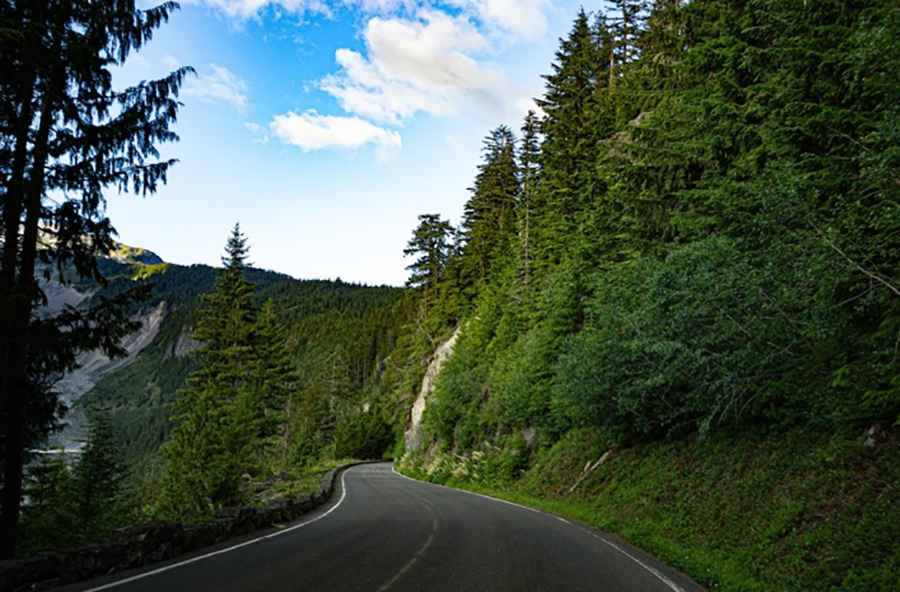
A fire on the wrong side of that limit does not get fought by the equipment you see on a highway. It gets fought by whatever can physically arrive, which is why skid units built for utility vehicles exist at all. Suppliers such as BLZ Fire Skids build self-contained pump, tank and hose packages sized to drop into a UTV bed rather than onto a chassis.
Why Does a Fire Engine Stop at the Trailhead?
Three constraints stack up, and none of them are about the driver's nerve.
- Many forest roads run a single lane with no passing bay for miles, and a full-size engine cannot reverse out of a mistake.
- Grade and surface. Loaded weight on loose gravel at a sustained gradient is a traction problem before it is a power problem.
- Turning radius. A switchback cut for logging trucks decades ago is not necessarily cut for a modern apparatus.
Add overhead clearance and the occasional washout and the picture is clear enough. The road that makes a scenic drive interesting is the same road that strands a 30,000 pound vehicle.
None of this is a criticism of the roads. They were built to move timber, ore or livestock, and they still do that well. Emergency access simply was not the design brief.
What Is a Fire Skid?
A skid unit is a self-contained firefighting package built on a frame that sits in a vehicle bed rather than being built into the vehicle. Pump, tank, hose reel and plumbing arrive as one assembly.
The appeal is flexibility. The same unit can move between a UTV, a flatbed pickup and a trailer as conditions change. It can be removed entirely when the vehicle is needed for something else. For volunteer departments and land managers running small fleets, that matters more than outright capacity.
Capacity is genuinely small. Where a full wildland engine carries several hundred gallons, a UTV skid works with a fraction of that. The job shifts from suppression to holding a line until something larger arrives, or finishing an ignition while it is still small.
That is a road problem as much as an equipment one. The unit is small because the route will not accept anything bigger.
What Does Road Geometry Actually Decide?
More than the vehicle spec does. A route's design was fixed decades ago by whoever cut it, and everything after that is a consequence.
Four features do most of the deciding:
- Passing bays, and how many miles sit between them. Without one, a meeting between two vehicles means somebody reverses a long way.
- Turning radius at switchbacks, usually set by the logging or mining trucks the road was built for.
- Sustained gradient, which governs both climbing traction and brake heat on the way down.
- Turnaround points, because a dead end with no way to reverse direction is a trap for anything long.
None of these appear on a map legend. They are the difference between a road a crew can commit to and one they will not enter.
Drivers read the same features differently. What an overlander notes as a good spot to pull over is, to a dispatcher, the only place two vehicles can pass in 6 miles.
Seasonal condition sits on top of geometry. A route that is trivially passable in August can be closed by a washout, a slide or a fallen tree, and nobody discovers it until somebody drives it.
What Do These Roads Do to Equipment?
They are hard on everything, and in specific ways.
Sustained vibration on washboard surfaces loosens fittings and fatigues brackets. Dust gets into everything that breathes. Rock strikes find anything mounted low. Steep descents heat brakes on a vehicle already carrying more weight than its designers assumed.
Consider Forest Road 0161, or the climb on Forest Road 123 in the Tushar Mountains. Both are ordinary examples rather than extreme ones. Both are the sort of ground a response vehicle has to treat as routine.
Where Does This Matter Most?
Wherever recreation, dispersed housing and fuel load overlap on roads that were never built for emergency access.
State agencies publish planning material on this, and both CAL FIRE and the Washington Department of Natural Resources deal with the problem at scale across very different terrain. The common thread is that access dictates tactics. A fire reachable in 20 minutes is a different incident to the same fire reachable in 2 hours.
There is a smaller point in this for drivers. The road you are enjoying is also somebody's access route, and blocking it matters more than it looks.
Frequently Asked Questions About Remote Fire Response
How Much Water Does a UTV Skid Carry?
Commonly somewhere between 50 and 200 gallons depending on the vehicle. The upper end usually means a purpose-built or heavily rated machine rather than a standard UTV.
Are Skid Units Only for Fire Departments?
No. Ranches, timber operations, land trusts and some private landowners run them, particularly where the nearest station is a long way off.
Can a Skid Unit Replace an Engine?
Not for a working fire of any size. It buys time, protects a structure, or handles an ignition before it grows.
What Happens When the Tank Runs Out?
Refill from a water tender, a natural source with a draft kit, or the unit withdraws. Planning that resupply is most of the tactical thinking on a remote incident.
Reading a Road With Fire In Mind
Next time a route narrows and the trees close in, it is worth noticing what could follow you up it. Passing bays, turnarounds and surface condition stop being scenery and start being a response time.
The roads catalogued here are interesting because they are difficult. That difficulty is not academic to everyone who drives them.
Photo by Gigin Krishnan on Unsplash