The Role of Catalytic Converters in the Circular Economy
The automotive industry is becoming an important part of the global transition toward a circular economy. Instead of treating vehicles and their components as disposable products, manufacturers, recyclers, and consumers are increasingly looking for ways to reuse materials and recover valuable resources.
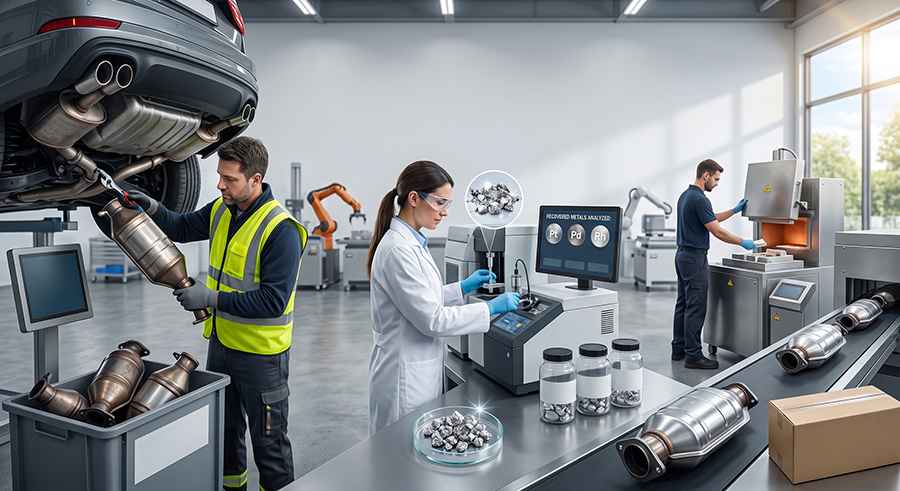
Catalytic converters are particularly important in this process because they combine an essential environmental function with a valuable source of recyclable materials.
Why Catalytic Converters Matter
Catalytic converters are installed in vehicle exhaust systems to reduce harmful emissions. During their service life, they help convert pollutants into less harmful substances before exhaust gases are released into the atmosphere.
However, their value does not end when a vehicle reaches the end of its useful life. Catalytic converters contain platinum, palladium, and rhodium — precious metals that can be recovered and used again.
This makes a recycled catalytic converter an important example of how automotive components can remain part of the resource cycle instead of becoming waste.
From End-of-Life Part to Valuable Resource
In a traditional linear economy, an old vehicle component would eventually become waste. The circular economy takes a different approach by recovering materials and returning them to productive use.
Once a vehicle is dismantled, its catalytic converter can be collected and assessed. Specialized recycling processes can then recover the valuable metals contained within the converter. These materials can subsequently enter industrial supply chains and be used in the production of new products.
This process reduces the amount of valuable material that needs to be obtained from primary sources.
Reducing Pressure on Natural Resources
Mining precious metals can require significant amounts of energy, water, and other natural resources. Recovering metals from existing automotive components provides an alternative source of supply.
Recycling catalytic converters can therefore contribute to:
- More efficient use of existing resources
- Reduced automotive waste
- Recovery of valuable precious metals
- Lower dependence on primary raw materials
- A more sustainable supply chain
The benefits become particularly significant when recycling is carried out at scale.
Technology and Better Identification
Efficient recycling begins with accurate identification. Different catalytic converters contain different quantities and combinations of precious metals, so determining the exact model is an important part of the process.
Modern databases and digital platforms make it easier for recyclers, dismantlers, and other market participants to identify converters and assess their potential value. Better access to information can improve transparency and help valuable components move efficiently through the recycling chain.
The Economic Side of the Circular Economy
Sustainability is not the only reason catalytic converter recycling is becoming more important. The precious metals inside these components have significant economic value.
This creates an ecosystem in which vehicle owners, dismantlers, collectors, recyclers, and refiners can all participate. Instead of being treated simply as waste, end-of-life catalytic converters become a source of recoverable materials with an established secondary market.
Looking Ahead
As the automotive industry continues to focus on resource efficiency, catalytic converters are likely to remain an important part of the circular economy. Millions of vehicles eventually reach the end of their service life, creating a continuous supply of components that can be collected and processed.
Recovering precious metals from these components helps keep valuable materials in circulation while reducing waste and supporting more efficient use of natural resources.
The catalytic converter recycling industry therefore demonstrates how the circular economy can turn an end-of-life automotive component into a valuable resource for the next generation of products.