How Demanding Roads Affect Key Commercial Truck Parts
Commercial trucks are built to handle long distances, heavy loads, and changing road conditions. Even so, repeated exposure to potholes, broken pavement, steep gradients, debris, vibration, dust, and extreme temperatures can gradually place extra stress on important components.
For drivers and fleet operators, maintenance is therefore not only about mileage or scheduled servicing. The roads a truck regularly travels can also influence which parts deserve closer attention and how often inspections should take place.
Understanding the components most affected by difficult routes can make maintenance more organized, help identify wear earlier, and keep a truck prepared for demanding journeys.
Why Road Conditions Matter in Truck Maintenance
Not every truck experiences the same level of mechanical stress. A vehicle used mainly on well-maintained highways may encounter very different conditions from those of one operating on construction routes, mountainous roads, industrial sites, rural highways, or uneven regional roads.
Repeated vibration can affect suspension parts, fasteners, exterior panels, lighting mounts, and steering components. Road debris may strike bumpers, grilles, headlights, and cooling equipment. Steep climbs can increase the demands placed on the engine and cooling system, while long descents require dependable braking performance.
For this reason, drivers should consider both mileage and operating conditions when planning inspections.
Parts that commonly deserve attention include:
- Suspension and steering components.
- Brakes and wheel hardware.
- Radiators and cooling parts.
- Headlights and exterior lighting.
- Bumpers, grilles, and body panels.
- Windshield wipers and mirrors.
- Filters, fluids, and visible hoses.
Suspension and Steering Components
Suspension systems absorb much of the movement created by rough and uneven roads. Springs, shock absorbers, bushings, air suspension components, mounting hardware, and related parts all work together to keep the truck stable.
Changes in Ride Quality Can Be Useful Clues
Drivers often become familiar with how their truck normally handles. Changes such as excessive bouncing, unusual leaning, increased vibration, or different steering response can indicate that an inspection is worthwhile.
Visible checks may also reveal:
- Damaged or worn bushings.
- Loose mounting points.
- Air suspension leaks.
- Uneven ride height.
- Damaged shock absorbers.
- Unusual movement around suspension components.
Brakes, Wheels, and Tires
Braking systems work particularly hard when trucks operate on steep routes or carry heavy loads.
Pads or linings, discs or drums, hoses, air lines, and related hardware should form part of regular inspections. Drivers should also pay attention to changes in braking response, unusual sounds, or other signs that the system may require professional assessment.
Tires Need Frequent Visual Checks
Tires are another major contact point between the truck and the road.
Rough surfaces, sharp debris, potholes, and changing temperatures can contribute to wear. Drivers should regularly look for:
- Cuts or cracks.
- Uneven tread wear.
- Embedded objects.
- Incorrect inflation.
- Visible sidewall damage.
Cooling Systems Under Heavy Workloads
A commercial truck's cooling system plays an important role when the engine is working under sustained load.
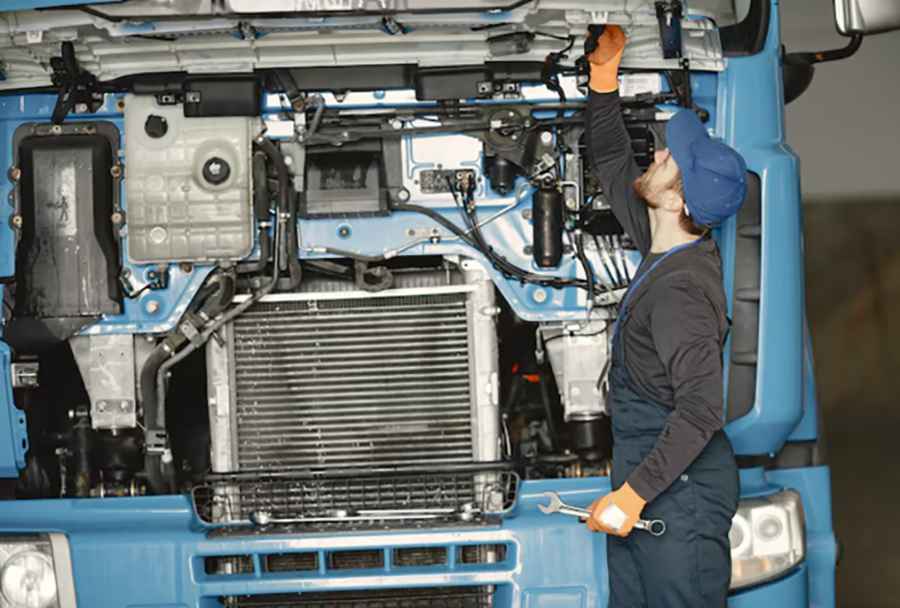
Long climbs, warm weather, heavy cargo, and slow-moving traffic can all increase operating temperatures. Radiators, charge air coolers, coolant hoses, water pumps, fans, and reservoirs therefore deserve regular attention.
Keep the Front Cooling Area Clear
The front of a truck is constantly exposed to insects, dirt, stones, and road debris. Over time, material can collect around grille openings and cooling surfaces.
Routine inspection helps identify damaged screens, blocked airflow, loose components, or visible leaks before they develop into larger maintenance concerns.
When replacement components are required, they may be sourced through a truck parts supplier, but compatibility should always be checked using the truck's manufacturer, model, production year, and relevant part specifications.
The source of a component matters less than confirming that the part is appropriate for the specific vehicle and intended application.
Lighting and Visibility on Difficult Routes
Good visibility becomes particularly important when road conditions are already challenging.
Rain, fog, dust, darkness, snow, and poorly illuminated roads can make it harder for drivers to identify curves, obstacles, surface damage, and other vehicles.
Headlights, fog lights, brake lights, indicators, marker lights, and reflective elements should therefore be included in regular walk-around checks.
Replacement Lights Must Match the Vehicle
Commercial trucks may use different headlight assemblies depending on the model, year, trim, and electrical configuration.
A replacement unit that looks similar may not necessarily fit correctly. Mounting points, electrical connectors, dimensions, and vehicle specifications should all be checked before installation.
Windshield wipers and mirrors should receive similar attention. A worn wiper blade or damaged mirror may appear minor during clear weather but becomes far more important when visibility suddenly drops.
Exterior Components Provide Practical Protection
Bumpers, grilles, fenders, hood panels, fairings, and cab extensions are often associated with appearance, but many of these parts also serve practical purposes.
They can protect components behind them, direct airflow, reduce exposure to road debris, and help maintain the intended shape of the vehicle.
Because exterior parts are directly exposed to the road environment, they may experience:
- Stone impacts.
- Loose fasteners.
- Damaged brackets.
- Weather-related wear.
How to Choose Replacement Truck Parts More Accurately
Commercial trucks can remain in service for many years, and manufacturers often update individual models over time. As a result, components from different generations may look similar while using different mounting designs, dimensions, sensors, or electrical connections.
Before ordering a replacement part, it is useful to confirm:
- Truck manufacturer.
- Exact model.
- Production year.
- OEM or reference part number.
- Driver-side or passenger-side position.
- Mounting points.
- Electrical connectors.
- Compatibility with sensors or driver-assistance equipment.
Use Model-Specific Information When Searching
Searching by exact vehicle information can reduce the number of unsuitable options.
For example, an owner maintaining a Kenworth may search for kenworth truck parts online, while drivers operating Freightliner, Peterbilt, Volvo, Mack, International, or other trucks can use the same model-specific approach.
The key point is to treat the manufacturer's name as only one part of the compatibility check. Production year, configuration, side position, and part specifications can be just as important.
Build Maintenance Around Real Operating Conditions
A fixed maintenance schedule provides a useful foundation, but commercial trucks operate in very different environments.
A truck regularly traveling on smooth interstates may not experience the same wear patterns as one working on broken rural roads, steep mountain routes, construction sites, or poorly maintained regional highways.
Drivers and fleet operators can therefore benefit from adjusting inspections according to the conditions a truck actually encounters.
After demanding journeys, particular attention can be given to:
- Tires and wheels.
- Suspension components.
- Steering behavior.
- Brake performance.
- Cooling equipment.
- Exterior panels.
- Mirrors and wipers.
Conclusion
Demanding roads can place extra stress on suspension, steering, brakes, tires, cooling systems, lighting, and exterior parts, making regular inspections especially important. When replacements are needed, drivers and fleet operators should match parts carefully to the truck’s manufacturer, model, year, position, and technical specifications rather than relying on appearance alone. Combining routine maintenance with checks based on real road conditions can help keep commercial trucks better prepared for challenging routes and reduce the chance of minor issues developing into larger problems.
Image source