Using an AI Image Generator to Visualise the World’s Most Scenic Roads
Some roads are memorable because of where they lead. Others become the destination themselves. A winding mountain pass, a narrow road above a deep valley or a coastal route surrounded by dramatic cliffs can turn an ordinary drive into an unforgettable journey.
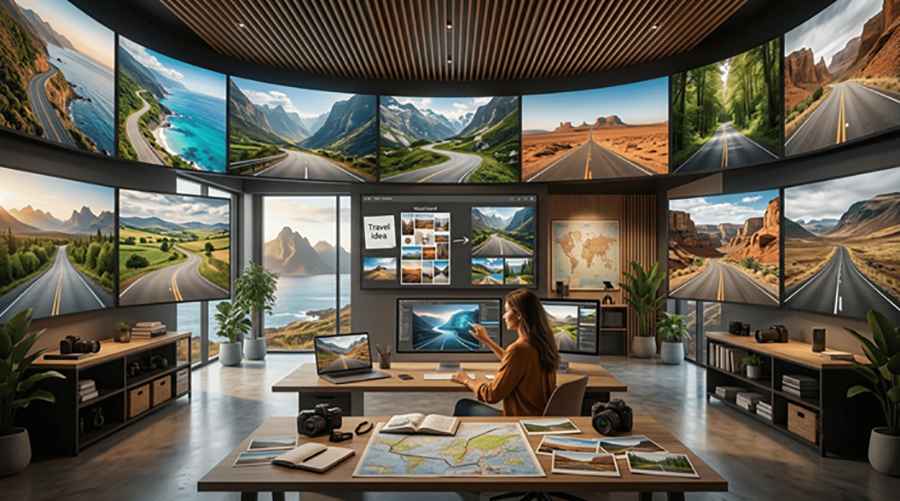
For travellers who enjoy discovering spectacular roads, photographs can provide a glimpse of what lies ahead. But sometimes it is difficult to imagine a route before actually reaching it. An AI Image Generator can offer another way to explore those ideas, with Higgsfield supporting creative travel visualisation and concept development by turning written descriptions into visual concepts.
Used thoughtfully, an AI Image Generator can help travellers picture dramatic landscapes, imagine different road trip scenes and develop inspiration for future journeys. It cannot replace real photographs, maps or local information, but it can add an imaginative layer to the planning process.
Why Scenic Roads Are So Visually Appealing
A great road is rarely just a strip of pavement. Its character often comes from the landscape surrounding it. Think about a road climbing through the Himalayas, a route winding along a rugged coastline or a narrow mountain pass disappearing into clouds. The combination of road, terrain, weather and scenery creates a story.
This is one reason road enthusiasts often save photographs and videos before planning a journey. Visual references can help answer questions that a written description cannot always communicate.
- What does the landscape look like?
- How dramatic are the bends?
- Does the road pass through forests, deserts or mountains?
- How exposed does the route appear?
An AI Image Generator can help explore these questions at the idea stage by creating interpretations based on descriptions.
The result should be treated as a creative visualization, not as an accurate representation of an actual road.
Turning a Road Description Into a Visual Idea
One interesting use of an AI Image Generator is transforming a written road description into a visual concept. Suppose a traveller is researching a remote mountain road. The description might mention steep cliffs, winding switchbacks, high altitude terrain and snow covered peaks.
Those details can become the basis for a visual prompt. The resulting image might show how the different elements could appear together. This can make research more engaging, particularly for travellers who enjoy imagining a journey before they begin. The process also encourages attention to details.
Instead of simply searching for "beautiful mountain road," a traveller might think about:
- Road surface
- Elevation
- Landscape
- Weather
- Vegetation
- Vehicle type
- Time of day
- Viewpoints
- Road width
- Surrounding terrain
These details can produce a much more specific visual concept.
1. Visualising Mountain Roads
The mountain roads can be among the breathtaking routes around the globe. They could include hairpin bends, steep slopes and rocky cliffs, high altitude passes, and continuously changing weather conditions. An AI Image Generator helps travelers visualize these features prior to exploring a specific area.
For instance, a prompt could be a description of a mountain road traversing the top of a mountain with striking mountains in the background. The photo could serve as a source of inspiration for a road trip mood board.
But, it is important not to presume that all the information shown is accurate in terms of geography. An image generated could place the road or other feature of the landscape that is not there. For a true travel plan maps that are official as well as road authorities and other trustworthy local sources must remain the only source of information. The visual generated is just an opportunity to envision the trip.
2. Bringing Coastal Roads to Life
Coastal drives provide a totally unique experience. A road can traverse along a coastline that is rocky and pass through small fishing villages, or rise over the ocean before heading towards an adjacent town.
An AI Image Generator will allow you to look at different variations of this landscape. Travelers might envision the same coastline at sunrise, in cloudy skies, or during an evening with a golden hour. This can be extremely useful when creating a road trip idea or travel journal. For instance an entire family looking to travel along the coast might make a mood board that shows beaches, cliffs as well as viewpoints, and winding roads.
The images could then inspire decisions about photography stops and places worth researching. Again, the distinction between imagination and reality matters. Generated visuals should never be used as evidence that a particular viewpoint, road condition or landmark exists.
3. Exploring Desert Roads
Desert roads have a visual character of their own. Long stretches of asphalt can disappear toward the horizon, while mountains, dunes or rocky formations dominate the surrounding landscape. These environments are especially interesting to visualise because small changes in lighting can completely alter the mood.
An AI Image Generator can create concepts featuring sunrise, midday heat, sunset or a star filled night sky. Travellers can use these ideas to think about the kind of experience they want from a desert road trip.
The visual exercise may also lead to practical questions.
- Where are the fuel stations?
- How far apart are settlements?
- What happens if weather conditions change?
- Is the route suitable for a standard vehicle?
- Where can travellers safely stop?
These questions are much more important than the generated picture itself.
4. Imagining Forest and Jungle Routes
Roads through dense forests can feel completely different from exposed mountain passes. Trees may form a natural tunnel around the road, mist can cover the landscape and wildlife may occasionally appear along the route. An AI Image Generator can help create atmospheric ideas around these environments.
A traveller might experiment with a misty forest road, a tropical mountain route or a winding road surrounded by autumn foliage. These images can be useful for travel inspiration, photography planning or simply exploring destinations from home.
For wildlife rich areas, however, generated imagery should not be mistaken for a prediction of what travellers will actually see. Real wildlife sightings depend on season, location, weather and chance.
5. Visualising Famous Hairpin Roads
Hairpin bends are one of the defining features of many famous mountain routes.
From a distance, a road covered with switchbacks can look almost like a drawing across the side of a mountain. An AI Image Generator can help create a visual interpretation of this type of landscape. The image could show the road from above, from a viewpoint across the valley or from the driver's perspective.
Each perspective tells a different story. A top-down view highlights the geometry of the road. A driver's view communicates the feeling of approaching a bend. A distant landscape view shows how the road fits into the surrounding terrain.
This kind of visual exploration can help travellers think about the viewpoints they may want to photograph during a real trip.
6. Creating a Road Trip Mood Board
A road trip often begins long before the car starts moving. Travellers collect maps, photographs, accommodation ideas, destination lists and notes about interesting stops. An AI Image Generator can become another part of that planning process.
A mood board could include visual concepts representing:
- Mountain passes
- Coastal highways
- Forest roads
- Desert landscapes
- Historic villages
- Scenic viewpoints
- Campsites
- Roadside cafés
The goal is not to create a perfect itinerary. Instead, the images can help establish the kind of journey the traveller wants. Someone looking for dramatic scenery might build a completely different mood board from someone interested in quiet countryside roads. That distinction can make trip planning more personal.
7. Exploring Roads Before a Journey
One advantage of visualisation is that it can encourage travellers to research a destination more carefully. Imagine seeing a generated concept of a winding road crossing a remote mountain landscape. The next step should not be booking a vehicle immediately.
It should be asking better questions.
- Where exactly is this type of road found?
- What is the actual elevation?
- When is it open?
- What are the road conditions?
- Are there restrictions for visitors?
- Is specialist driving experience required?
- What weather conditions are common?
The visual can therefore act as a prompt for deeper research.
This is one of the more responsible ways to use AI in travel planning.
Using Higgsfield for Scenic Road Visuals
Higgsfield offers tools that can be used to explore visual ideas from written descriptions and references. For travellers interested in experimenting with road trip concepts, It can provide a creative starting point for imagining landscapes, routes and cinematic travel scenes.
For example, a description of a winding road above a dramatic coastline can be turned into a visual concept that captures the atmosphere of the journey.
Higgsfield AI creative suits can also be useful when creating a collection of different travel concepts. One image might focus on a mountain pass, another on a forest road and another on a coastal route.
These visuals can then be compared to determine which type of journey feels most appealing. The important point is that generated imagery remains conceptual. It does not replace geographic research, road maps or official travel information.
8. Comparing Different Driving Environments
Another interesting use of an AI Image Generator is comparing different road environments.
A traveller could create visual concepts for:
Mountain roads
Steep terrain, switchbacks and dramatic peaks.
Coastal roads
Cliffs, ocean views and winding shorelines.
Desert roads
Open landscapes, long straights and distant mountains.
Forest roads
Dense vegetation, shade and changing weather.
Rural roads
Small villages, farmland and quieter surroundings.
Seeing these environments side by side can help travellers decide what type of road trip appeals to them most.
It can also become a fun activity for families or groups planning a holiday together.
9. Creating Travel Storytelling Images
Road trips are often remembered through stories. There is the unexpected viewpoint, the difficult climb, the roadside stop or the moment a mountain suddenly appears around a bend. An AI Image Generator can help recreate the atmosphere of those stories.
A traveller could describe a fictional scene such as:
A lone vehicle approaching a high mountain pass just before sunset, with clouds gathering around the peaks.
The resulting image does not need to represent a real location.
Instead, it can illustrate the feeling of adventure.
This can be useful for travel journals, personal blogs or presentations about future trips. It also shows how AI imagery can support storytelling without pretending to document an actual event.
10. Turning Research Into a Visual Checklist
Road trip planning often involves a long list of practical details. A visual approach can make some of that preparation easier to organise.
For example, a traveller researching a remote road could create a checklist covering:
Route
Where does the road begin and end?
Distance
How long is the journey?
Terrain
Is the route mountainous, coastal, desert or forested?
Road surface
Is it paved, gravel or unsealed?
Weather
What conditions are common?
Fuel
Where are the nearest fuel stops?
Communication
Is mobile coverage available?
Vehicle
Is a standard car suitable?
Emergency planning
What should be done if conditions deteriorate?
An AI Image Generator could provide visual concepts for the different environments, but the factual information should always come from trustworthy sources.
AI Images Should Never Replace Real Road Information
This distinction is especially important when dealing with roads described as dangerous or challenging. A generated picture may show a dramatic cliff, a perfectly clear sky or a particular road surface simply because those details were included in the prompt. Reality can be very different.
Road conditions can change because of:
- Heavy rain
- Snow
- Landslides
- Construction
- Flooding
- Rockfalls
- Seasonal closures
- Traffic
- Local restrictions
Travellers should therefore check current information before setting out.
An AI Image Generator can help someone imagine a destination, but it cannot tell them whether a road is currently open or safe to drive. For genuine route information, official authorities, local tourism organisations and reliable road resources should take priority.
Making Scenic Road Research More Engaging
Research does not have to feel like a long list of facts. Combining maps, photographs, road descriptions and visual concepts can make the process more engaging.
A traveller might begin with a road they have never visited, read about its history and geography, look at real photographs, and then create a visual interpretation of the landscape.
This encourages curiosity. It can also help children and teenagers become interested in geography. A family could choose a famous road and explore its country, climate, terrain and nearby communities before creating an imaginative scene based on what they learned. The activity becomes a combination of travel research and creativity.
A More Thoughtful Way to Use AI in Travel
The most useful role for an AI Image Generator may not be creating something that looks exactly like a photograph. Its greater value can be helping people ask questions and explore possibilities.
- What would this journey feel like?
- How might the landscape change from one section of the road to another?
- What kind of viewpoint would make the best photograph?
- Which environment would be most exciting to explore?
These questions can make travel planning more engaging. Higgsfield can be part of that process, particularly for travellers who enjoy experimenting with different visual interpretations before creating a final concept.
The technology becomes a creative companion to maps, photographs and research rather than a replacement for them.
Safety Still Comes First
Scenic roads can be beautiful, but some are also genuinely challenging. A dramatic photograph should never encourage a driver to take unnecessary risks.
Drivers should avoid stopping in unsafe locations simply to recreate a picture. They should also follow local traffic rules, respect road closures and pay attention to changing weather conditions.
For remote routes, preparation can be especially important. Fuel, food, water, navigation, communication and emergency supplies may all require additional planning. The more isolated a road is, the more important it becomes to understand the actual conditions before travelling. Beautiful scenery is a reason to enjoy a road, not a reason to ignore safety.
The Future of Visual Road Trip Planning
As AI tools become easier to use, visualisation could become a more familiar part of travel planning. Instead of relying only on written descriptions, travellers may increasingly experiment with visual concepts before deciding where they want to go.
An AI Image Generator could help turn a vague idea such as "a dramatic mountain road" into several different concepts.
One might inspire a trip through the Alps.
Another might encourage research into Himalayan routes.
A third could lead to a completely different idea involving a remote coastal road.
Technology does not decide where the journey should go.
It simply makes the possibilities easier to explore.
Final Thoughts
The world's scenic roads already provide plenty of inspiration. From high mountain passes and winding coastal routes to remote desert highways and forest tracks, every landscape offers a different kind of driving experience.
An AI Image Generator adds an interesting new layer to that experience by allowing travellers to visualise ideas before they become real journeys.
It can help with mood boards, travel stories, destination inspiration, photography concepts and family road trip planning. Used responsibly, it can also encourage people to research the geography, weather and practical challenges of a route more closely.
Higgsfield and similar tools are most useful when they complement real travel information rather than replacing it.
A generated image may show what a road could feel like, but maps, official sources, experienced travellers and real world conditions tell you what the road is actually like.
That balance between imagination and preparation is what makes AI visualisation particularly interesting for road enthusiasts.
The next great road trip may begin with a map, a photograph, a story or simply a question. An AI Image Generator can now add another possibility: seeing the idea before setting out to experience it.