Best Headlight Bulbs for Night Driving: What Matters on Dark and Dangerous Roads
Night driving becomes much harder once you leave well-lit city streets. On a dark highway, mountain road, or rural route, your headlights may be the only thing helping you spot a curve, lane marking, animal, or obstacle ahead. Rain, fog, and snow can reduce visibility even further.
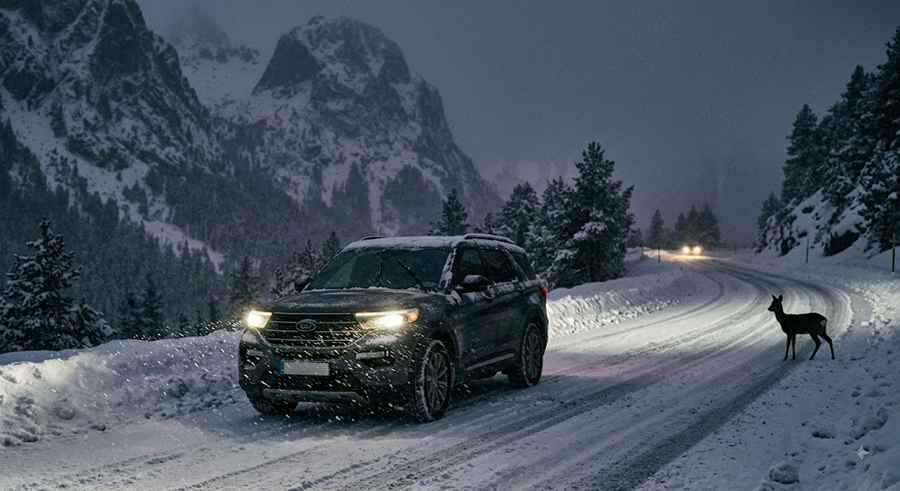
That is why choosing the best headlight bulbs for night driving is not simply about finding the highest lumen number.
Useful nighttime visibility depends on brightness, illumination distance, beam width, beam pattern, color temperature, fitment, and cooling. A good bulb should put light where you actually need it on the road ahead and along its edges without creating excessive glare for other drivers.
What to Look for in Headlight Bulbs for Night Driving
Brightness matters, but advertised lumen output does not tell the whole story.
A powerful bulb with a poorly controlled beam can scatter light above the road or create bright spots directly in front of the vehicle while leaving the distance ahead difficult to see. For night driving, effective road illumination is more important than raw output alone.
Illumination Distance and Beam Width
Longer illumination distance can help on highways and unlit rural roads because it gives you more time to recognize curves, road signs, debris, animals, and other hazards.
Beam width matters too. A wider useful beam can improve visibility near the shoulders and edges of the road, which is particularly helpful on rural and mountain routes.
The goal is a combination of forward reach and usable side visibility rather than simply making the area immediately in front of the vehicle extremely bright.
Beam Pattern and Cutoff
A controlled beam pattern directs light toward the road instead of scattering it into the eyes of approaching drivers.
With low beams, a defined cutoff is especially important. If an LED replacement does not position its light-emitting chips close to where the original halogen filament sat, the headlight housing may produce unwanted glare, dark areas, or an uneven beam.
Color Temperature and Stable Output
Many LED headlight bulbs produce a whiter light than traditional halogen bulbs. Clear white illumination can make lane markings, signs, and road details easier to distinguish under suitable conditions.
However, color alone does not determine performance. Beam placement and usable intensity remain more important.
Heat management also matters during long drives. LEDs generate heat around their electronic components, so an effective cooling system helps maintain consistent output and protects the bulb during extended operation.
Finally, always check the bulb size, connector, available housing space, and vehicle compatibility before buying. Even a high-performance bulb will not work correctly if it does not fit or sit properly inside the headlight assembly.
LED vs. Halogen Headlight Bulbs for Driving at Night
Halogen bulbs remain common because they are simple, inexpensive, and designed to work with many factory headlight housings. Their warmer light can also be comfortable in certain driving conditions.
However, halogen bulbs generally offer lower output and shorter service life than modern LED alternatives.
LED bulbs can provide brighter, clearer white illumination while consuming less electrical power for a given light output. They can also maintain more consistent performance and typically offer longer service life.
For drivers replacing dim or aging halogens, compatible, vehicle-specific LED headlight bulbs can therefore be a practical upgrade. Compatibility is critical, though. Bulb size, housing design, LED chip position, installation angle, and headlight aim all influence the final beam pattern.
Weather introduces another consideration.
Headlights and fog lights perform different jobs. Low-beam headlights provide primary forward illumination, while fog lights are positioned lower and are intended to supplement low beams by illuminating the road closer to the vehicle during poor visibility.
Compatible LED fog light bulbs can support visibility in fog, rain, snow, and similar conditions, but fog lights should be treated as supplemental lighting, not a replacement for properly functioning low-beam headlights.
Best Headlight Bulbs for Highway, Mountain, and Dangerous Night Driving
Night-driving needs are not the same for every driver. Someone regularly traveling on dark rural highways may prioritize maximum light output and durability, while a daily commuter may care more about balanced performance and easy fitment.
Based on the supplied SEALIGHT specifications, the S7S, S2S, and S2 target different types of nighttime driving.
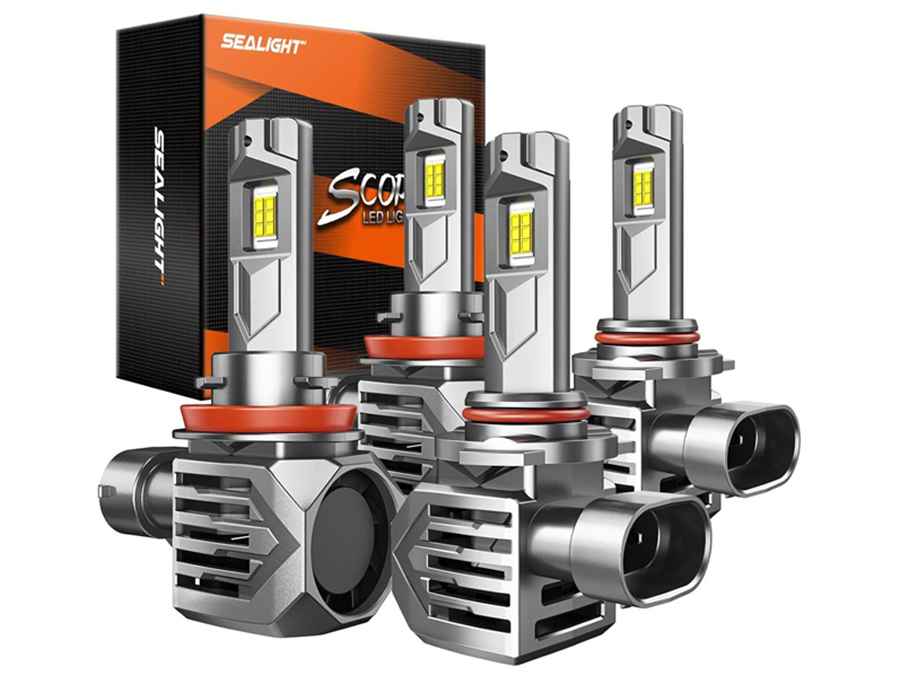
1. Best Flagship Performance: SEALIGHT S7S
The SEALIGHT S7S is the flagship option for drivers who want a high-output LED upgrade for demanding nighttime conditions. Its combination of bright white light, active cooling, IP68 protection, and long stated service life makes it particularly suitable for frequent night driving.
Key specifications:
- Color temperature: 6500K bright white
- Stated light output: 66,000 lumens per set
- Stated wattage: 260W per set
- Light source: LED
- Fit type: Vehicle-specific
- Model: 9005/HB3 + H11/H9/H8
- Waterproof rating: IP68
- Stated lifespan: Over 60,000 hours
- Cooling: Proactive cooling
- Power supply: Interior
- Package: 4 bulbs / 2 pairs
The S7S stands out when strong illumination is the priority. Its 6500K bright-white output can provide a crisp view of lane markings, signs, road edges, and potential hazards on poorly lit roads.
Heat management is another important consideration with high-output LEDs. The S7S uses proactive cooling to help manage operating temperature during extended use. Its IP68 rating also adds protection against water and dust, which is useful for vehicles regularly driven through rain, snow, mud, or other challenging conditions.
Best for: Long highway trips, dark rural roads, mountain routes, frequent night driving, and drivers looking for the flagship option in this comparison.
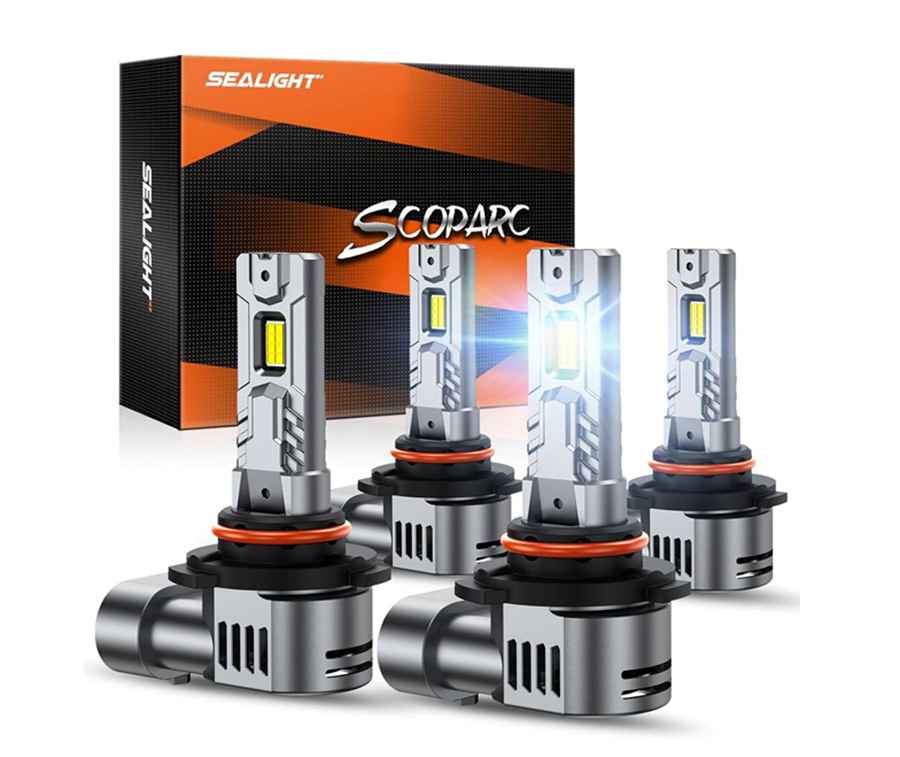
2. Best Overall Night-Driving Choice: SEALIGHT S2S
For most drivers, the SEALIGHT S2S offers the strongest balance of output, efficiency, and everyday usability.
Rather than focusing only on maximum power, the S2S combines a high stated light output with lower wattage than the S7S and S2 specifications provided here.
Key specifications:
- Color temperature: 6500K bright white
- Stated light output: 44,000 lumens per set
- Stated wattage: 140W per set
- Light source: LED
- Fit type: Vehicle-specific
- Model: 9005/HB3 + 9006/HB4
- Waterproof rating: IP68
- Stated lifespan: Over 6,000 hours
- Power supply: Internal
The 6500K color temperature provides the bright-white appearance commonly associated with modern LED headlights. For regular nighttime driving, this can provide clear illumination of lane markings, signs, and road details when paired with a properly controlled beam pattern.
Its IP68 waterproof rating is another advantage for year-round driving in wet or dusty conditions.
Fitment remains important. The S2S specification provided here is for 9005/HB3 + 9006/HB4, so drivers should confirm their vehicle's required bulb sizes before ordering.
Best for: Daily commuting, suburban roads, regular highway use, poorly lit routes, and drivers wanting a balanced LED headlight upgrade.
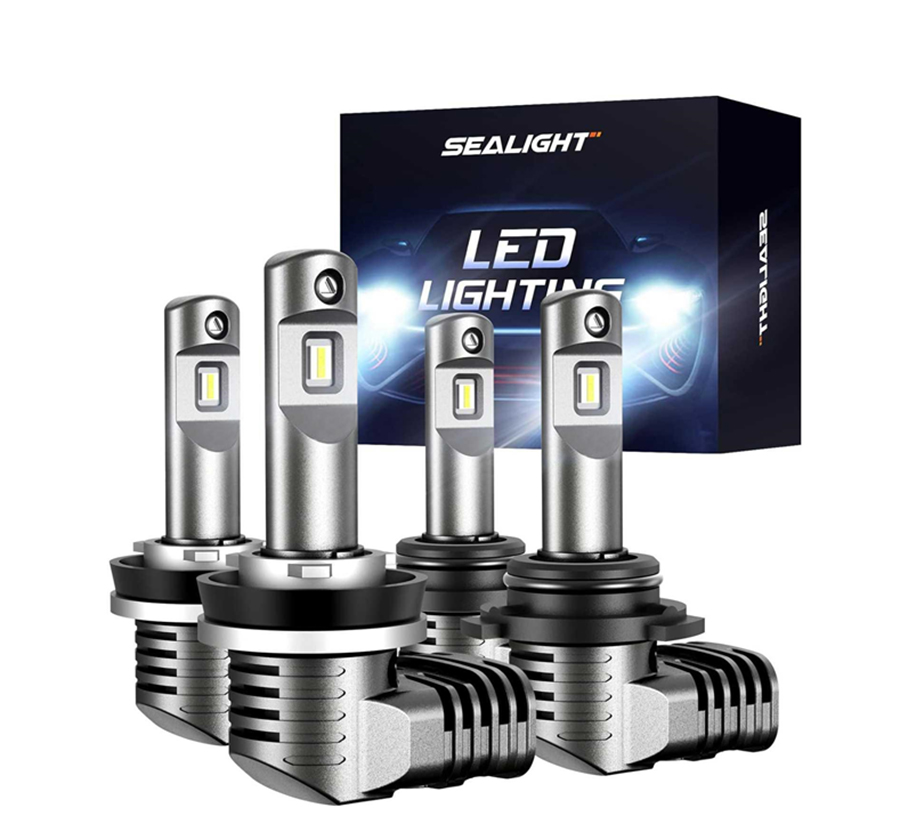
3. Best Budget Night-Driving Upgrade: SEALIGHT S2
The SEALIGHT S2 is the more straightforward option for drivers looking to move away from dim or aging lighting without prioritizing the highest stated output.
It retains several useful features found in the S7S, including a 6500K color temperature, proactive cooling, IP68 protection, and a stated lifespan of more than 60,000 hours.
Key specifications:
- Color temperature: 6500K bright white
- Stated light output: 14,000 lumens per set
- Stated wattage: 240W per set
- Light source: LED
- Fit type: Vehicle-specific
- Model: 9005/HB3 + H11/H9/H8
- Waterproof rating: IP68
- Stated lifespan: Over 60,000 hours
- Cooling: Proactive cooling
- Power supply: Interior
- Package: 4 bulbs / 2 pairs
Its lower stated lumen figure places the S2 below the S7S and S2S in this comparison, but maximum output is not necessary for every driving situation.
For everyday urban and suburban driving, the S2 can make more sense for someone who wants an LED upgrade while keeping the focus on essential nighttime visibility.
Like the S7S, it carries an IP68 rating, while proactive cooling helps manage heat during extended operation.
Best for: Daily commuting, city and suburban roads, occasional nighttime highway use, and drivers seeking a more basic LED upgrade.
S7S vs. S2S vs. S2: Quick Comparison
Feature | SEALIGHT S7S | SEALIGHT S2S | SEALIGHT S2 |
Color Temperature | 6500K | 6500K | 6500K |
Stated Lumens/Set | 66,000 LM | 44,000 LM | 14,000 LM |
Stated Wattage/Set | 260W | 140W | 240W |
Light Source | LED | LED | LED |
Fit Type | Vehicle-specific | Vehicle-specific | Vehicle-specific |
Waterproof Rating | IP68 | IP68 | IP68 |
Stated Lifespan | 60,000+ hours | 6,000+ hours | 60,000+ hours |
Cooling | Proactive | — | Proactive |
Best For | Maximum performance | Best overall balance | Budget upgrade |
For the most demanding nighttime routes, the S7S is the performance-focused choice. The S2S makes more sense for drivers seeking a balance between output and power requirements, while the S2 provides a simpler option for everyday nighttime driving.
Whichever model you choose, check the exact bulb size and vehicle compatibility first. Correct installation, bulb orientation, headlight housing design, and beam aim can matter just as much as the bulb's advertised output when determining how well you can actually see the road at night.
How to Reduce Headlight Glare When Driving at Night
More brightness is not automatically safer.
Glare can result from excessive or poorly controlled light, incorrect bulb orientation, incompatible LED replacements, dirty or damaged housings, and improperly aimed headlights.
Choose bulbs designed to create a focused beam with a controlled cutoff. With LED replacements, the light-emitting position should closely match the original halogen filament location so the reflector or projector can direct the light as intended.
After installation, check headlight aim rather than assuming the bulbs are correctly aligned.
Keep the headlight lenses clean as well. Oxidized, cloudy, or dirty lenses can scatter light and reduce useful illumination. A clean windshield and mirrors can also reduce distracting reflections while driving at night.
Use low beams around oncoming traffic and when following another vehicle. High beams should only be used when conditions allow and when they will not interfere with another driver's vision.
How to Test Headlights Before Driving on Dark Roads at Night
A quick inspection before a long nighttime trip can reveal problems that are difficult to notice during normal daytime driving.
First, switch on the low beams and high beams and compare both sides. They should have reasonably consistent brightness and color.
Next, park on level ground facing a wall or garage door. Examine the beam pattern for obvious differences in height, dark spots, scattered light, or an irregular cutoff.
Confirm that each bulb is securely installed and correctly oriented inside the housing.
Inspect the headlight lenses for dirt, oxidation, cracks, moisture, or condensation, all of which can affect light output and beam quality.
Finally, test the headlights on a safe, familiar road after dark. Make sure you can see the roadway clearly without producing excessive glare. Correct any installation, alignment, or visibility problems before relying on the headlights for a long highway, mountain, or rural trip.
Conclusion
The right headlight bulb depends on where and how you drive.
Among these options, the SEALIGHT S7S offers the strongest supplied performance specifications for demanding nighttime driving, the S2S provides a balanced choice for regular night use, and the S2 offers a more budget-friendly upgrade for everyday driving.
Whichever bulb you choose, confirm the correct vehicle fitment and headlight-housing compatibility before installation. Good nighttime visibility also depends on proper headlight aim, clean lenses, correct low- and high-beam use, appropriate speed, and enough following distance for the conditions ahead.
A brighter bulb can improve what you see, but a well-controlled beam that puts usable light on the road is what ultimately matters most at night.