How to Prepare Your Car for Dangerous Roads
Some roads punish weak preparation. Steep grades, hairpin turns, loose gravel, and unpredictable weather all put extra strain on a vehicle. Before you drive one, your car needs to be ready for it, not just running.
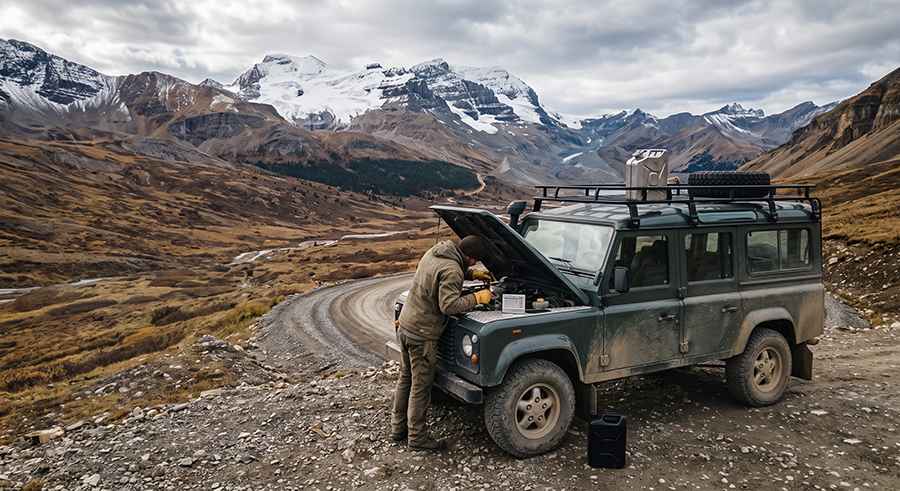
Start With the Engine and Fluids
A dangerous road is the wrong place to find out your engine is struggling. Check oil level and condition before any trip that involves steep climbs, long descents, or extreme temperatures.
Old or low oil increases engine wear under load. On mountain routes, engines work harder for longer stretches, and heat builds up fast. A fresh oil change before departure gives your engine a better shot at handling that stress. If it's been a while since your last service, book one with a shop like MAXI Mobile before you leave, not after a warning light comes on halfway up a mountain pass.
Check these fluid levels before any high-risk drive:
- Engine oil, for level and color
- Coolant, to prevent overheating on long climbs
- Brake fluid, since worn brakes need more fluid pressure
- Transmission fluid, especially before steep descents
- Power steering fluid, for tight switchbacks and hairpin turns
Low or dirty fluid in any of these systems raises your risk of a breakdown in a location where help isn't close by.
Check belts and hoses too. Cracked or worn belts fail more often under heat and heavy load, and a snapped belt on a remote road can strand you fast. A quick visual check takes a few minutes and catches most problems before they become breakdowns.
Inspect Tires Before Anything Else
Tires make contact with the road. Everything else depends on them working correctly.
Poor vehicle maintenance plays a role in a significant share of crashes. NHTSA estimates that maintenance-related failures contribute to around 2,600 deaths and 100,000 disabling injuries in the United States each year, according to Lowe Law Group. Tire failure is one of the most common mechanical causes behind those numbers.
Check tread depth with a simple gauge or the penny test. Worn tread loses grip on wet or gravel surfaces, which matters most on unpaved mountain roads. Check tire pressure cold, before driving, since altitude changes affect pressure readings once you're moving.
Carry a full-size spare if your vehicle allows it. A compact spare gets you to a shop. It does not get you safely through a mountain pass.
Test Your Brakes Under Real Conditions
Brakes wear differently depending on terrain. Steep descents put constant strain on brake pads, and overheated brakes lose stopping power fast.
Listen for grinding or squealing before you leave. Both signal pad wear that needs attention. Check brake fluid color too. Dark or cloudy fluid holds less moisture resistance, which lowers braking performance under heat.
On long descents, use lower gears to reduce brake strain instead of riding the brake pedal continuously. This single habit prevents more mountain road accidents than any single mechanical fix.
Pack for Isolation, Not Convenience
Dangerous roads often mean long stretches without cell signal, gas stations, or repair shops. Your emergency kit should reflect that reality.
Bring these items on any remote or high-risk route:
- A physical map or downloaded offline navigation
- Extra water and non-perishable food
- A basic tool kit and tire repair kit
- Jumper cables or a portable jump starter
- A first aid kit
- Warm layers, even in warm climates, for elevation changes
Isolation turns small problems into serious ones. A flat tire on a city street is an inconvenience. The same flat tire on an unpaved mountain road with no signal is a real emergency.
Check Your Vehicle's Ground Clearance and Traction
Not every vehicle belongs on every road. Low ground clearance vehicles struggle on rutted or rocky routes, and standard tires lack grip on loose gravel or mud.
Know your vehicle's limits before you commit to a route. If the road ahead requires four-wheel drive or higher clearance, don't attempt it in a vehicle that lacks either. Turning back costs time. Getting stuck costs a lot more.
Check your owner's manual for your vehicle's rated ground clearance and approach angle. These numbers tell you more about what your car can handle than guesswork ever will.
Preparing a car for a dangerous road takes more than a quick glance under the hood. Fluids, tires, brakes, and emergency supplies all need attention before departure, not after a warning sign appears on the road itself.